
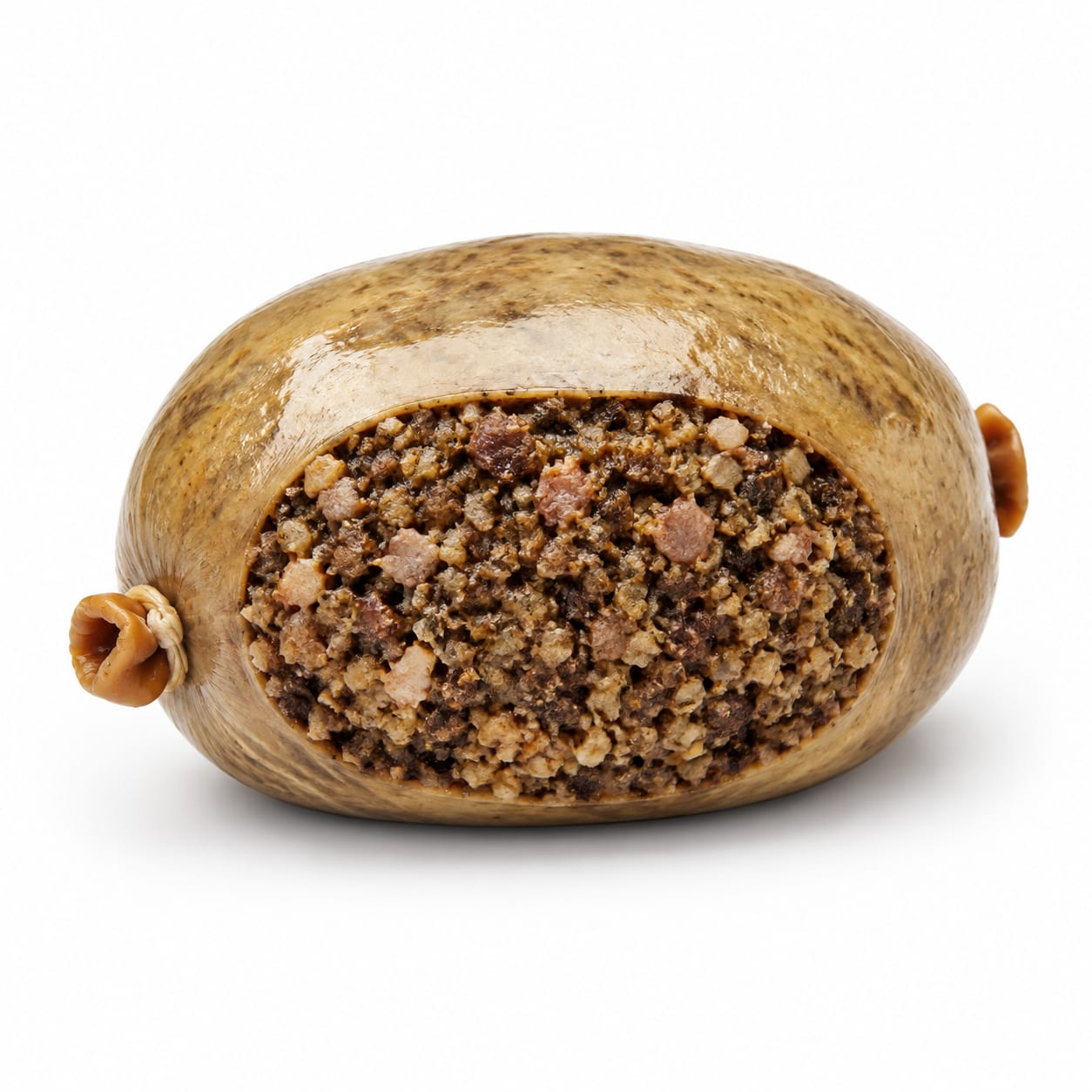
Offal and Meat Products
Haggis
A traditional Scottish dish made from minced sheep offal mixed with oatmeal, suet, and spices.
A traditional Scottish savory pudding made from sheep's pluck (heart, liver, and lungs) minced with onion, oatmeal, suet, spices, and salt, traditionally encased in the animal's stomach.
high-fat high-protein offal-based dish
Typical serving · 150g
Common varieties · traditional sheep haggis, beef haggis, vegetarian haggis, microwavable commercial haggis, gluten-free haggis
Overall context score across nutrition, safety, and diet fit
At a glance
Quick facts
Simple indicators based on nutrition, processing, and diet fit.
The story
What makes it unique
Haggis is a complex food matrix combining animal offal and cereal grains. The high fat content from suet and offal slows gastric emptying, resulting in a low glycemic response despite the inclusion of oatmeal. The protein matrix from organ meats provides a complete amino acid profile, while the oatmeal contributes soluble fiber. Digestion is slow due to the high fat and protein content, promoting prolonged satiety.
Varieties: traditional sheep haggis · beef haggis · vegetarian haggis · microwavable commercial haggis · gluten-free haggis
Per 100g
Nutrition breakdown
Macro balance and key metrics at a glance.
Energy
Density 3.10 kcal/g
Protein
Carbs
Fat
Fiber
Sugar
1 g
Sodium
720 mg
Potassium
260 mg
Glycemic index
35
Glycemic load
4
Water content
50%
Standout compounds
Nutrient highlights
Vitamin B12
highEssential for nerve function and red blood cell formation
Iron
highSupports oxygen transport in the blood
Zinc
highCrucial for immune function and wound healing
Saturated Fat
highProvides dense energy but can raise LDL cholesterol if overconsumed
Sodium
highImportant for fluid balance but excessive amounts increase blood pressure risk
Wellness map
Health scores & processing
NOVA processing scale
moderately processed · Whole food
Traditional haggis is a processed culinary food made by mixing minced animal offal with oatmeal and spices, though commercial versions may include additional preservatives placing them closer to ultra-processed.
Diet compatibility
- Weight loss
- Muscle gain
- Diabetes
- Gut health
- Low carb
- High protein
- Heart health
Relative standing
Food rankings
Qualitative ranks compared to similar whole foods.
- Satietygood
- Blood sugarexcellent
- Nutrient densitygood
- Fitness fuelmoderate
- Processing qualitymoderate
Eat with confidence
Food safety profile
The primary safety concerns relate to the offal content, which can concentrate heavy metals and environmental toxins. Proper cooking to safe internal temperatures eliminates bacterial risks associated with raw organ meats.
Evidence confidence 75%
- Pesticideslow
- Antibioticsmoderate
- Heavy metalsmoderate
- Contaminationmoderate
Watch for
- heavy metals in offal
- pathogenic bacteria from raw offal handling
Safer choices
Organic or locally sourced haggis from trusted butchers reduces antibiotic and contaminant exposure.
Prep tips
Ensure haggis is cooked thoroughly to an internal temperature of at least 74°C (165°F). Avoid cross-contamination from raw offal during preparation.
Offal can accumulate environmental contaminants and heavy metals; strict sourcing is required for traditional lung-containing recipes in some regions.
Deep dive
Health analysis
How this food may fit different goals and preparation choices.
Weight loss
The high energy density and fat content make haggis a poor choice for calorie-restricted diets, though its strong satiety effect may prevent overeating later in the day.
Blood sugar
The combination of fat, protein, and moderate carbohydrates from oatmeal results in a very low glycemic impact, preventing sharp blood sugar spikes.
Fitness & energy
Provides a robust amino acid profile for muscle repair, but the high fat content can cause sluggishness if consumed too close to intense physical activity.
Gut health
Contains some soluble fiber from oatmeal, but the high fat content and lack of diverse plant fibers limit its gut microbiome benefits.
Processing quality
Traditional preparations use whole food ingredients, but commercial varieties often contain preservatives, fillers, and higher sodium levels.
Food safety
Offal inherently carries a higher risk of concentrating heavy metals and pathogens than muscle meat, requiring careful sourcing and thorough cooking.
Common mistakes
Assuming haggis is a low-carb meat when it actually contains a significant portion of oatmeal, or treating it as a lean protein source due to its high fat content.
Best preparation
Baking or boiling are the traditional methods. Baking allows some fat rendering, making it slightly leaner than boiling in its own casing.
Practical guide
Best use cases
When and how this food fits real eating patterns.
Traditional celebration meal
Ideal for Burns Night or cultural events where a hearty, authentic dish is the centerpiece.
Cold weather fuel
The high fat and calorie density provides sustained warmth and energy in cold climates.
Nutrient density boost
Useful for individuals needing to increase iron and B12 intake, such as those with anemia.
Balance sheet
Pros & cons
Upsides
- Extremely rich in bioavailable vitamin B12 and iron
- High protein content supports muscle maintenance
- Low glycemic impact prevents blood sugar spikes
- Oatmeal provides some soluble fiber
- High satiety keeps you full for hours
Trade-offs
- Very high in saturated fat and calories
- High sodium content is concerning for blood pressure
- Offal can accumulate environmental toxins and heavy metals
- Not suitable for vegetarians or vegans
- Contains allergens like gluten and oats in most recipes
Fit check
Who is it for?
Great match
- low-carb dieters
- individuals needing iron supplementation
- cold-weather calorie needs
- traditional cultural observances
Consider alternatives
- heart disease patients
- low-sodium diets
- strict calorie restriction
- vegetarian and vegan diets
Side by side
How it compares
Open the full head-to-head analysis for nutrition, safety, and practical tradeoffs.
This food
Haggis
VS85% alike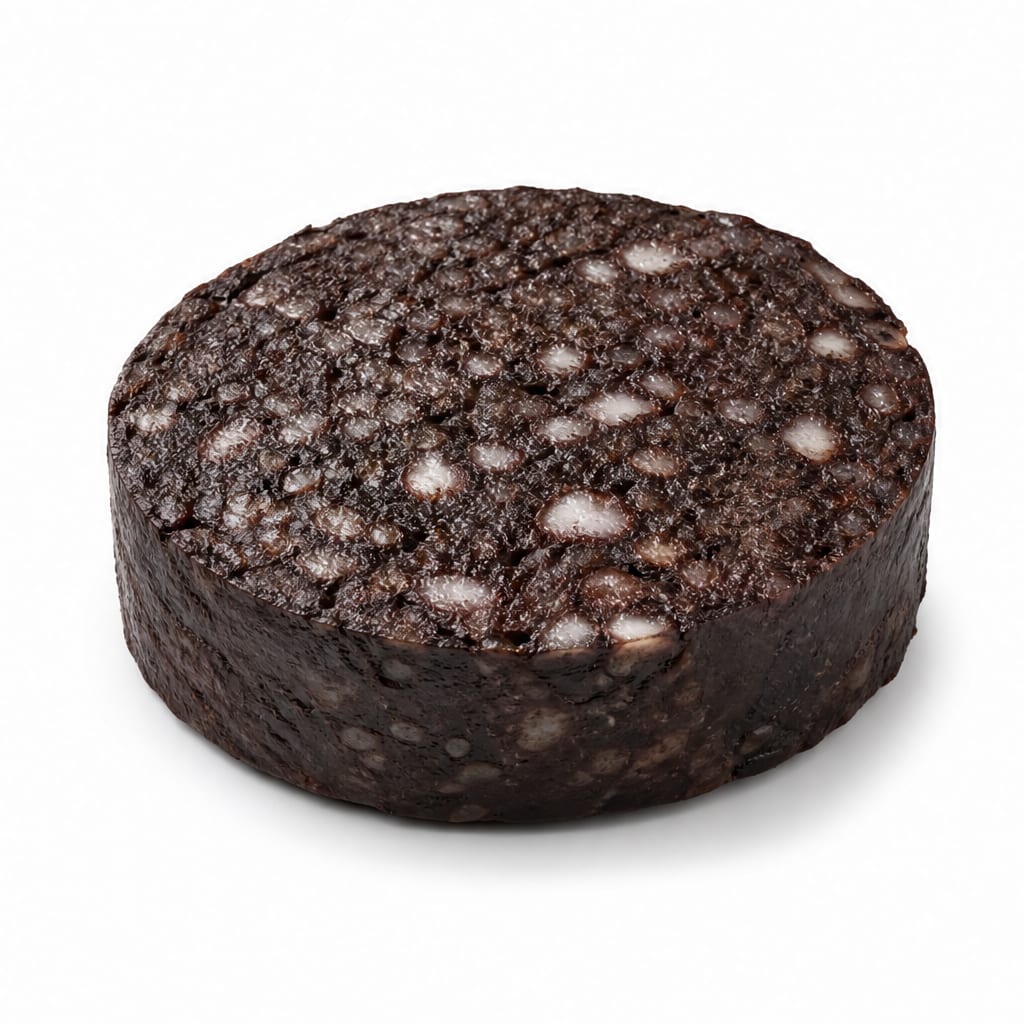
Compare with
Black Pudding
Black pudding is a blood sausage, while haggis uses a mix of heart, liver, and lungs with oats.
Haggis provides more diverse vitamins from mixed offal, while black pudding is lower in fat but higher in salt.
This food
Haggis
VS80% alike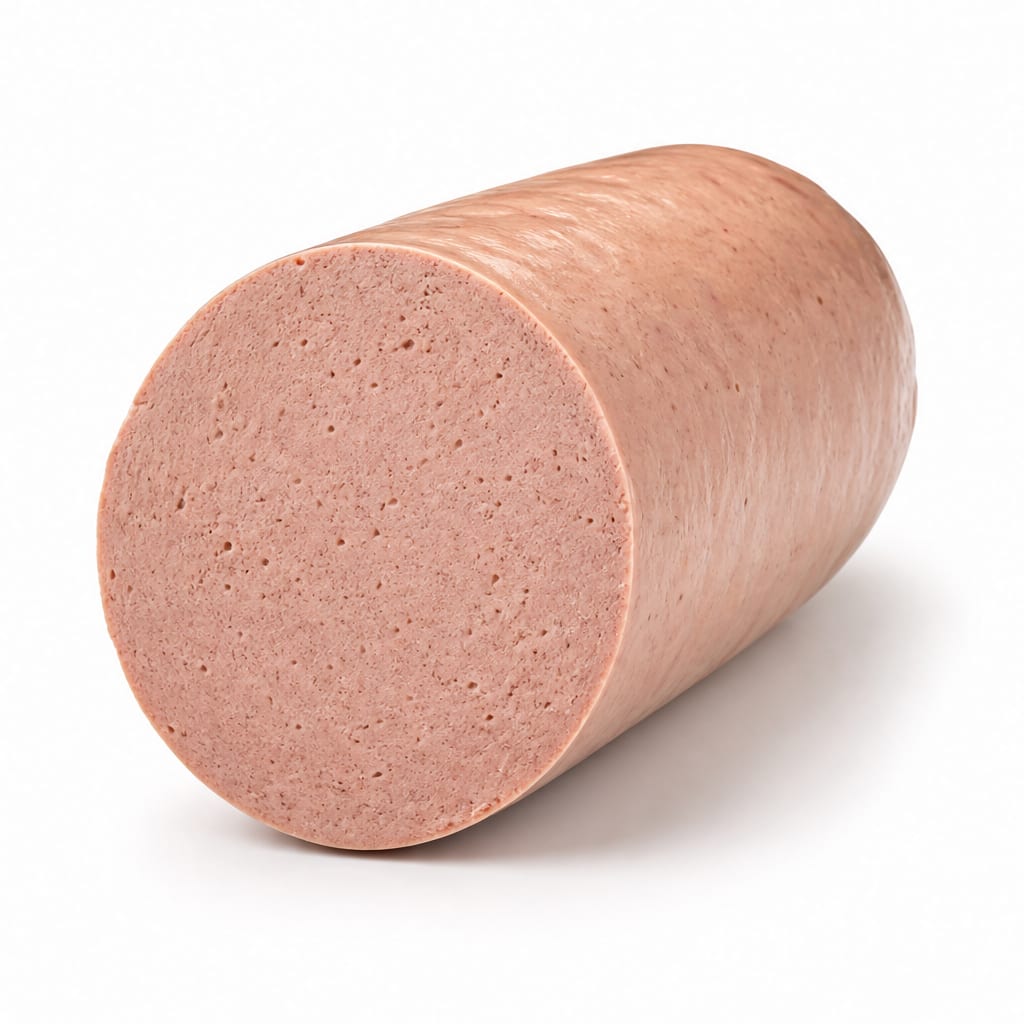
Compare with
Liverwurst
Liverwurst is a German liver sausage, while haggis includes oats and a broader offal mix.
Liverwurst is richer in vitamin A from liver, but haggis offers more fiber from oatmeal and a lower glycemic impact.
This food
Haggis
VS75% alike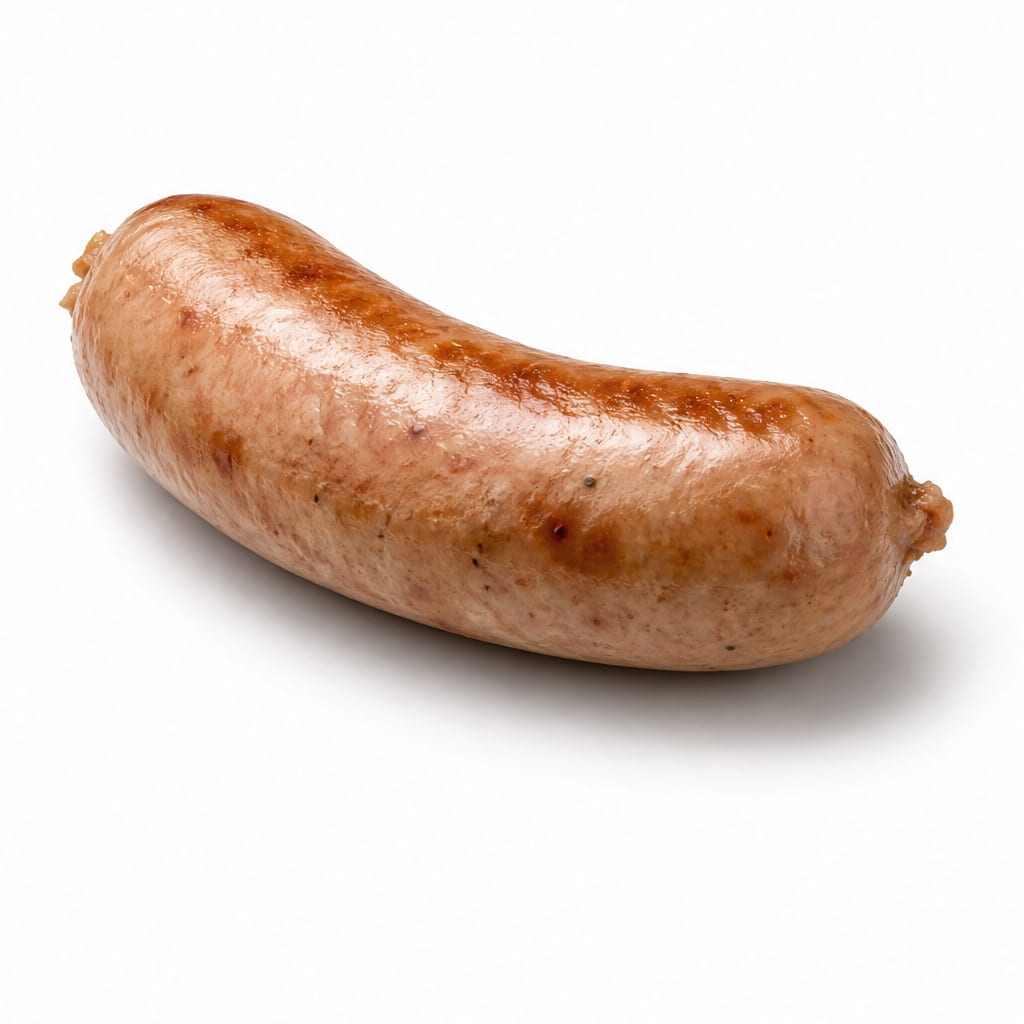
Compare with
Pork Sausage
Pork sausage is muscle meat and fat, while haggis is offal and oatmeal.
Haggis beats pork sausage for micronutrient density and blood sugar stability, though sausage is typically lower in carbohydrates.
This food
Haggis
VS70% alike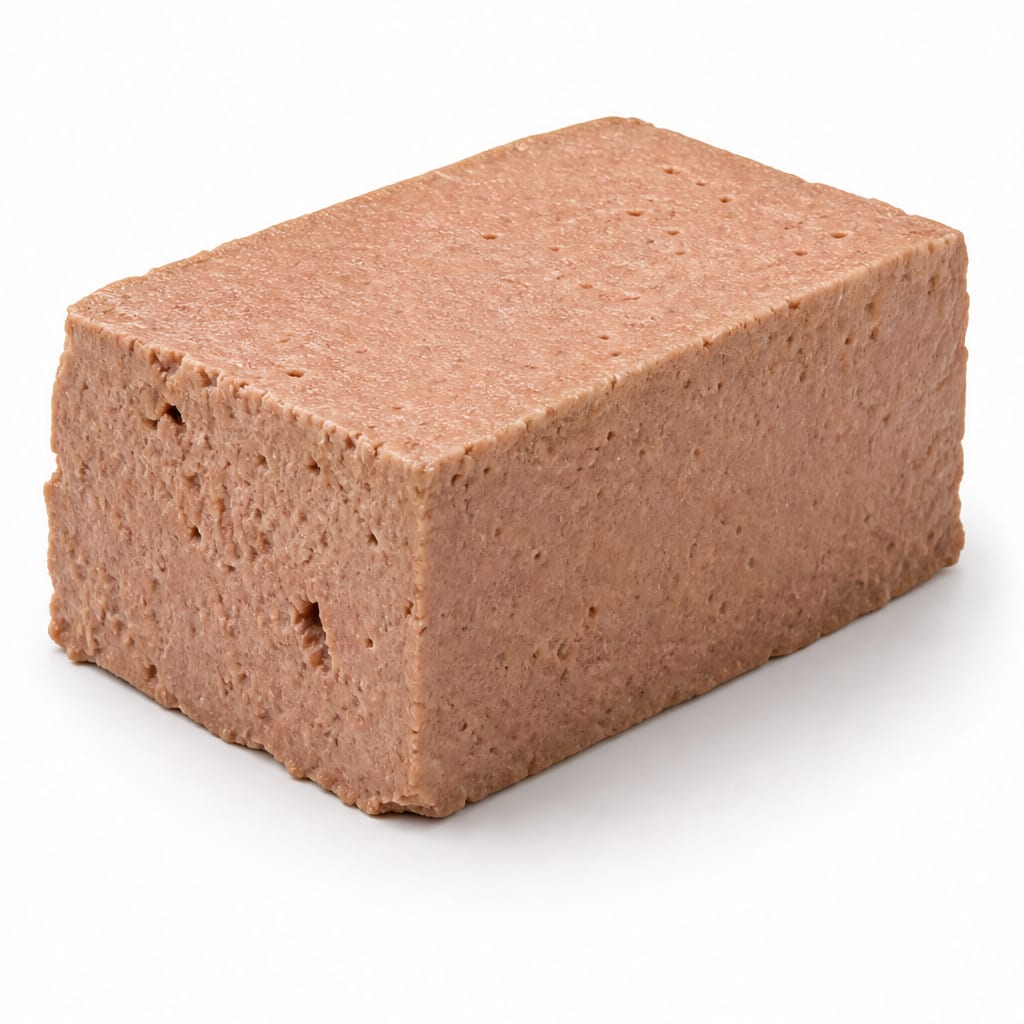
Compare with
Pate
Pate is primarily liver and fat, whereas haggis incorporates oats and lung/heart.
Pate is smoother and higher in vitamin A, while haggis offers more texture, fiber, and a broader mineral profile.
This food
Haggis
VS75% alike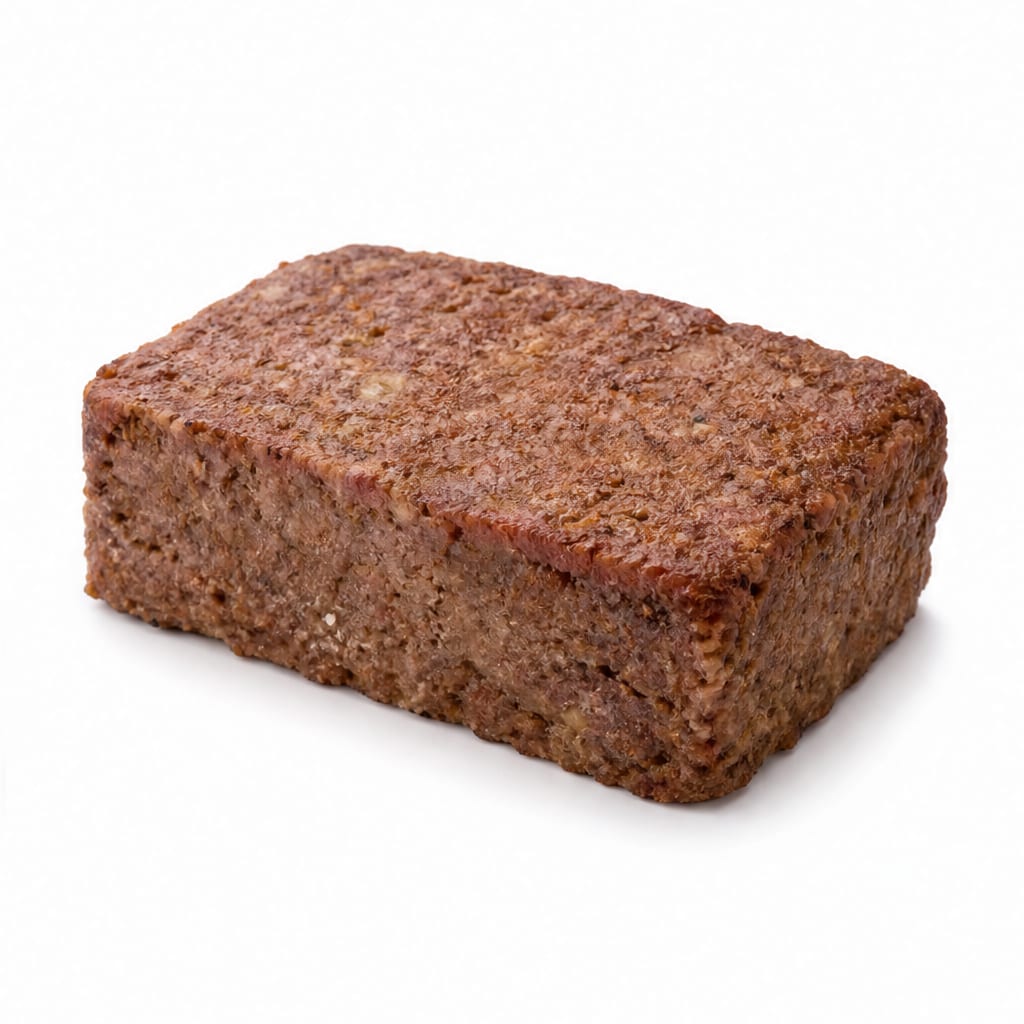
Compare with
Scrapple
Scrapple uses pork scraps and cornmeal, while haggis uses sheep offal and oatmeal.
Haggis provides more iron and B12 from offal than scrapple, and the oatmeal offers a better glycemic profile than scrapple's cornmeal.
This food
Haggis
VS60% alike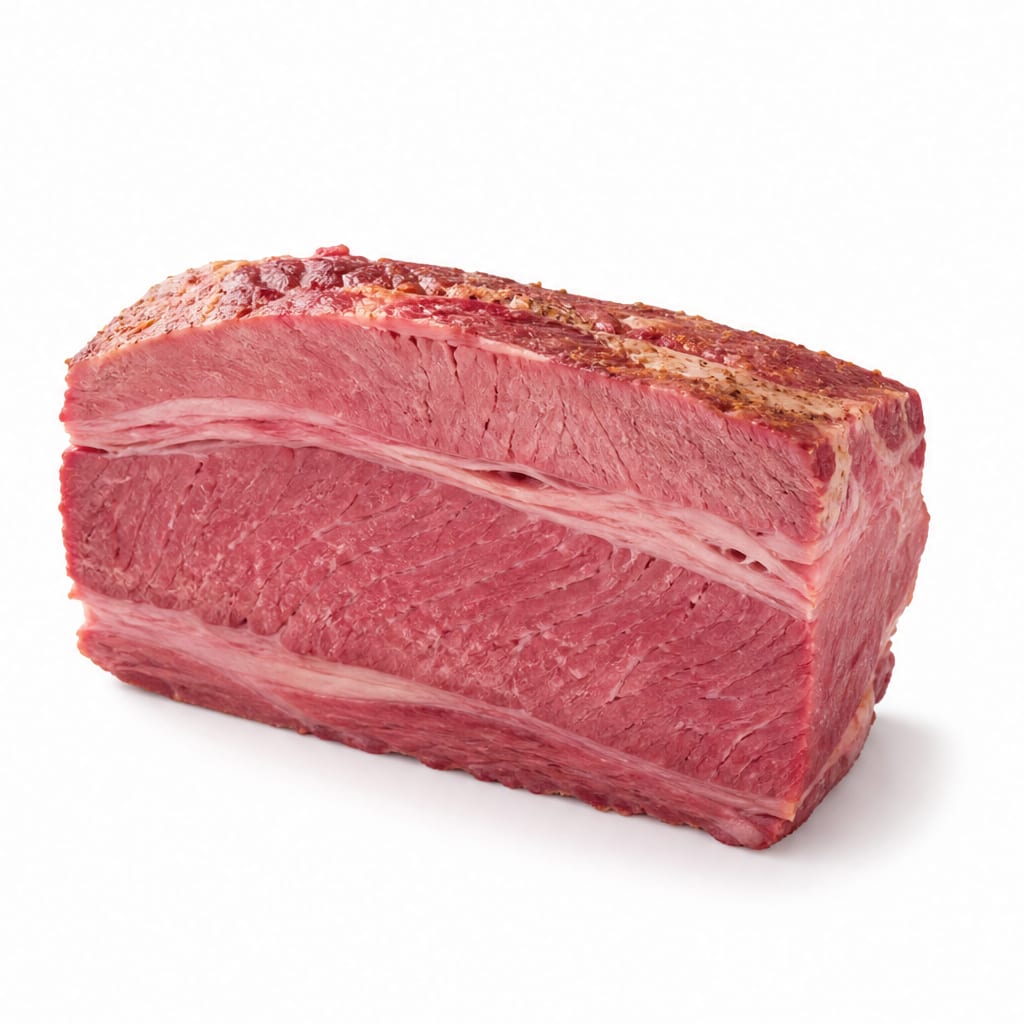
Compare with
Corned Beef
Corned beef is cured beef brisket, while haggis is minced offal with oats.
Corned beef is higher in protein and lower in fat, but haggis provides vastly more iron and B12.
This food
Haggis
VS55% alike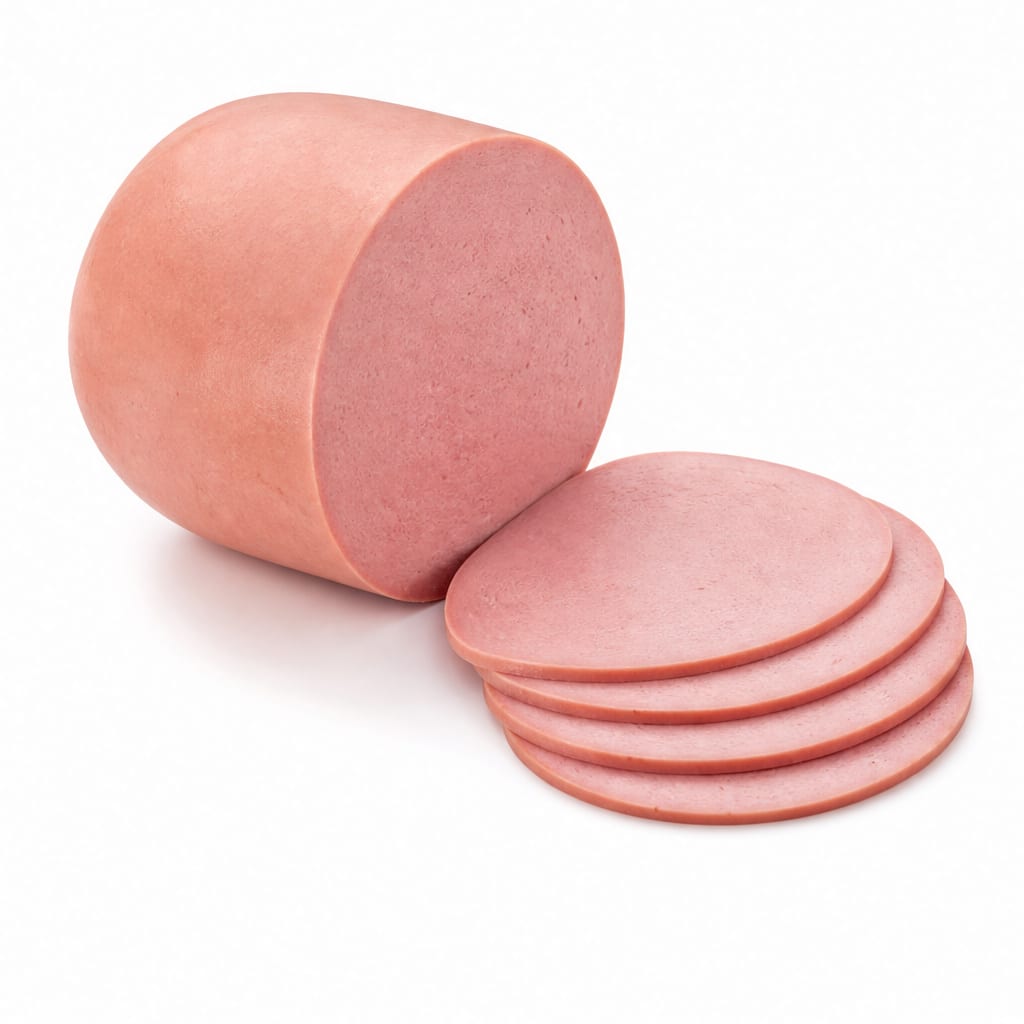
Compare with
Bologna
Bologna is a highly processed pork/beef sausage, while haggis is an offal-based pudding.
Haggis is far more nutrient-dense than bologna, which is more processed and lacks the micronutrients of offal.
This food
Haggis
VS60% alike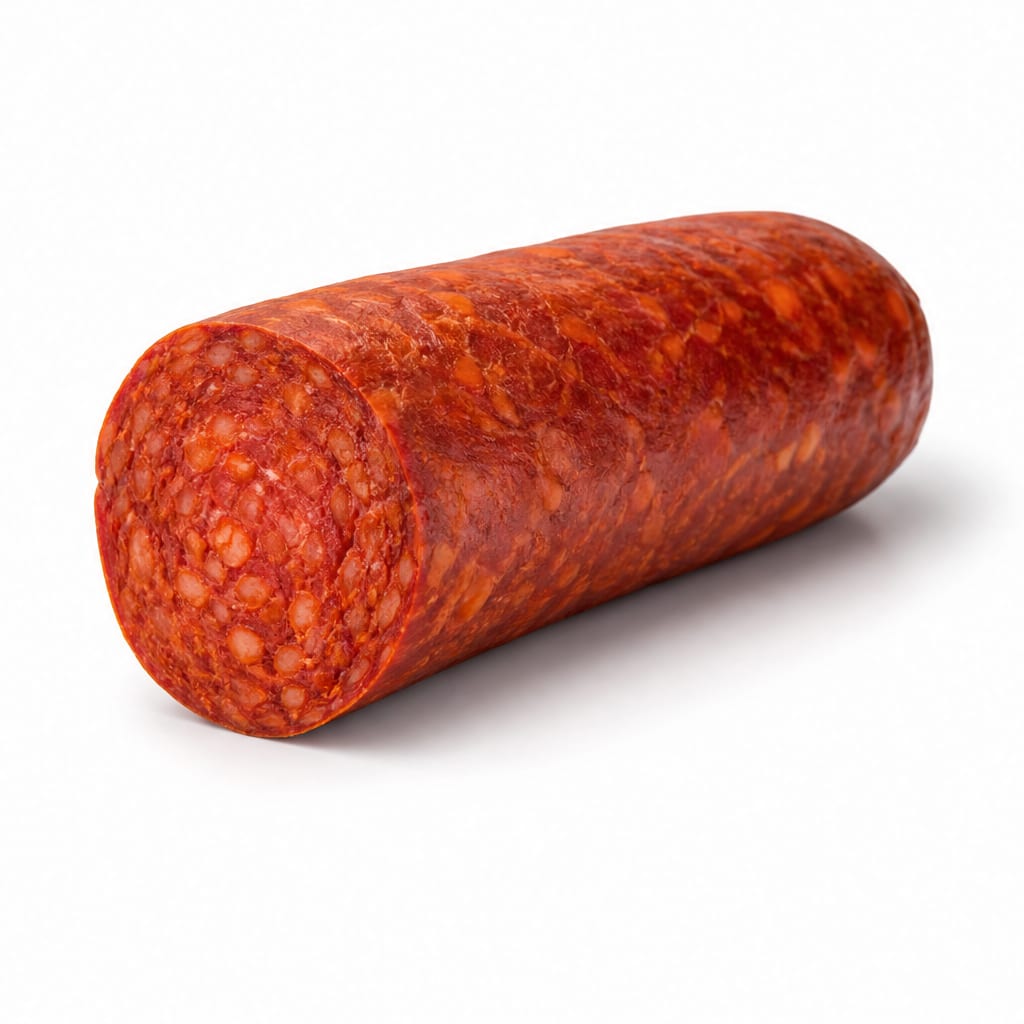
Compare with
Chorizo
Chorizo is a cured pork sausage, while haggis is a boiled or baked offal pudding.
Chorizo is lower in carbs but heavily processed and cured; haggis offers better nutritional value from organ meats.
This food
Haggis
VS55% alike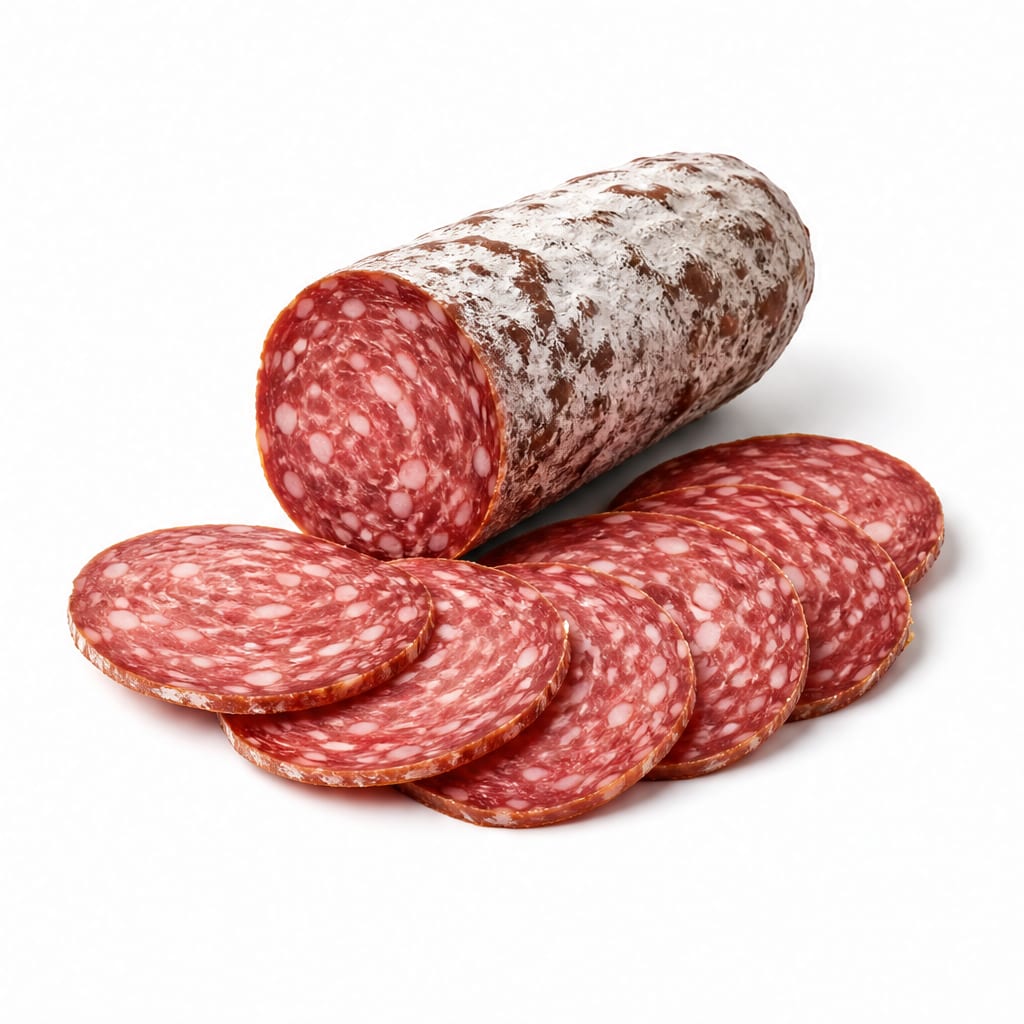
Compare with
Salami
Salami is a dry-cured sausage, whereas haggis is a cooked grain-and-offal mix.
Salami is convenient and zero-carb, but haggis provides superior micronutrients and fiber from oats.
This food
Haggis
VS50% alike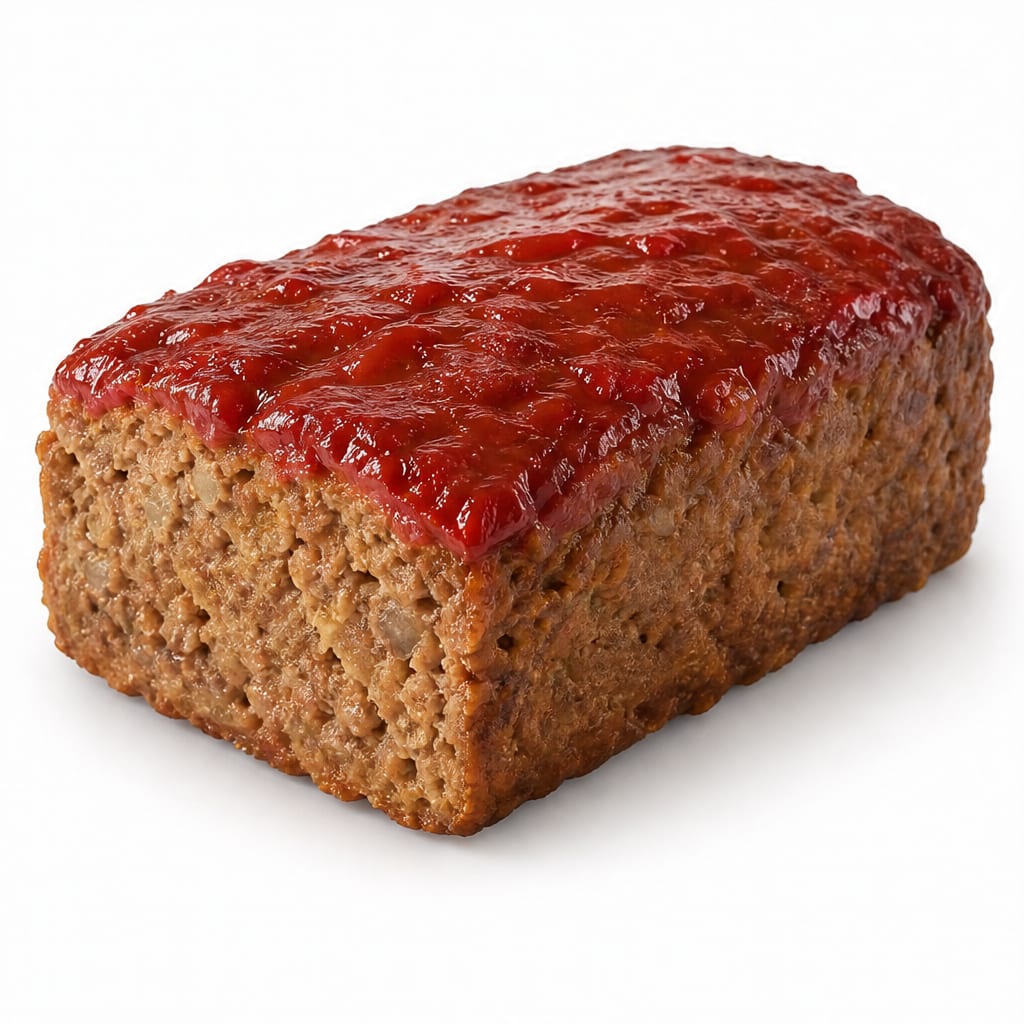
Compare with
Meatloaf
Meatloaf uses ground beef and breadcrumbs, while haggis uses offal and oatmeal.
Meatloaf is leaner and higher in protein, but haggis offers a vastly denser vitamin and mineral profile due to the organ meats.
Common questions
FAQ
Answers aligned with how people search for this food.
Is haggis good for you?
Haggis is highly nutritious due to its offal content, providing exceptional amounts of vitamin B12, iron, and zinc. However, it is also high in saturated fat, calories, and sodium, meaning it should be eaten in moderation.
Is haggis high in carbs?
Haggis is moderately low in carbs. A 100g serving contains about 12g of carbohydrates, primarily from the oatmeal used in the recipe, making it suitable for low-carb diets in moderate portions.
Can diabetics eat haggis?
Yes, diabetics can eat haggis in moderation. The high protein and fat content slows the digestion of the oatmeal carbohydrates, resulting in a low glycemic impact that prevents sharp blood sugar spikes.
Is haggis keto-friendly?
Strict keto dieters may find haggis too high in carbs due to the oatmeal, but those following a more liberal low-carb diet can easily fit a moderate portion into their daily macros.
Does haggis have a lot of iron?
Yes, haggis is an excellent source of iron. The sheep liver and heart used in traditional haggis are rich in heme iron, which is highly bioavailable and easily absorbed by the body.
Is haggis high in cholesterol?
Yes, haggis contains significant dietary cholesterol because it is made from organ meats and suet. However, for most people, saturated fat intake impacts blood cholesterol more than dietary cholesterol does.
What are the main nutrients in haggis?
Haggis is particularly rich in vitamin B12, iron, zinc, copper, and selenium, alongside providing a solid dose of complete protein and saturated fat.
Is vegetarian haggis healthier than traditional haggis?
Vegetarian haggis is lower in saturated fat and cholesterol while being higher in fiber, making it better for heart health. However, it lacks the high levels of bioavailable iron and vitamin B12 found in the traditional offal version.
Transparency
Data confidence
Estimated confidence for nutrition data, interpretation, safety notes, and comparisons.
Nutrition data
Health analysis
Food safety
Comparisons