
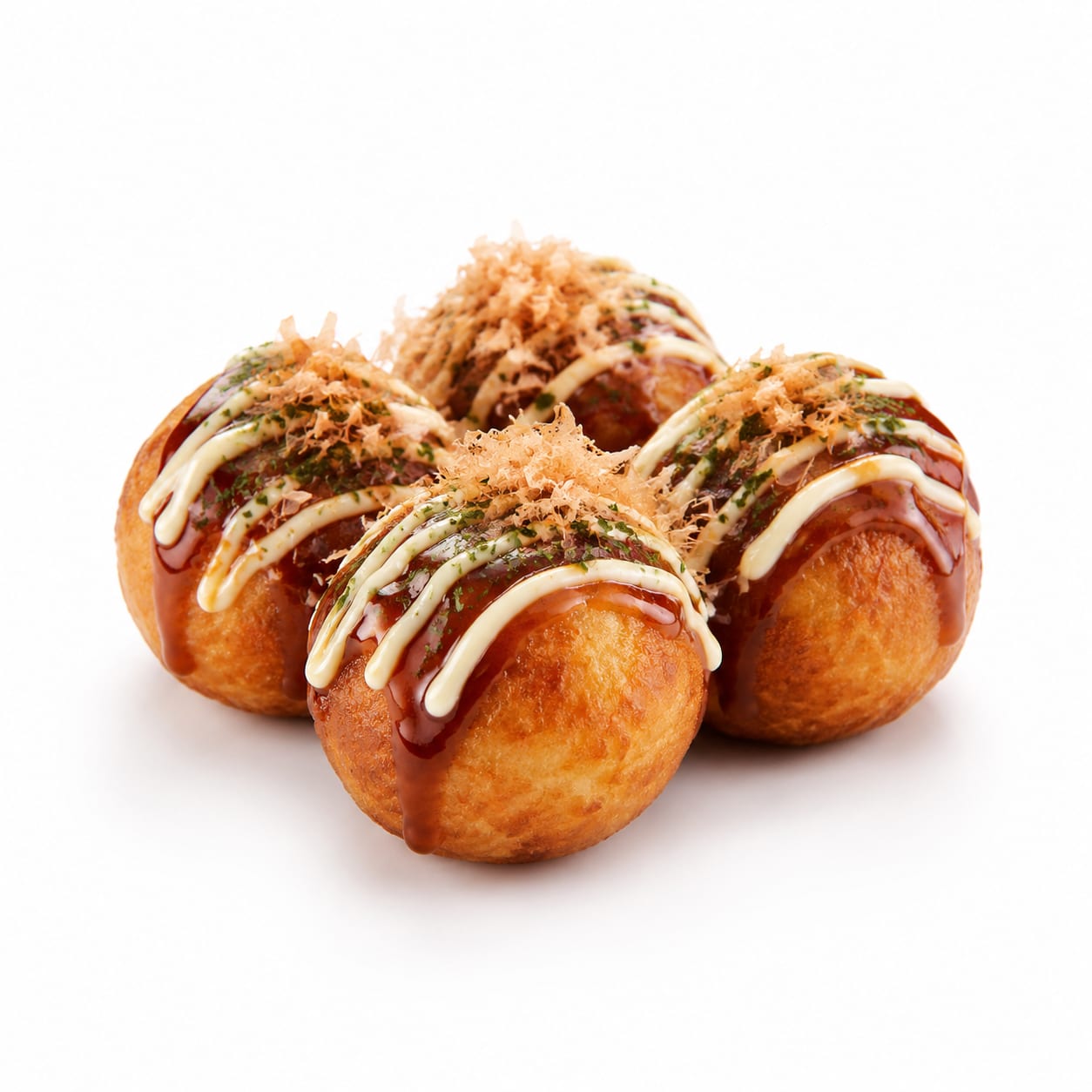
Japanese Street Food
Takoyaki
Takoyaki is a fried Japanese dumpling ball made of wheat batter and octopus, topped with savory sauces.
A popular Japanese street food consisting of a savory wheat flour batter filled with diced octopus, pickled ginger, and green onion, cooked into spherical shapes and topped with takoyaki sauce, mayonnaise, and bonito flakes.
carbohydrate-dense fried street snack
Typical serving · 150g
Common varieties · classic octopus, cheese-filled, shrimp, kimchi, sausage
Overall context score across nutrition, safety, and diet fit
At a glance
Quick facts
Simple indicators based on nutrition, processing, and diet fit.
The story
What makes it unique
Takoyaki is a moderate-to-high glycemic food due to its refined wheat flour base and sweet sauce toppings. Digestion is rapid, providing limited satiety. The macronutrient profile is carbohydrate-dominant with significant added fats from cooking oil and mayonnaise. It is an ultra-processed culinary preparation combining refined carbohydrates, sodium-rich condiments, and animal protein.
Varieties: classic octopus · cheese-filled · shrimp · kimchi · sausage
Per 100g
Nutrition breakdown
Macro balance and key metrics at a glance.
Energy
Density 1.75 kcal/g
Protein
Carbs
Fat
Fiber
Sugar
4.5 g
Sodium
520 mg
Potassium
140 mg
Glycemic index
75
Glycemic load
14
Water content
60%
Standout compounds
Nutrient highlights
Sodium
highElectrolyte balance, but excessive intake raises blood pressure
Carbohydrates
highRapid energy replenishment
Vitamin B12
moderateNerve function and red blood cell formation from octopus
Selenium
moderateAntioxidant protection and thyroid function from octopus
Wellness map
Health scores & processing
NOVA processing scale
ultra-processed · Ultra-processed
Made with refined wheat flour, commercial mayonnaise, and sweetened takoyaki sauce, containing multiple processed additives and flavor enhancers.
Diet compatibility
- Weight loss
- Muscle gain
- Diabetes
- Gut health
- Low carb
- High protein
- Heart health
Relative standing
Food rankings
Qualitative ranks compared to similar whole foods.
- Satietypoor
- Blood sugarpoor
- Nutrient densitypoor
- Fitness fuelmoderate
- Processing qualitypoor
Eat with confidence
Food safety profile
Octopus can accumulate heavy metals from ocean environments. The use of raw eggs in mayonnaise and batter poses a slight microbial risk if not cooked or stored at proper temperatures.
Evidence confidence 75%
- Pesticideslow
- Antibioticslow
- Heavy metalsmoderate
- Contaminationmoderate
Watch for
- vibrio parahaemolyticus
- salmonella
- heavy metals from octopus
Safer choices
Homemade takoyaki using fresh octopus and pasteurized eggs
Prep tips
Ensure octopus is thoroughly cooked and sourced from reputable suppliers; keep batter refrigerated until cooking.
Street vendor temperature control for mayonnaise and batter
Deep dive
Health analysis
How this food may fit different goals and preparation choices.
Weight loss
High energy density and added fats from oil and mayonnaise make it easy to overconsume calories, limiting its usefulness for weight loss.
Blood sugar
Refined wheat flour and sweet sauces cause rapid spikes in blood glucose, making it a poor choice for insulin resistance or diabetes management.
Fitness & energy
Provides quick-digesting carbohydrates for short-term energy, but lacks the sustained release and protein content needed for optimal workout recovery.
Gut health
Very low fiber content limits benefits for the gut microbiome, while fried fats and sodium can promote inflammation in sensitive individuals.
Processing quality
Classified as ultra-processed due to refined flour, commercial condiments, and flavor enhancers, stripping away natural whole-food benefits.
Food safety
Primary concerns involve seafood contamination and improper holding temperatures for egg-based sauces at street vendors.
Common mistakes
Assuming it is a healthy seafood dish; the octopus portion is minimal compared to the refined carbohydrate and fat content.
Best preparation
Baking instead of deep-frying, using whole wheat flour blends, and substituting plain yogurt or low-fat sauces for mayonnaise.
Practical guide
Best use cases
When and how this food fits real eating patterns.
Occasional indulgent street snack
Best enjoyed in moderation as a cultural treat rather than a dietary staple.
Quick pre-workout carb source
The fast-digesting carbs can provide a rapid energy boost before a short, intense workout.
Balance sheet
Pros & cons
Upsides
- Provides quick-digesting carbohydrates for immediate energy
- Contains some micronutrients from octopus like B12 and selenium
- Culturally authentic and satisfying flavor profile
Trade-offs
- High in refined carbohydrates that spike blood sugar
- Deep-fried preparation increases calorie density and fat content
- Very high in sodium from sauces and batter
- Low in dietary fiber, leading to poor satiety
- Contains ultra-processed ingredients like commercial mayonnaise
Fit check
Who is it for?
Great match
- occasional cultural indulgence
- quick pre-workout energy
- sharing as a small appetizer
Consider alternatives
- weight loss diets
- blood sugar control
- low-carb or ketogenic diets
- low-sodium diets
Side by side
How it compares
Open the full head-to-head analysis for nutrition, safety, and practical tradeoffs.
This food
Takoyaki
VS90% alike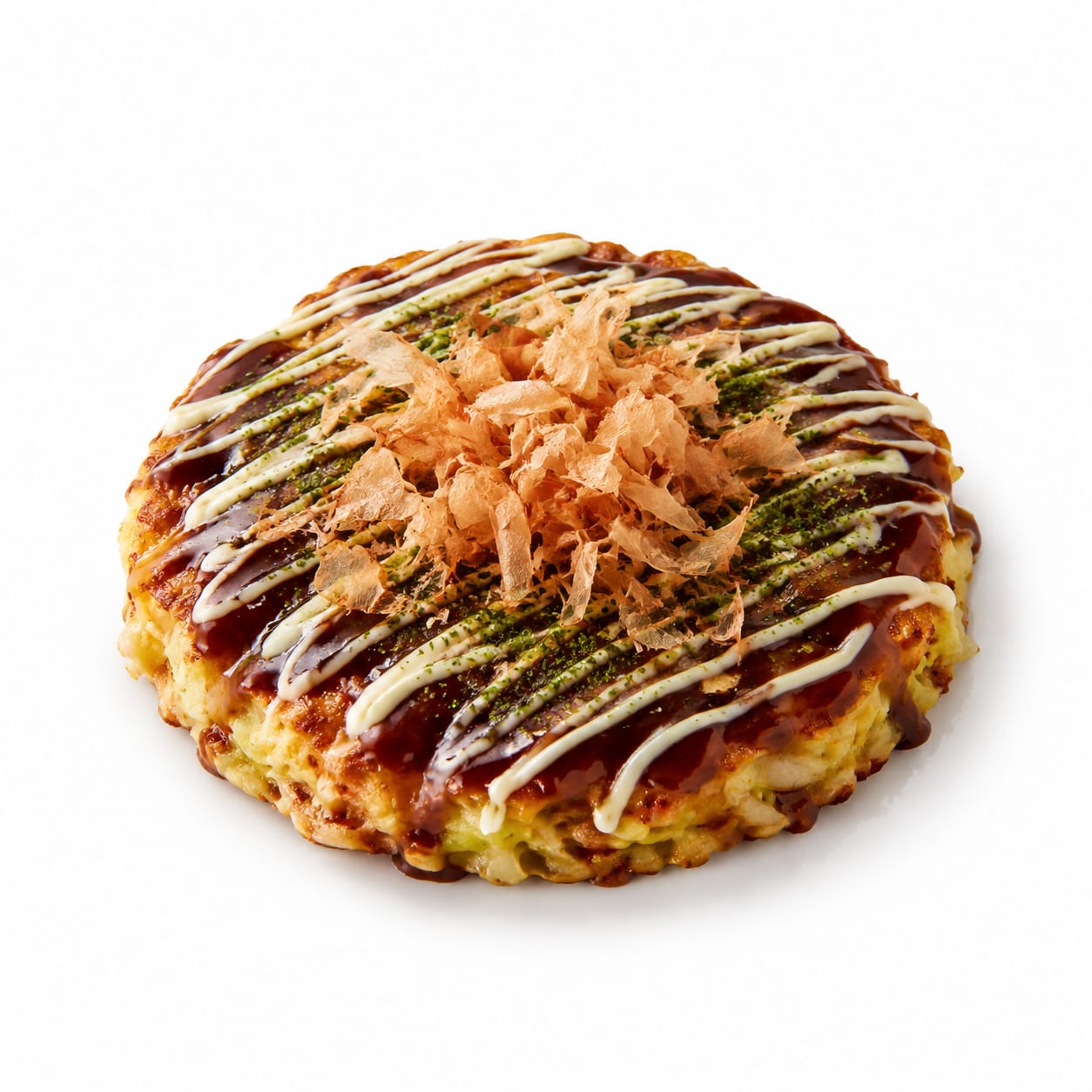
Compare with
Okonomiyaki
Okonomiyaki is a savory Japanese pancake with a similar wheat flour base and toppings, but contains more cabbage, offering slightly more fiber and volume per calorie than takoyaki.
Okonomiyaki offers more fiber and volume from cabbage compared to takoyaki, making it slightly better for satiety and blood sugar control.
This food
Takoyaki
VS85% alike.jpg)
Compare with
Korean Pancake (Pajeon)
Pajeon is a savory Korean pancake made with wheat batter and green onions. Both are fried and high in refined carbs, but pajeon often contains more vegetables.
Korean pajeon and takoyaki are similar fried batter snacks, but pajeon usually provides more vegetable content and fewer sweet sauces.
This food
Takoyaki
VS80% alike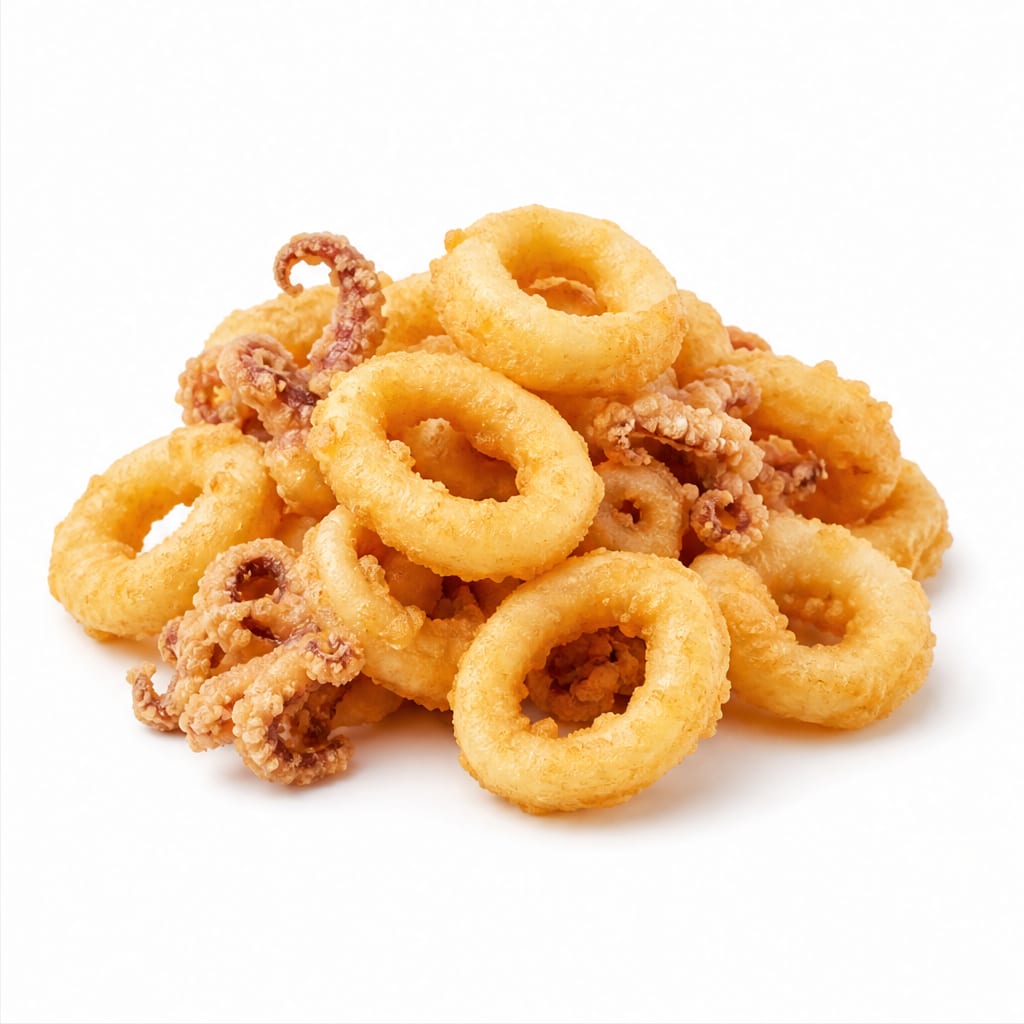
Compare with
Fried Calamari
Both are deep-fried seafood dishes. Fried calamari uses squid instead of octopus and typically lacks the sweet sauce, resulting in slightly lower sugar content.
Fried calamari is lower in sugar than takoyaki due to the absence of sweet sauces, though both are high in fried batter calories.
This food
Takoyaki
VS75% alike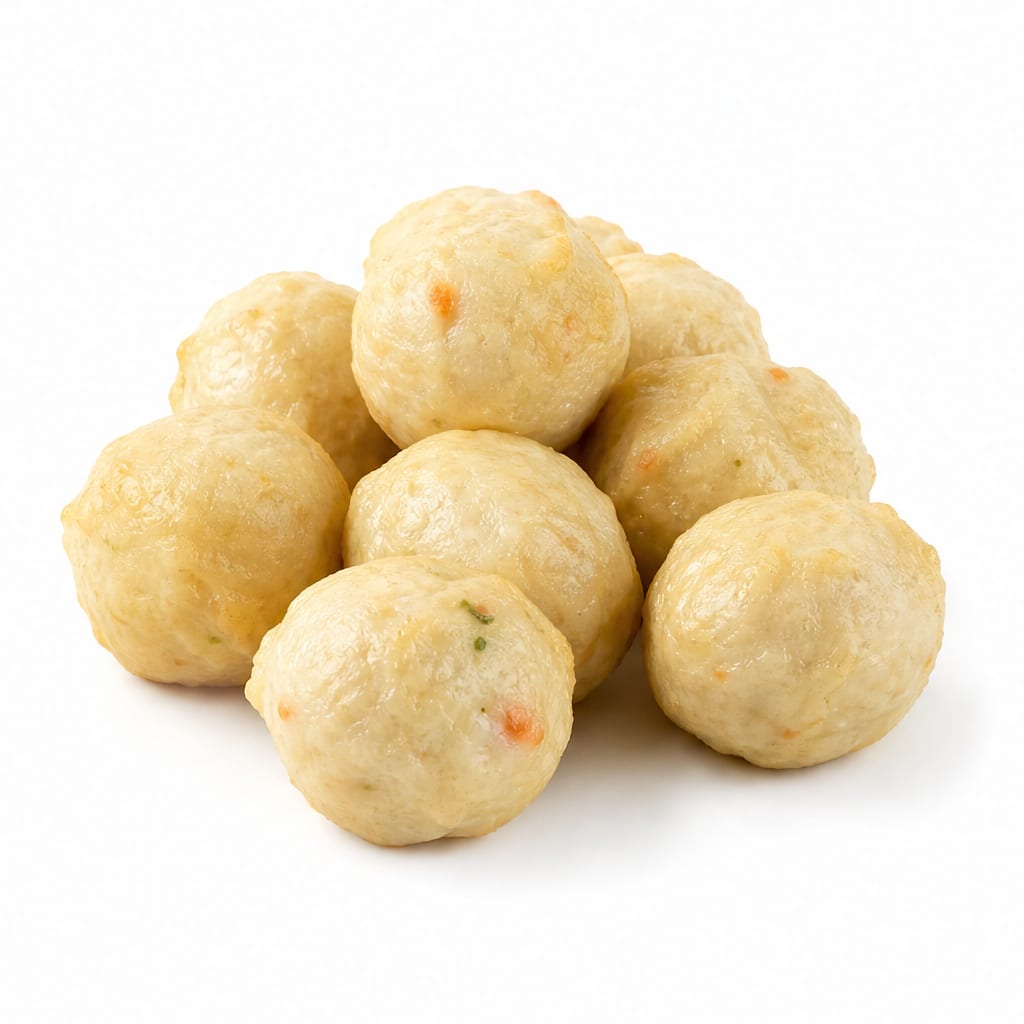
Compare with
Fish Balls
Fish balls are a processed seafood snack often served in soups or fried. Takoyaki contains more whole octopus but far more batter and heavy sauces.
Boiled fish balls are lower in fat and carbs than takoyaki, making them a lighter choice, though fried fish balls are nutritionally similar.
This food
Takoyaki
VS70% alike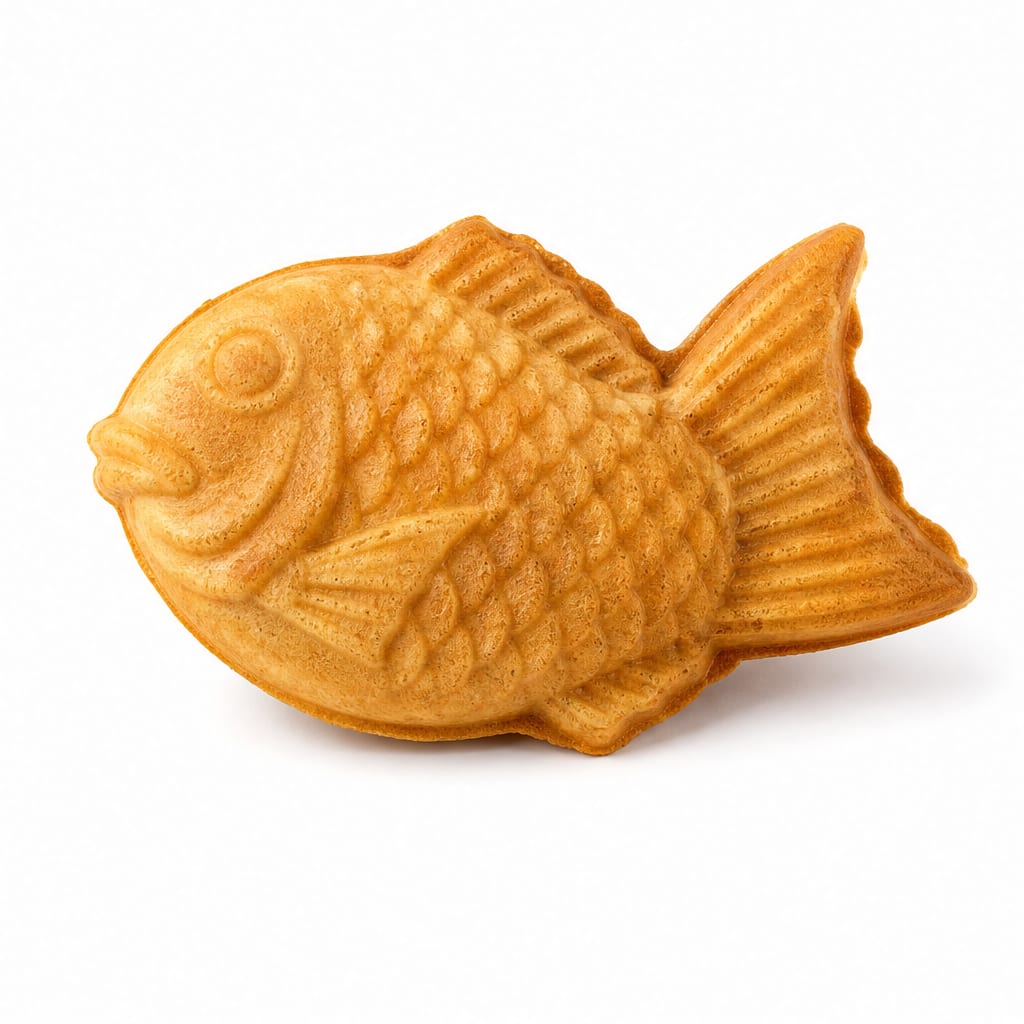
Compare with
Taiyaki
Taiyaki is a fish-shaped cake filled with sweet red bean paste. Takoyaki is savory and contains protein from octopus, whereas taiyaki is a purely sweet dessert.
Takoyaki provides more protein from octopus and less sugar than taiyaki, which is a sweet dessert cake.
This food
Takoyaki
VS65% alike
Compare with
Corn Dog
Corn dogs are sausages coated in cornmeal batter and fried. Corn dogs offer more protein from the sausage but contain highly processed meat, whereas takoyaki uses whole seafood.
Takoyaki uses whole octopus instead of processed sausage, but corn dogs provide more protein and satiety despite being highly processed.
This food
Takoyaki
VS60% alike.jpg)
Compare with
Dim Sum (Har Gow)
Har gow is a steamed shrimp dumpling. Because it is steamed rather than deep-fried, it is significantly lower in fat and calories than takoyaki.
Steamed dim sum like har gow is much lower in fat and calories than deep-fried takoyaki, making it a healthier dumpling choice.
This food
Takoyaki
VS55% alike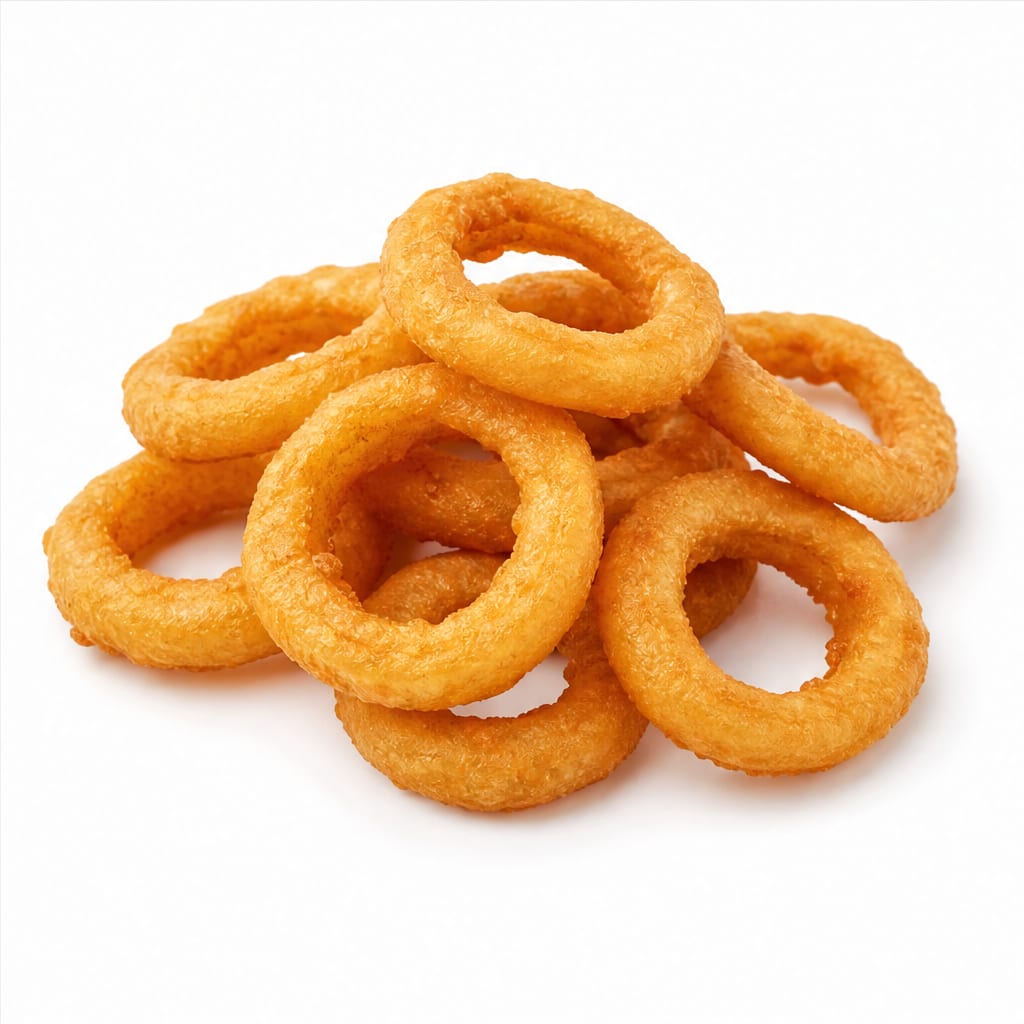
Compare with
Onion Rings
Both are deep-fried battered foods. Onion rings lack the protein from octopus and the sugar from takoyaki sauce, making them lower in sugar but higher in simple carbs.
Onion rings are lower in sugar than takoyaki, but takoyaki provides a small amount of protein from the octopus filling.
This food
Takoyaki
VS50% alike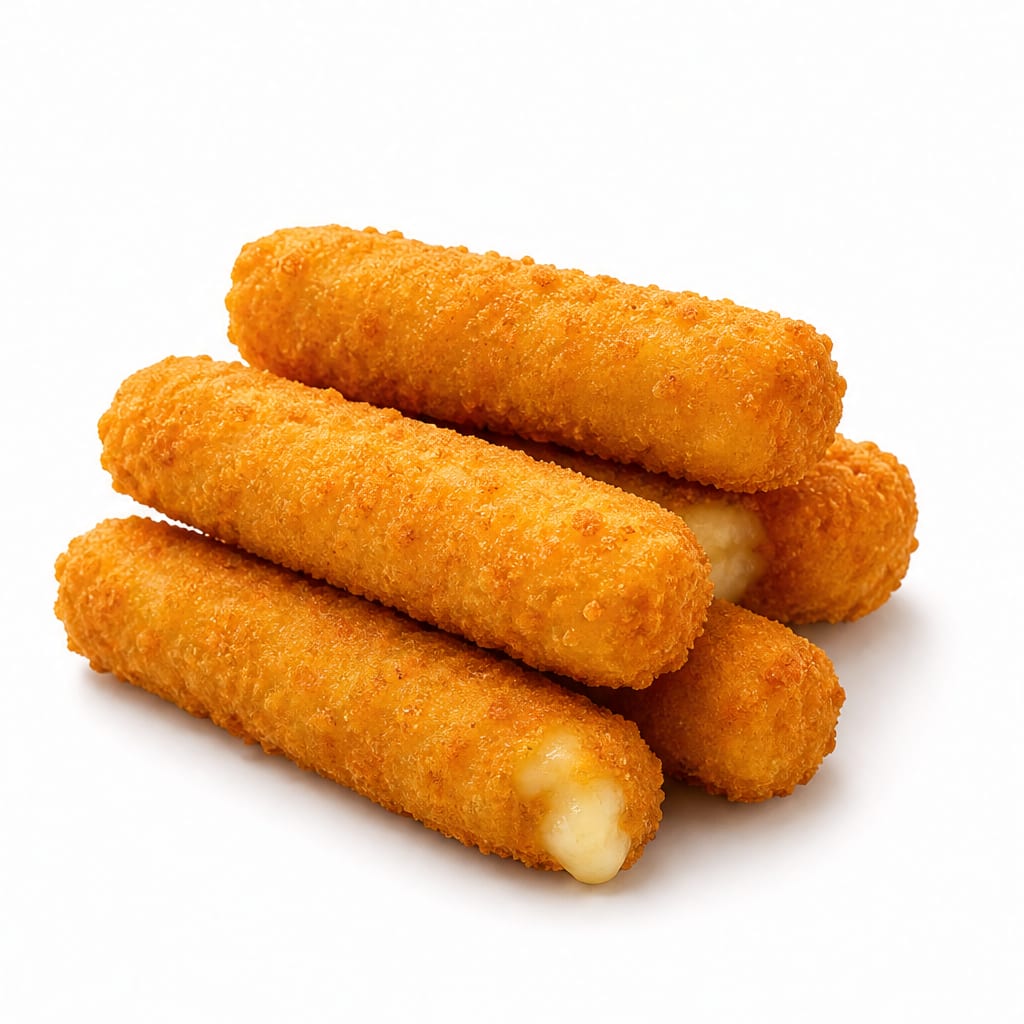
Compare with
Mozzarella Sticks
Mozzarella sticks are deep-fried cheese. They offer significantly more protein and calcium than takoyaki but are much higher in saturated fat.
Mozzarella sticks provide more protein and satiety than takoyaki, but they contain much more saturated fat from the cheese.
This food
Takoyaki
VS40% alike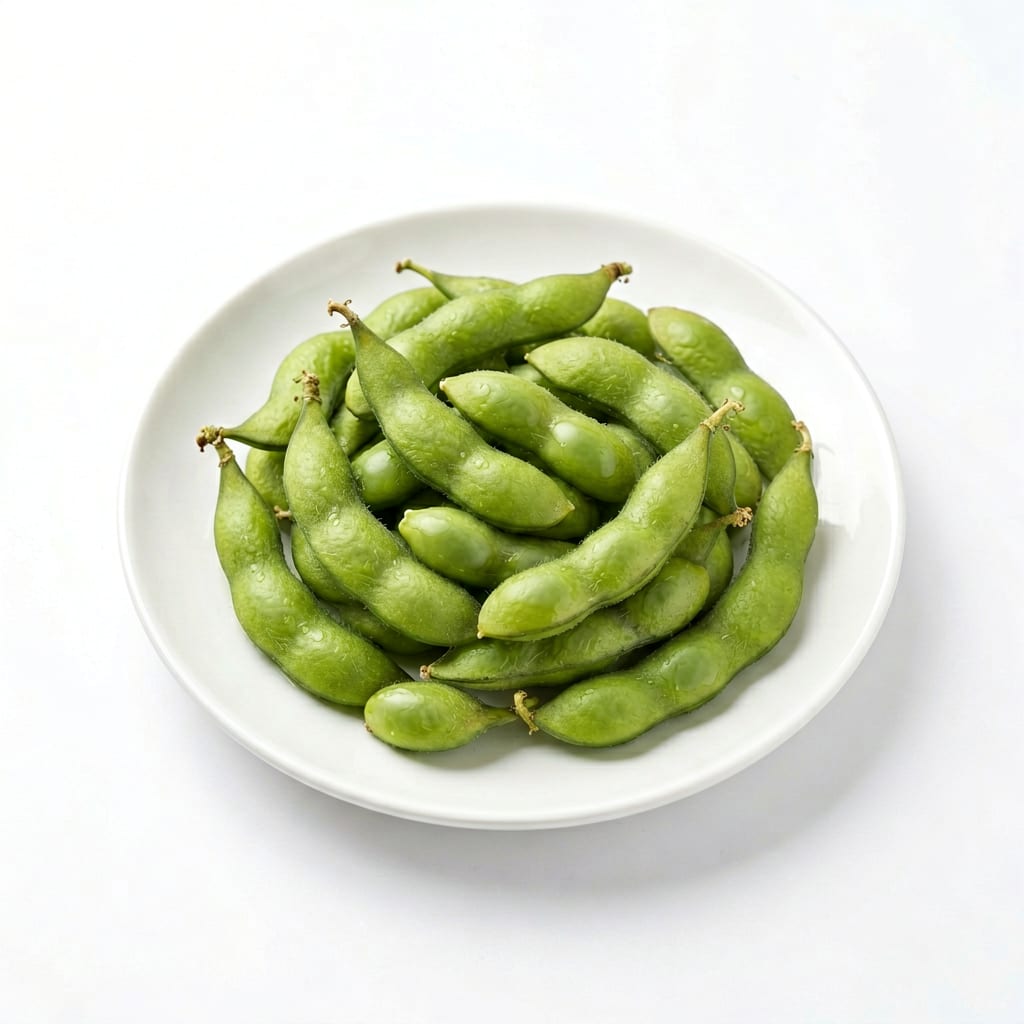
Compare with
Edamame
Edamame is a whole-food, plant-based snack. It is vastly superior to takoyaki in protein, fiber, and micronutrients, with no refined carbs or deep-frying.
Edamame is a high-protein, high-fiber whole food that completely outperforms takoyaki in satiety, blood sugar control, and weight loss.
Common questions
FAQ
Answers aligned with how people search for this food.
Is takoyaki healthy?
Takoyaki is not considered a health food. It is deep-fried, high in refined carbohydrates, and topped with high-sodium and high-fat sauces, though it does provide some protein and micronutrients from the octopus.
How many calories are in takoyaki?
A typical 6-piece serving of takoyaki contains around 260 to 300 calories, depending on the amount of oil and sauces used during preparation.
Is takoyaki high in carbs?
Yes, takoyaki is high in carbohydrates because the primary ingredient in the batter is refined wheat flour, and it is often topped with a sweetened savory sauce.
Can diabetics eat takoyaki?
Takoyaki is not ideal for diabetics. The refined wheat flour and sweet sauce can cause rapid blood sugar spikes. Portion control and pairing with fiber-rich foods are recommended if consumed.
Is takoyaki good for weight loss?
No, takoyaki is not good for weight loss. Its high energy density from deep-frying and mayonnaise makes it easy to overconsume calories without feeling full.
How much protein is in takoyaki?
Takoyaki contains a moderate amount of protein, roughly 6 to 7 grams per 100 grams, coming primarily from the small pieces of octopus and the egg in the batter.
Is takoyaki gluten-free?
No, traditional takoyaki is not gluten-free. The batter is made from wheat flour, and the sauces typically contain wheat-based soy sauce.
What are the healthiest Japanese street foods?
Healthier alternatives include yakitori (grilled chicken skewers), edamame, and sashimi, which are lower in refined carbs and unhealthy fats compared to takoyaki.
Transparency
Data confidence
Estimated confidence for nutrition data, interpretation, safety notes, and comparisons.
Nutrition data
Health analysis
Food safety
Comparisons