
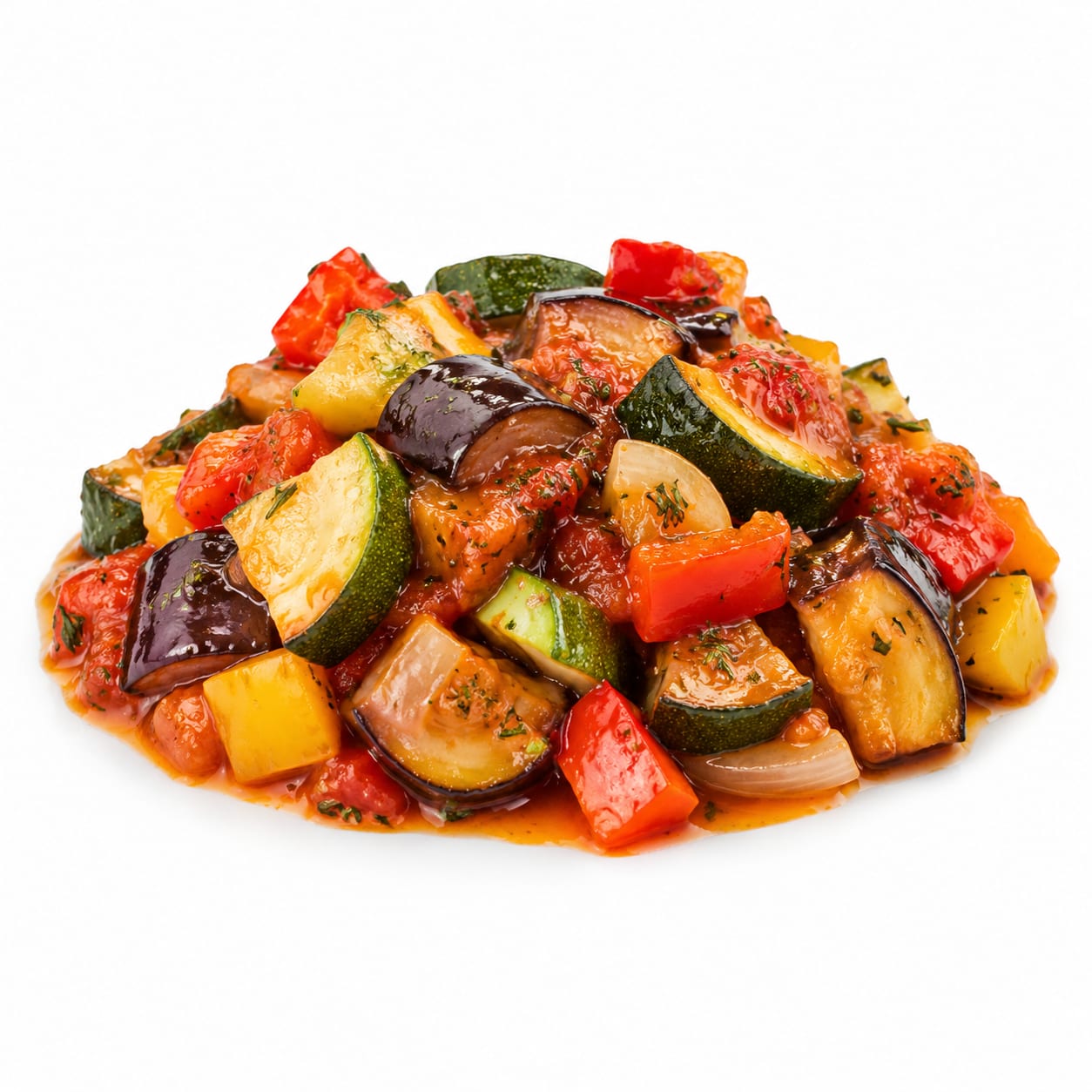
Vegetable Stew
Ratatouille
A low-calorie, nutrient-dense French vegetable stew rich in fiber and antioxidants.
A traditional French Provençal stewed vegetable dish made with eggplant, zucchini, bell peppers, tomatoes, onions, garlic, and herbs, cooked in olive oil.
high-volume low-calorie vegetable dish
Typical serving · 245g
Common varieties · traditional stewed, tian (layered), confit byaldi (fine sliced), basque pipérade
Overall context score across nutrition, safety, and diet fit
At a glance
Quick facts
Simple indicators based on nutrition, processing, and diet fit.
The story
What makes it unique
Ratatouille is a high-volume, low-energy-density food due to its high water and fiber content from mixed vegetables. Digestion is moderately slowed by soluble fiber and olive oil, resulting in a low glycemic response. The macronutrient profile is carbohydrate-dominant with minimal protein, and processing is minimal if prepared from fresh whole ingredients.
Varieties: traditional stewed · tian (layered) · confit byaldi (fine sliced) · basque pipérade
Per 100g
Nutrition breakdown
Macro balance and key metrics at a glance.
Energy
Density 0.55 kcal/g
Protein
Carbs
Fat
Fiber
Sugar
3.5 g
Sodium
210 mg
Potassium
310 mg
Glycemic index
25
Glycemic load
2
Water content
85%
Standout compounds
Nutrient highlights
Vitamin C
highSupports immune function and collagen synthesis
Lycopene
highPowerful antioxidant that supports heart health
Fiber
moderatePromotes digestive regularity and gut microbiome health
Potassium
moderateHelps regulate blood pressure and fluid balance
Wellness map
Health scores & processing
NOVA processing scale
minimally processed · Whole food
Made from fresh or minimally processed vegetables, olive oil, and herbs with no industrial additives.
Diet compatibility
- Weight loss
- Muscle gain
- Diabetes
- Gut health
- Low carb
- High protein
- Heart health
Relative standing
Food rankings
Qualitative ranks compared to similar whole foods.
- Satietygood
- Blood sugarexcellent
- Nutrient densityexcellent
- Fitness fuelmoderate
- Processing qualityexcellent
Eat with confidence
Food safety profile
Ratatouille is generally very safe. The primary concern is pesticide residue on conventional bell peppers and tomatoes, which frequently appear on watch lists. Washing ingredients thoroughly reduces this risk.
Evidence confidence 85%
- Pesticidesmoderate
- Antibioticslow
- Heavy metalslow
- Contaminationlow
Watch for
- pesticide residues on conventional peppers and tomatoes
Safer choices
Organic bell peppers, tomatoes, and eggplant
Prep tips
Wash all vegetables thoroughly under running water; consider soaking in a baking soda solution to reduce surface pesticides.
Standard agricultural pesticide limits apply to constituent vegetables.
Deep dive
Health analysis
How this food may fit different goals and preparation choices.
Weight loss
Low energy density and high water content allow large portion sizes with minimal calories, promoting fullness.
Blood sugar
Low glycemic index and high fiber content prevent rapid blood sugar spikes, making it highly suitable for glucose management.
Fitness & energy
Provides slow-releasing carbohydrates but lacks sufficient protein for muscle recovery, requiring pairing with a protein source.
Gut health
Diverse vegetable fiber feeds beneficial gut bacteria, supporting a healthy microbiome and regular digestion.
Processing quality
Typically made from whole, fresh ingredients with no artificial additives, retaining maximum nutritional value.
Food safety
Minimal microbial risk when cooked properly. Main concern is pesticide exposure from conventional vegetables.
Common mistakes
Overcooking until mushy destroys texture and some heat-sensitive vitamins; using excessive olive oil significantly increases calorie density.
Best preparation
Slow simmering or roasting to concentrate flavors while preserving structural integrity and nutrient content.
Practical guide
Best use cases
When and how this food fits real eating patterns.
high-volume low-calorie eating
Fill up on a large portion without exceeding daily calorie limits.
nutrient-dense side dish
Pairs well with lean proteins like chicken or fish for a balanced meal.
meal prep staple
Flavors improve over time, making it an excellent make-ahead healthy lunch or dinner component.
Balance sheet
Pros & cons
Upsides
- Very low calorie density supports weight management
- Rich in diverse antioxidants from multiple vegetables
- High fiber promotes satiety and gut health
- Naturally free of added sugars
- Versatile as a side or main dish
Trade-offs
- Very low in protein, requiring pairing for a complete meal
- Olive oil content can significantly increase calories if not measured
- Can be high in sodium if canned tomatoes or added salt are overused
- Requires chopping and prep time for fresh ingredients
Fit check
Who is it for?
Great match
- weight loss diets
- blood sugar management
- Mediterranean diet
- increasing daily vegetable intake
Consider alternatives
- strict ketogenic diets
- high-protein diets
- those needing low-fiber diets for digestive rest
Side by side
How it compares
Open the full head-to-head analysis for nutrition, safety, and practical tradeoffs.
This food
Ratatouille
VS85% alike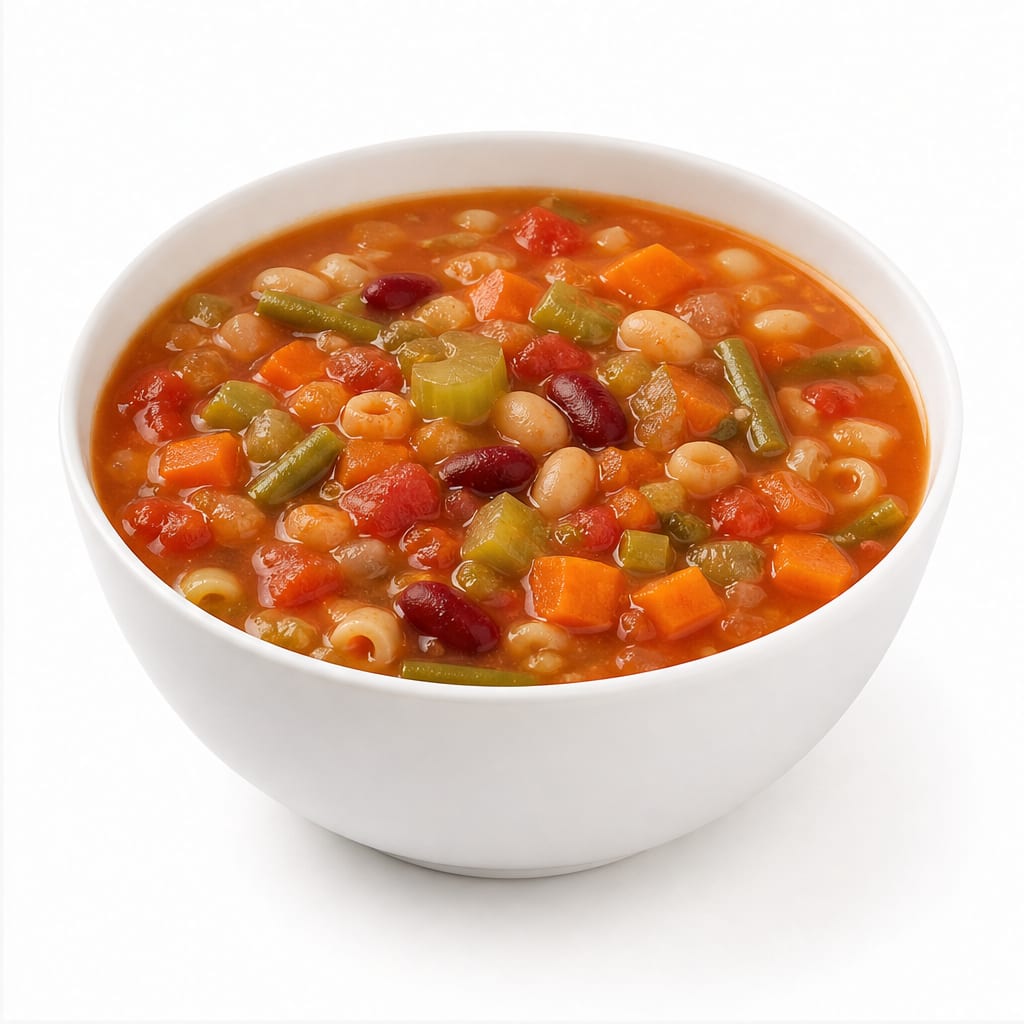
Compare with
Minestrone
Minestrone adds pasta and beans, increasing protein and carbs. Ratatouille is lower calorie and carb.
Ratatouille is lower in calories and carbs than minestrone, which contains pasta and beans, making minestrone better for satiety and fitness fuel.
This food
Ratatouille
VS90% alike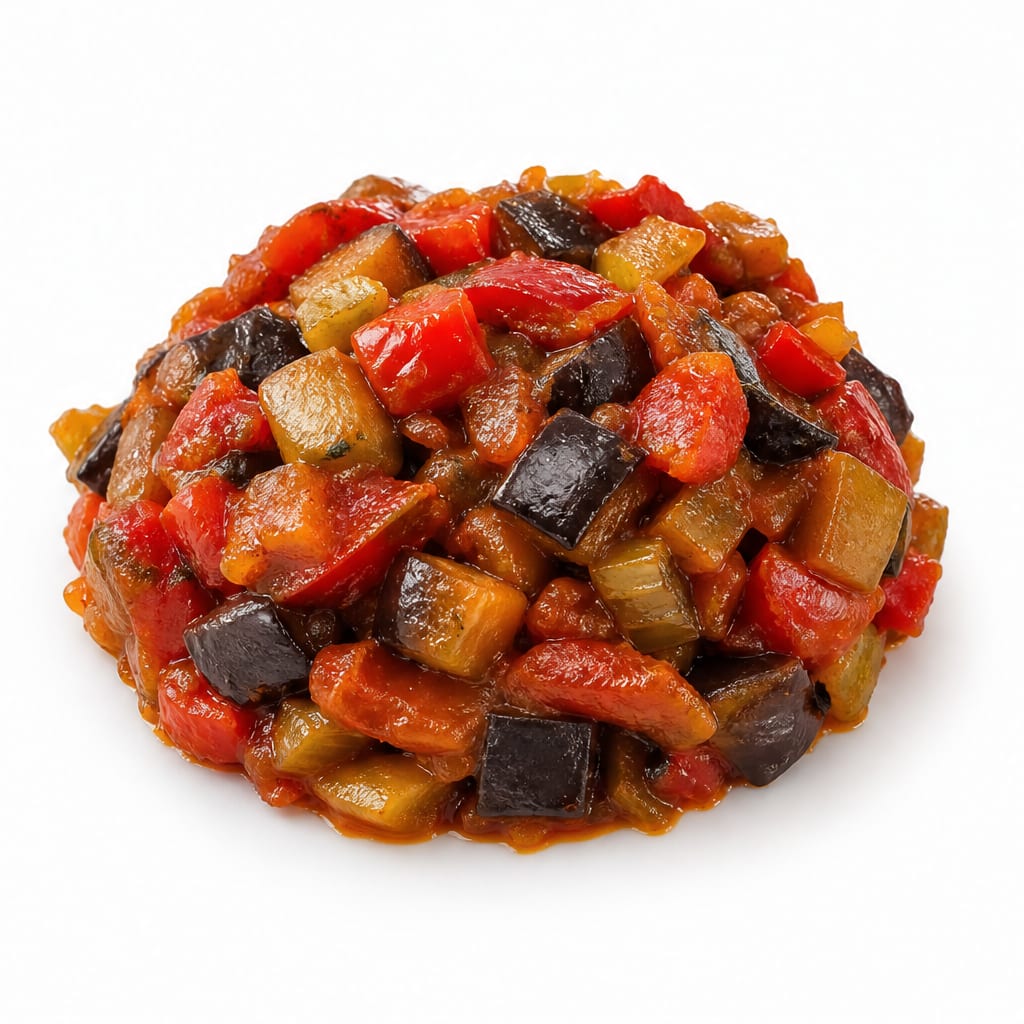
Compare with
Caponata
Caponata is sweeter with added sugar, vinegar, and olives. Ratatouille is lower sugar and calories.
Ratatouille is lower in sugar and calories than caponata, which often contains added sugar and more olive oil.
This food
Ratatouille
VS80% alike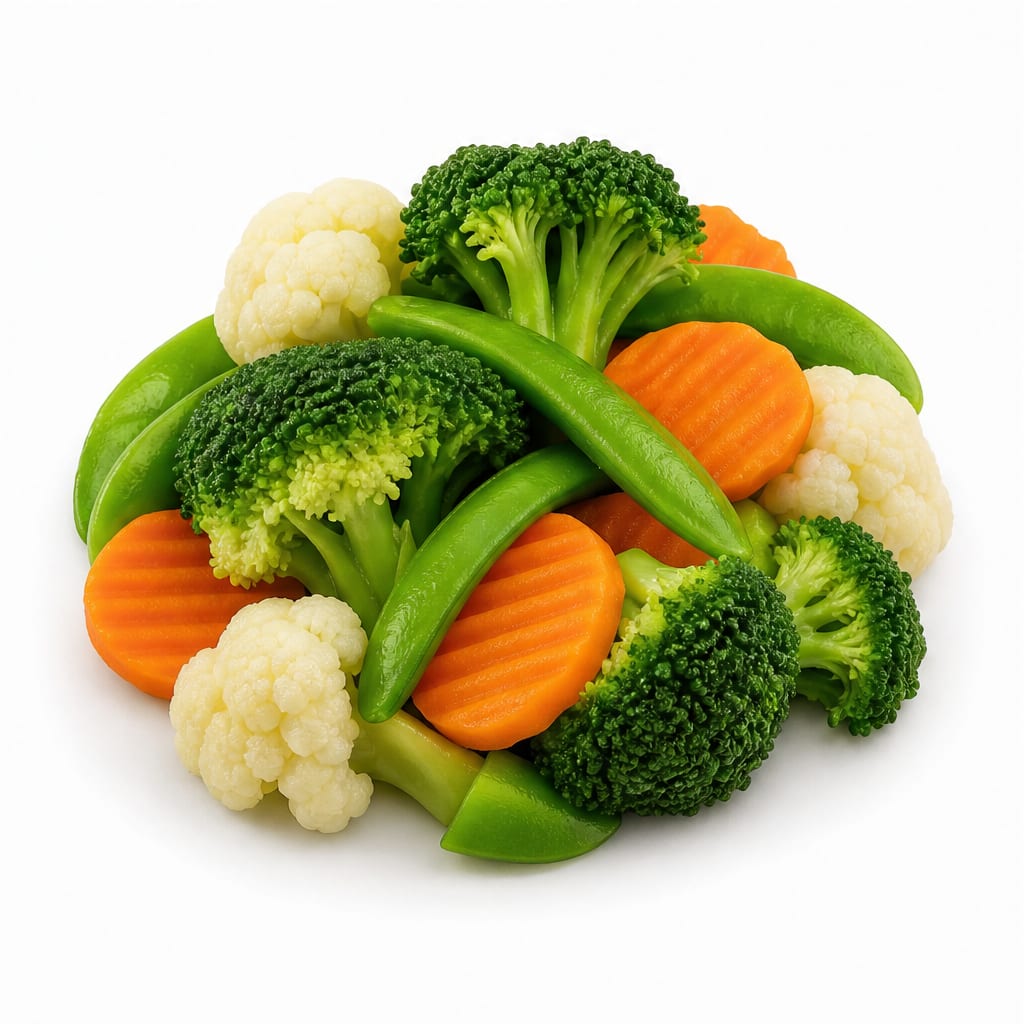
Compare with
Steamed Vegetables
Steamed has no oil, slightly fewer calories. Ratatouille has better antioxidant absorption due to oil.
Steamed vegetables are slightly lower in calories, but ratatouille's olive oil boosts absorption of fat-soluble vitamins and improves satiety.
This food
Ratatouille
VS85% alike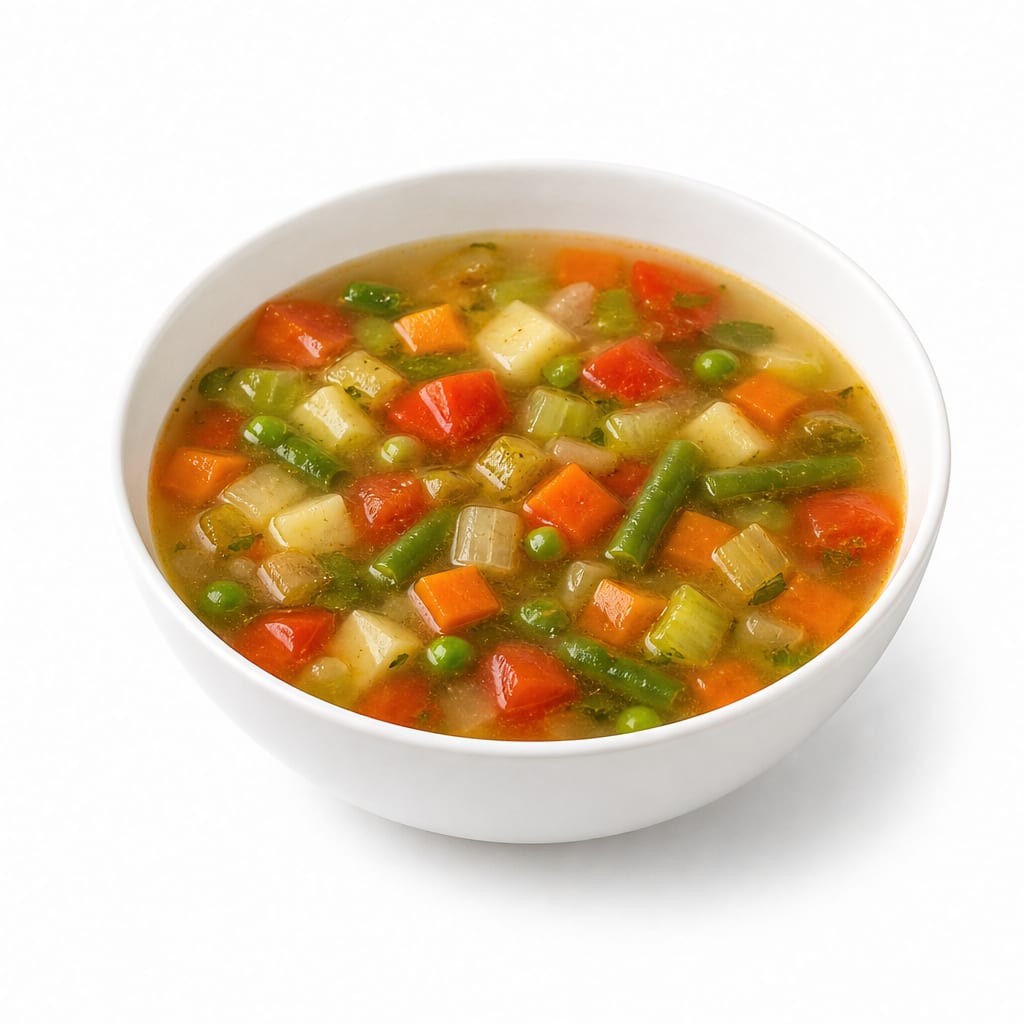
Compare with
Vegetable Soup
Soup is higher water, lower calorie density but less satiating fiber. Ratatouille is thicker, more fiber.
Vegetable soup is lower in calories due to higher water content, but ratatouille provides more fiber and a thicker texture for better satiety.
This food
Ratatouille
VS70% alike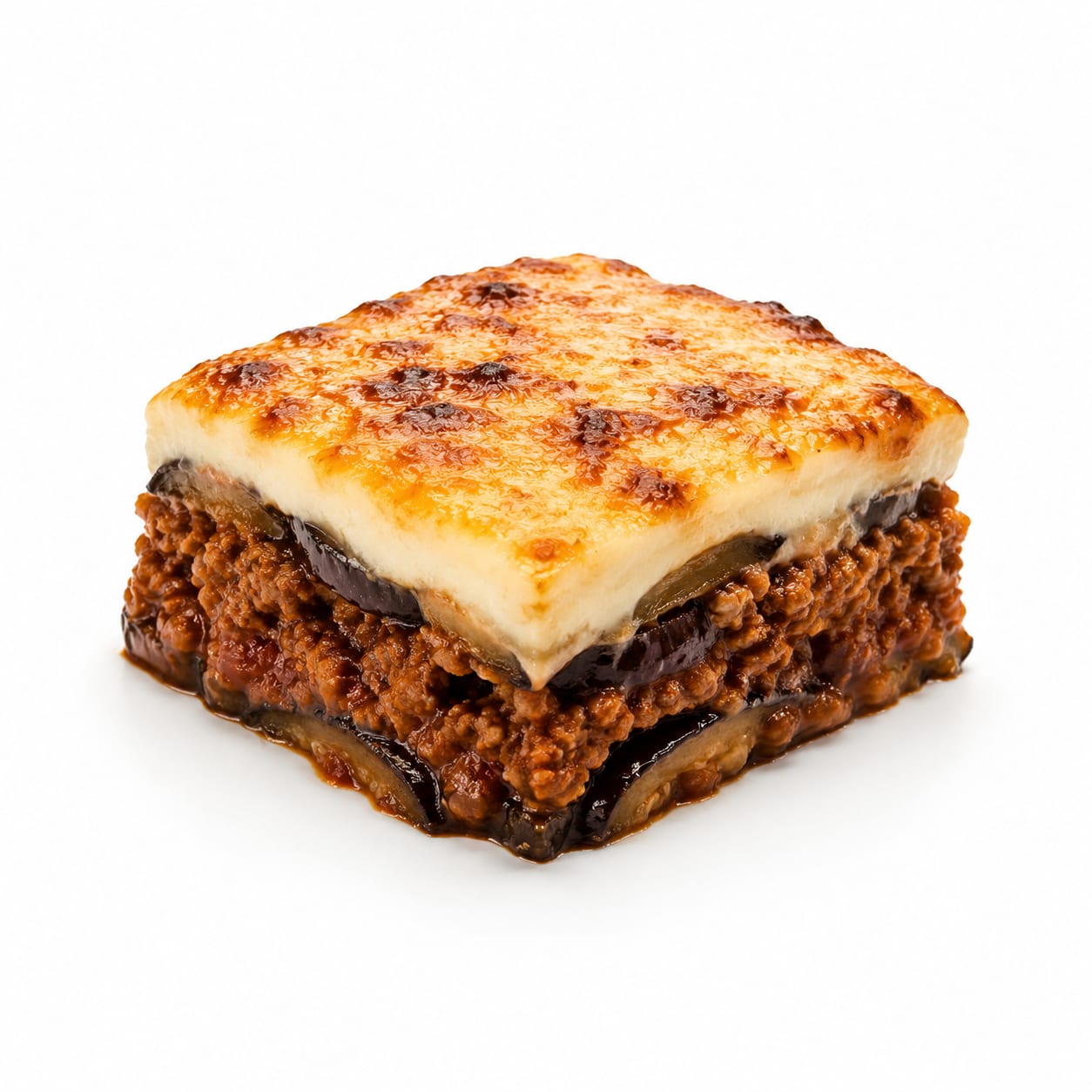
Compare with
Moussaka
Moussaka has meat, cheese, and bechamel. Much higher calorie and fat. Ratatouille is much lighter.
Ratatouille is a much lighter, low-calorie dish compared to moussaka, which is heavy with meat, cheese, and high-fat dairy.
This food
Ratatouille
VS65% alike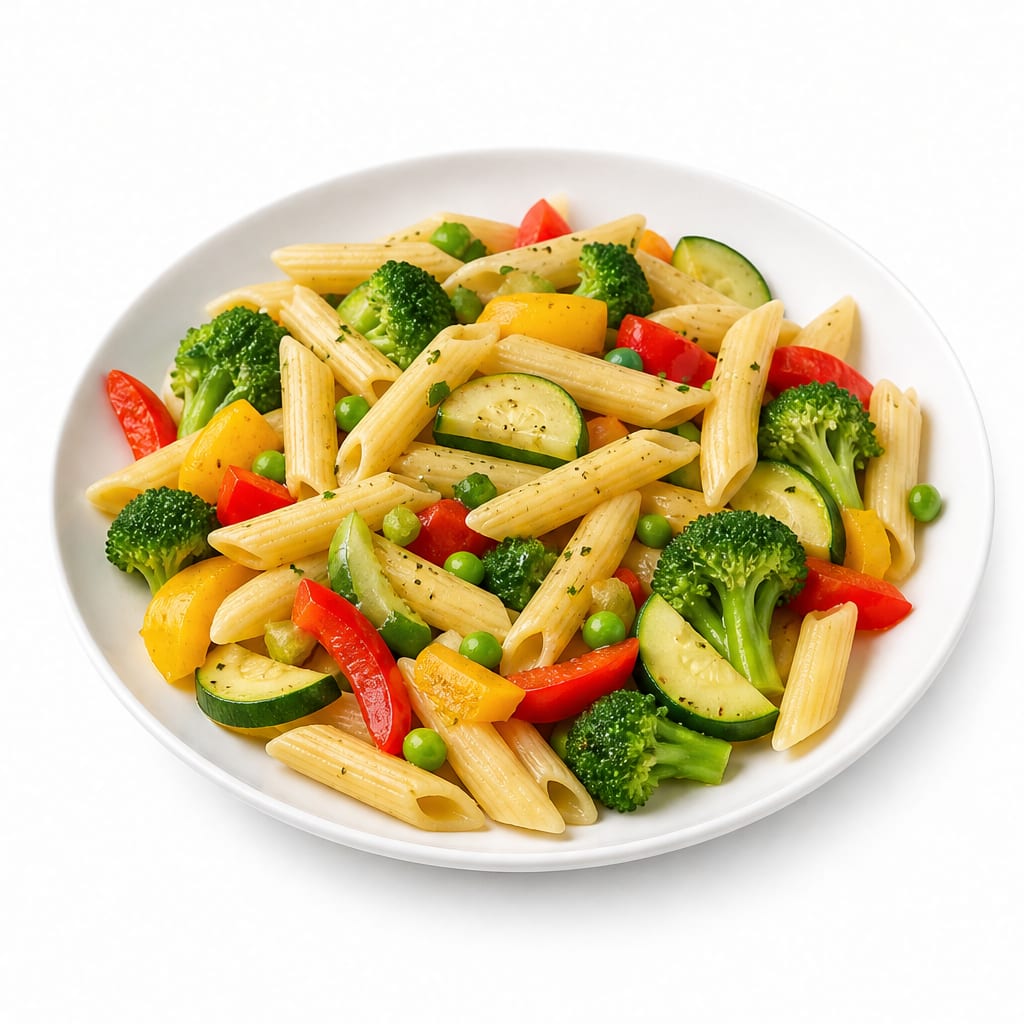
Compare with
Pasta Primavera
Primavera has pasta, making it high carb and calorie. Ratatouille is low carb and lighter.
Ratatouille is far lower in carbohydrates and calories than pasta primavera, making it the better choice for blood sugar control and weight loss.
This food
Ratatouille
VS75% alike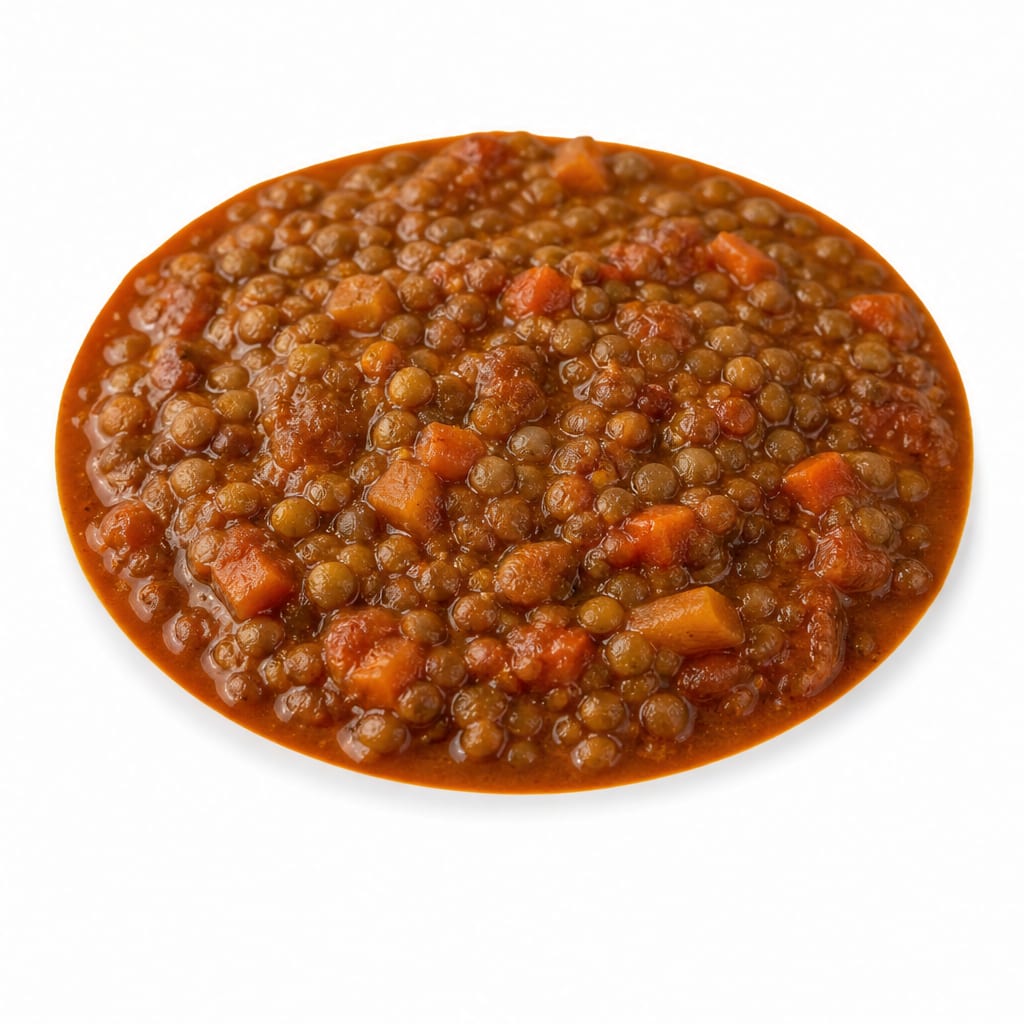
Compare with
Lentil Stew
Lentil stew has much more protein and fiber. Ratatouille is lighter and lower calorie.
Lentil stew provides significantly more protein and fiber for satiety and muscle support, while ratatouille is a lighter, lower-calorie alternative.
This food
Ratatouille
VS70% alike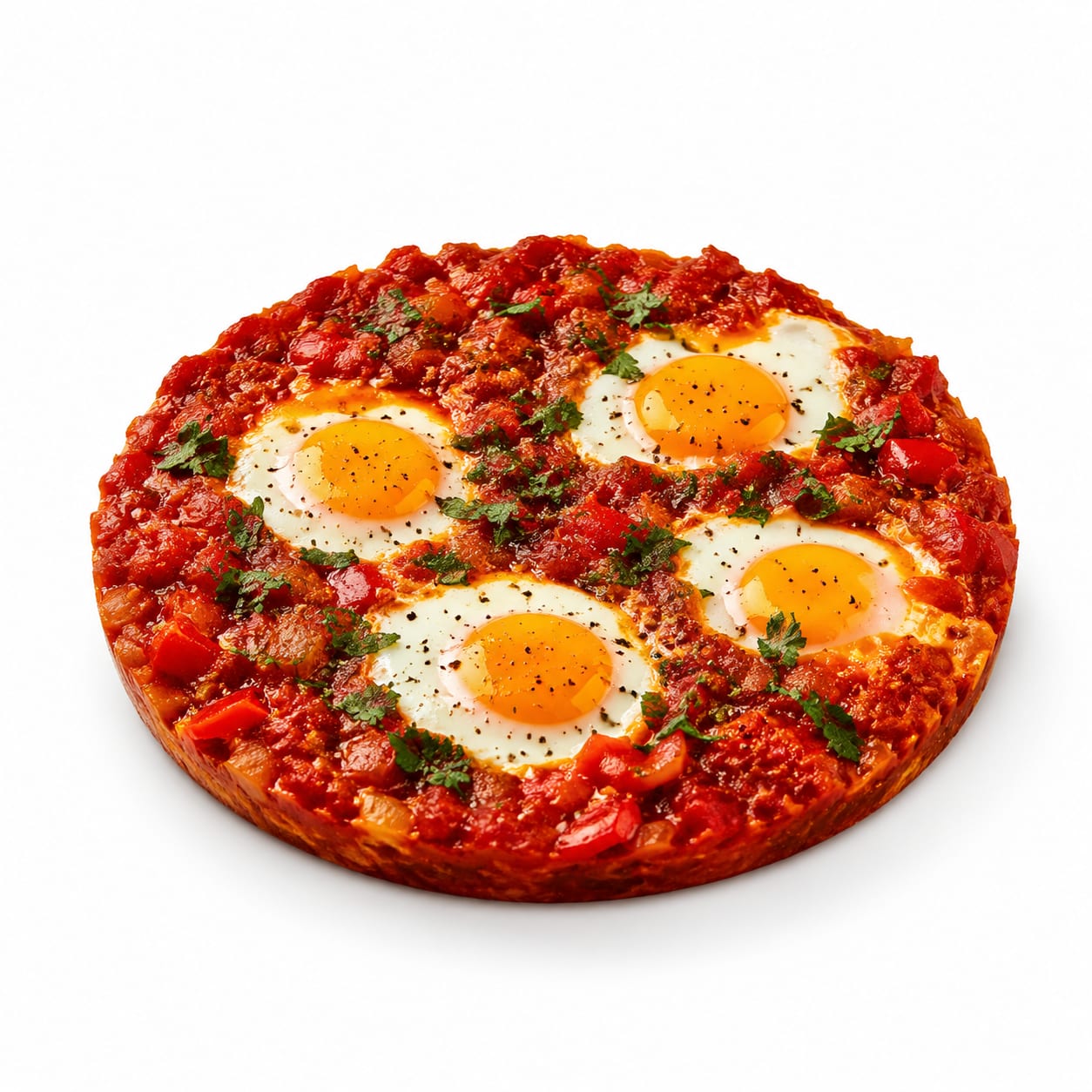
Compare with
Shakshuka
Shakshuka has eggs, higher protein and fat. Ratatouille is lower calorie and purely vegetable.
Shakshuka offers more protein from eggs, making it better for fitness, but ratatouille is lower in calories and fat for weight loss.
This food
Ratatouille
VS75% alike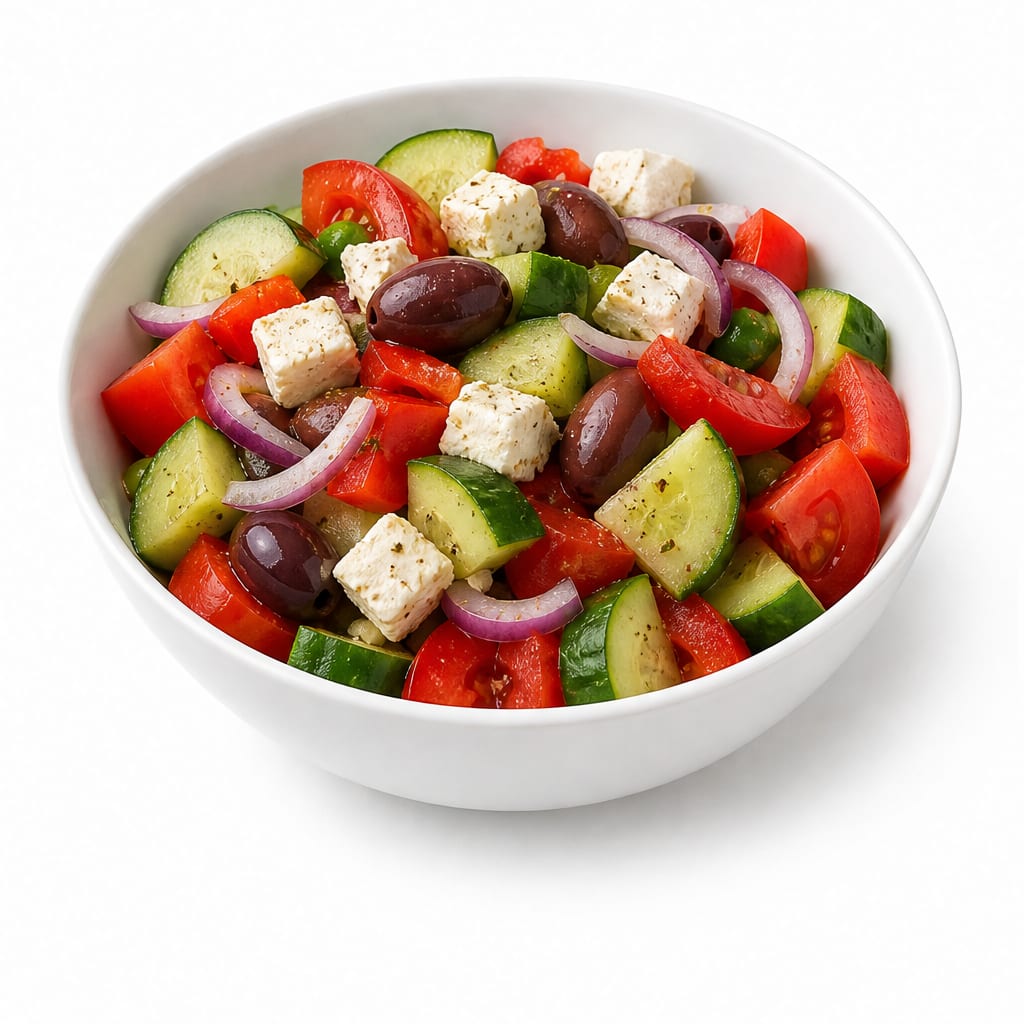
Compare with
Greek Salad
Greek salad is raw, high fat from feta and olives. Ratatouille is cooked, lower fat.
Ratatouille is lower in calories and fat than a Greek salad, which is heavy on olive oil and feta cheese, though both are Mediterranean staples.
This food
Ratatouille
VS75% alike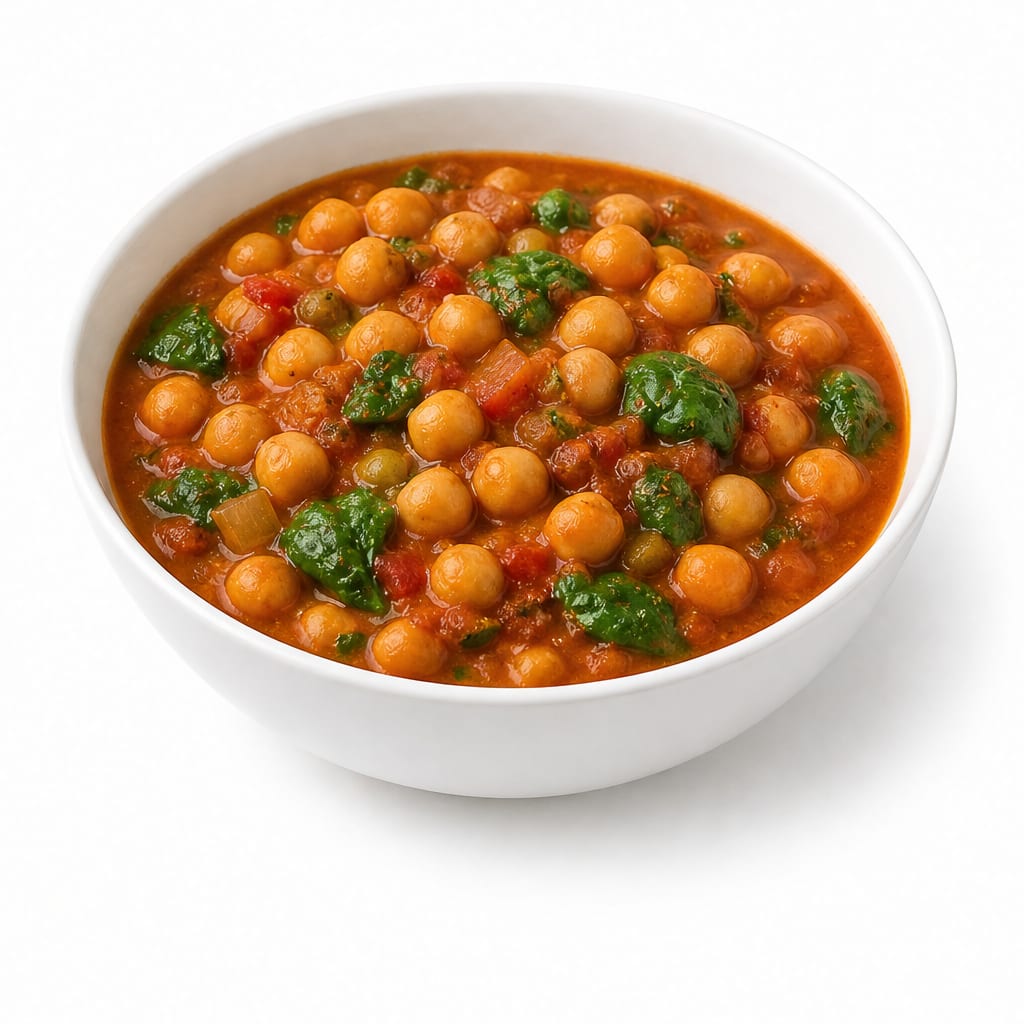
Compare with
Chickpea Stew
Chickpea stew has more protein and carbs. Ratatouille is lower calorie and lighter.
Chickpea stew provides more protein and sustained energy for fitness, while ratatouille is the lower-calorie option for weight loss.
Common questions
FAQ
Answers aligned with how people search for this food.
Is ratatouille good for weight loss?
Yes, it is very low in calories and high in fiber and water, which helps you feel full on fewer calories.
Can diabetics eat ratatouille?
Yes, the low glycemic index and high fiber content help stabilize blood sugar levels without causing spikes.
Is ratatouille a low carb dish?
Yes, it is relatively low in net carbs, making it suitable for moderate low-carb diets.
How many calories are in a cup of ratatouille?
A one-cup serving (about 245 grams) contains approximately 130 to 140 calories, depending on the amount of olive oil used.
Is ratatouille high in fiber?
Yes, the combination of eggplant, zucchini, and tomatoes provides a good source of dietary fiber.
Is store-bought ratatouille healthy?
It can be, but pre-packaged versions often contain added sodium and sugars, so checking the nutrition label is recommended.
What is the nutritional benefit of ratatouille?
It is rich in vitamins A and C, potassium, and antioxidants like lycopene, while being low in fat and calories.
Can you eat ratatouille on a Mediterranean diet?
Absolutely, it is a quintessential Mediterranean dish made with fresh vegetables and olive oil.
Transparency
Data confidence
Estimated confidence for nutrition data, interpretation, safety notes, and comparisons.
Nutrition data
Health analysis
Food safety
Comparisons