
Nutrition comparison
Ratatouille vs Greek Salad: Which Mediterranean Dish Is Healthier?
Compare Ratatouille and Greek Salad on nutrition, sodium, digestion, protein, and convenience. Find out which Mediterranean classic fits your health goals better.
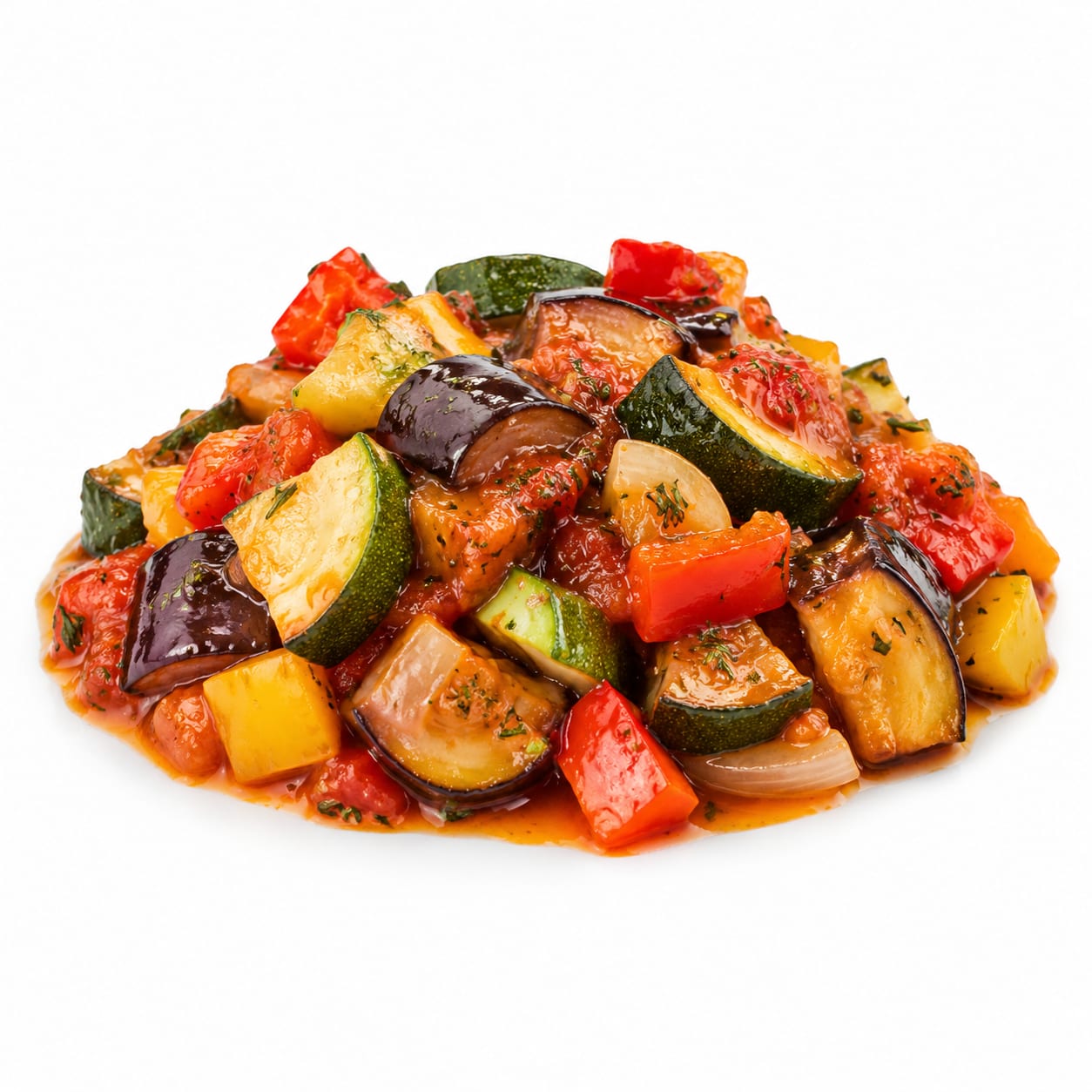
Ratatouille
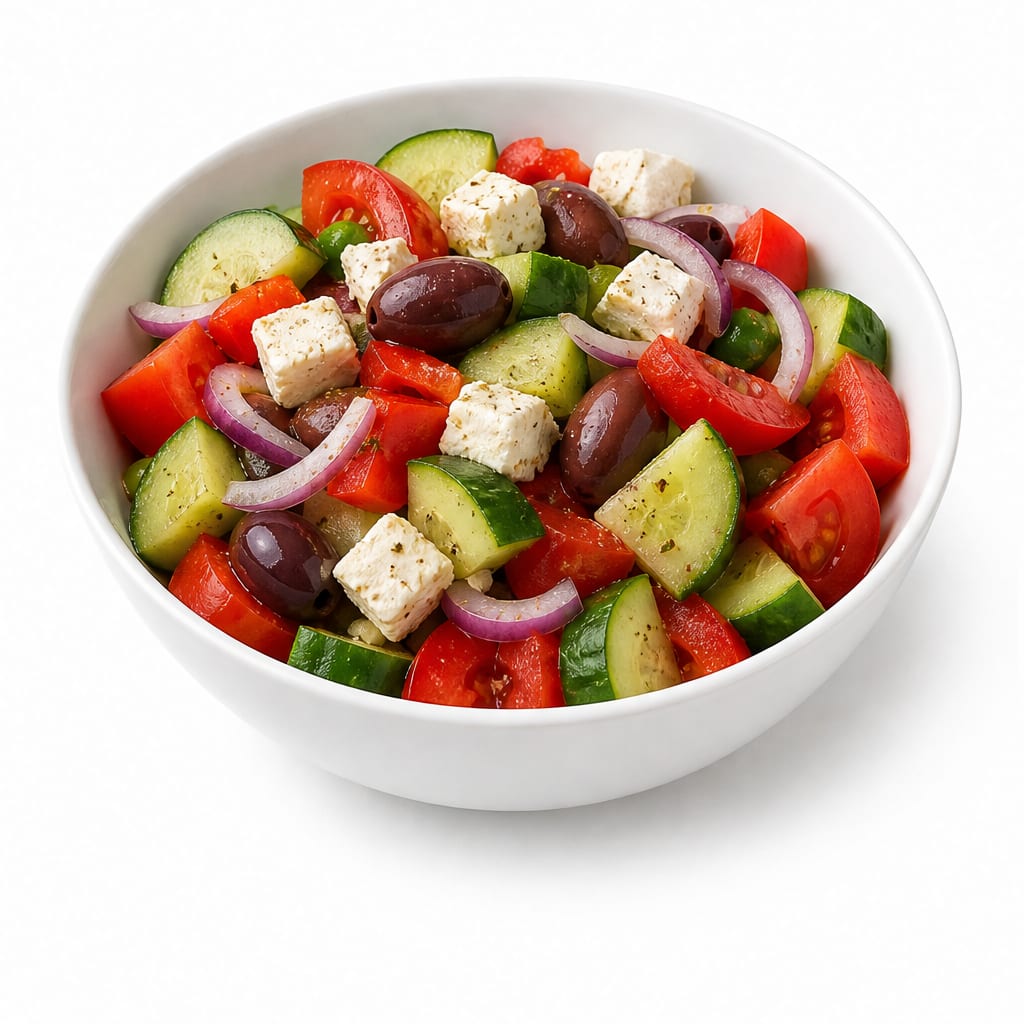
Greek Salad
Ratatouille is warm, comforting, and easier to digest; Greek Salad is lighter, higher in protein, and preserves more raw nutrients — choose based on what your body needs right now.
Greek Salad edges ahead slightly for daily practicality and protein content, but Ratatouille wins on digestive comfort and sodium. The close scores reflect how context-dependent this choice truly is.
Cooked comfort and digestive ease versus raw freshness and protein content
At a glance
Executive summary
Overall
It depends
Healthier
It depends
More practical
Greek Salad
Daily use
Greek Salad
Key comparison lenses
warm comfort vs fresh lightness
Ratatouille is a slow-cooked stew that feels like a hug; Greek Salad is crisp and refreshing — the temperature and texture gap defines the entire experience
sodium awareness
Feta cheese and Kalamata olives make Greek Salad surprisingly high in sodium, which matters for blood pressure and daily limits
digestive ease
Cooked vegetables in Ratatouille are gentler on sensitive stomachs; raw onions and cucumbers in Greek Salad can trigger bloating
protein and satiety
Feta adds meaningful protein and fat that keeps you full longer, while Ratatouille relies mostly on fiber for satiety
vitamin preservation
Raw vegetables in Greek Salad retain heat-sensitive vitamins like C and some B vitamins that cooking degrades
Best choice for
Ratatouille
- People with sensitive digestion or IBS who struggle with raw vegetables
- Cold weather meals where warmth and comfort matter
- Anyone wanting a low-sodium vegetable dish
- Meal prep enthusiasts — Ratatouille stores and reheats beautifully
- Older adults who need softer, easier-to-chew foods
Greek Salad
- Hot summer days when a cool meal feels right
- Anyone tracking protein intake who benefits from feta
- People wanting maximum vitamin retention from raw vegetables
- Busy people who need a 10-minute meal with zero cooking
- Mediterranean diet followers wanting the classic authentic option
Least suitable for
Ratatouille
- People short on time — Ratatouille takes 45-60 minutes to cook properly
- Anyone craving something crisp and refreshing
- Those watching calorie intake if the recipe is heavy on olive oil
- People who dislike soft, stewed textures
Greek Salad
- People on low-sodium diets — feta and olives are salt bombs
- Anyone with raw vegetable intolerance or bloating issues
- Those wanting a warm, comforting meal experience
- People who need a dish that reheats well as leftovers
Deep comparison
Dimension by dimension
Each lens scores both foods and breaks down who each option suits.
- Dimension 1 · Priority 90Ratatouille
digestive comfort
Ratatouille · 88Greek Salad · 58Ratatouille's cooked vegetables break down tough fibers, making them significantly easier on the gut.
Tradeoff
You lose some heat-sensitive vitamins but gain a meal that will not leave you bloated or gassy.
Why it matters
Raw onions, cucumbers, and peppers in Greek Salad are common triggers for IBS, acid reflux, and general bloating — especially in sensitive individuals.
Real-world impact
If you have ever felt uncomfortably full or gassy after a raw salad, Ratatouille is the safer bet for a calm stomach afterward.
Ratatouille
- IBS sufferers
- People recovering from stomach illness
- Anyone who feels bloated after raw vegetables
Better for
- Anyone who finds soft textures unappetizing
Worse for
Greek Salad
- People with iron digestion issues who tolerate raw produce well
Better for
- People prone to gas and bloating from raw alliums and crucifers
Worse for
- Dimension 2 · Priority 88Ratatouille
sodium load
Ratatouille · 85Greek Salad · 42Ratatouille is naturally low in sodium; Greek Salad can easily deliver 600-900mg of sodium per serving from feta and olives alone.
Tradeoff
Greek Salad's saltiness makes it more flavorful and satisfying immediately, but it can blow past your sodium budget without you noticing.
Why it matters
A single serving of Greek Salad can contain a third to half of your daily sodium limit, which is a serious concern for blood pressure and heart health.
Real-world impact
If you eat Greek Salad daily, the sodium from feta and olives adds up fast — Ratatouille lets you control salt entirely.
Ratatouille
- People with hypertension
- Anyone watching sodium for kidney health
- Those who already eat processed foods high in salt
Better for
- People who find low-sodium food bland without extra seasoning
Worse for
Greek Salad
- Athletes who need sodium replenishment after heavy sweating
Better for
- Anyone on a sodium-restricted diet
Worse for
- Dimension 3 · Priority 82Greek Salad
protein and satiety
Ratatouille · 48Greek Salad · 72Feta cheese gives Greek Salad a meaningful protein and fat boost that Ratatouille simply lacks.
Tradeoff
The protein comes with significant sodium and saturated fat from feta — not a free lunch.
Why it matters
Without protein, Ratatouille alone may leave you hungry again within 90 minutes, while Greek Salad's feta slows digestion and extends fullness.
Real-world impact
If Ratatouille is your main dish, you will likely need to add a protein source; Greek Salad stands alone better as a light meal.
Ratatouille
- Vegans who skip feta anyway and add their own plant protein
Better for
- People relying on it as a complete meal without sides
Worse for
Greek Salad
- Anyone eating it as a standalone light meal
- Vegetarians needing more protein variety
Better for
- Vegans who would omit the feta and lose the protein advantage
Worse for
- Dimension 4 · Priority 78Greek Salad
vitamin retention
Ratatouille · 62Greek Salad · 88Raw vegetables in Greek Salad preserve vitamin C and heat-sensitive B vitamins that cooking degrades.
Tradeoff
Cooking actually boosts lycopene absorption in Ratatouille's tomatoes, so it is not a total loss — different vitamins, different winners.
Why it matters
Vitamin C is one of the most heat-sensitive nutrients, and a raw salad delivers significantly more of it than any cooked dish.
Real-world impact
If you are relying on vegetables for your vitamin C intake, Greek Salad does a better job; if you want lycopene for prostate health, Ratatouille's cooked tomatoes actually deliver more.
Ratatouille
- People specifically seeking lycopene benefits from cooked tomatoes
- Anyone who absorbs carotenoids better from cooked vegetables
Better for
- Those counting on their vegetable dish for vitamin C
Worse for
Greek Salad
- Anyone wanting maximum vitamin C from their meal
- People who do not take a vitamin C supplement
Better for
- People who want the lycopene advantage of cooked tomatoes
Worse for
- Dimension 5 · Priority 80Greek Salad
convenience and speed
Ratatouille · 40Greek Salad · 90Greek Salad assembles in under 10 minutes with zero cooking; Ratatouille needs 45-60 minutes of simmering.
Tradeoff
Ratatouille reheats and freezes beautifully, so batch cooking can offset the time investment — but you still need that first investment.
Why it matters
On a busy weeknight, the 50-minute time difference is the deciding factor for most people.
Real-world impact
If you are starving after work, Greek Salad is on the table in minutes; Ratatouille requires planning ahead or meal prepping on weekends.
Ratatouille
- Meal preppers who cook once and eat for days
- People who enjoy slow cooking as a relaxing ritual
Better for
- People who decide what to eat at the last minute
Worse for
Greek Salad
- Busy professionals with limited weeknight time
- Anyone who wants a healthy meal with zero cooking
Better for
- Those who want a dish that improves as leftovers the next day
Worse for
- Dimension 6 · Priority 76Ratatouille
comfort and emotional satisfaction
Ratatouille · 88Greek Salad · 60Warm, aromatic, slow-cooked Ratatouille delivers a level of emotional comfort that a cold salad simply cannot match.
Tradeoff
That comfort comes at the cost of time and effort — you cannot rush warmth.
Why it matters
Emotional satisfaction drives long-term dietary adherence; a meal that feels comforting is easier to stick with than one that feels like a chore.
Real-world impact
On a rainy, stressful day, Ratatouille feels like self-care; Greek Salad feels like discipline.
Ratatouille
- Emotional eaters who need warmth and comfort
- Cold weather meals
- People for whom food is a nurturing experience
Better for
- Summer heat when a warm stew feels too heavy
Worse for
Greek Salad
- Hot weather when warm food feels oppressive
- People who associate salads with feeling light and energized
Better for
- Comfort-seeking moods when only warm food will do
Worse for
- Dimension 7 · Priority 74It depends
calorie density and weight management
Ratatouille · 68Greek Salad · 70Both are relatively low in calories, but Ratatouille's olive oil can add up during cooking, while Greek Salad's feta adds calories in a more visible way.
Tradeoff
Ratatouille's calories are hidden in the cooking oil you may not measure; Greek Salad's calories are obvious on the plate.
Why it matters
Hidden cooking oil is one of the most common reasons healthy vegetable dishes become calorie bombs without people realizing it.
Real-world impact
A generous hand with olive oil can push Ratatouille past Greek Salad in calories, even though it looks like just vegetables.
Ratatouille
- People who carefully measure cooking oil
- Anyone who finds warm food more satisfying with fewer calories
Better for
- Free-pourers who underestimate how much oil they use
Worse for
Greek Salad
- People who prefer seeing exactly what they are eating
- Those who find feta's fat satisfying enough to eat less overall
Better for
- Cheese lovers who add extra feta beyond a standard portion
Worse for
Timeline
Health impact over time
Short-term
Hours to days
Ratatouille
- Warm, cooked meal that settles the stomach comfortably
- Moderate fiber provides steady energy without spikes
- May feel heavier if large portions of oil are used in cooking
Greek Salad
- Quick, refreshing meal that feels light immediately
- Raw vegetables may cause bloating or gas in sensitive people
- Sodium from feta and olives can cause temporary water retention
Long-term
Months to years
Ratatouille
- Consistent intake of cooked vegetables supports heart health and regular digestion
- Lycopene from cooked tomatoes may reduce prostate cancer risk
- Low sodium profile supports healthy blood pressure over time
Greek Salad
- Raw vegetable antioxidants support immune function and skin health
- High sodium from regular feta and olive consumption may raise blood pressure risk
- Calcium and protein from feta support bone density when consumed regularly
Risk profile
Safety & processing
Both dishes are whole-food based with minimal processing. Feta in Greek Salad is a fermented dairy product, which is mildly processed but still a traditional, natural food. Ratatouille contains only vegetables, herbs, and olive oil — essentially zero processing concerns for either.
Ratatouille
Inadequate cooking of eggplant
lowUndercooked eggplant can be bitter and mildly irritating to digestion, but it is not dangerous. Proper cooking eliminates this entirely.
Greek Salad
Listeria from unpasteurized feta
mediumTraditional feta made from unpasteurized sheep's milk carries a small listeria risk, especially concerning for pregnant women. Most commercial feta uses pasteurized milk, but it is worth checking.
Foodborne illness from raw vegetables
lowRaw vegetables can carry surface contamination. Washing tomatoes, cucumbers, and peppers thoroughly reduces this risk significantly.
Who wins for whom
Audience fit
Same foods, different winners depending on your goal.
children
RatatouilleSoft, cooked vegetables are easier for kids to chew and digest, and the warm, stew-like texture is more approachable for picky eaters than raw onions and olives.
daily consumption
Greek SaladGreek Salad is faster to make and provides more protein variety, making it easier to sustain as a daily habit — as long as sodium is not a concern.
diabetes
RatatouilleBoth are low-glycemic, but Ratatouille's cooked vegetables and lack of sodium make it a slightly safer choice for metabolic health overall.
elderly
RatatouilleCooked vegetables are gentler on aging digestive systems and easier to chew. Low sodium is also a significant advantage for older adults managing blood pressure.
muscle gain
Greek SaladFeta provides some protein, though neither dish is a muscle-building powerhouse. Greek Salad's protein edge, however small, makes it slightly more useful.
weight loss
It dependsRatatouille wins if you control cooking oil; Greek Salad wins if you keep feta portions moderate. Both can work, but hidden oil in Ratatouille is the bigger risk.
Your move
Decision guide
Choose Ratatouille
- You have IBS, bloating, or sensitivity to raw vegetables
- You want a warm, comforting meal that feels like self-care
- You are watching your sodium intake carefully
- You enjoy meal prepping on weekends for easy weeknight reheating
- It is cold outside and a stew sounds right
Choose Greek Salad
- You need a healthy meal in under 10 minutes
- You want more protein and fat to stay full longer
- It is hot and the idea of warm food sounds unappealing
- You are not sodium-sensitive and enjoy bold, salty flavors
- You want maximum vitamin C from your vegetables
Either works if
- You are following a Mediterranean diet — both are authentic and excellent choices
- You want a vegetable-forward meal with healthy fats
- You are eating either as a side dish alongside a protein source
Avoid both if
- You need a high-protein main dish — neither delivers enough protein on their own
- You are on a very low-fat diet, as both rely on olive oil as a key ingredient
Final recommendation
Let the season and your stomach decide. On a cold evening when you want comfort, Ratatouille is the answer. On a hot day when you need something fast and fresh, Greek Salad wins. If you have digestive issues or sodium concerns, lean toward Ratatouille. If you need quick protein and crave crunch, go Greek. Neither is wrong — both are Mediterranean staples that have earned their place.
Practical
Consumer tips
- 1
Make a large batch of Ratatouille on Sunday — it tastes even better the next day and freezes well for up to 3 months
- 2
Ask for reduced-sodium feta or rinse olives before adding them to Greek Salad to cut sodium by 20-30%
- 3
If Ratatouille leaves you hungry, add white beans or chickpeas for protein without losing the comfort factor
- 4
For Greek Salad, use block feta instead of pre-crumbled — it has better flavor and less surface area exposed to salt brine
- 5
Both dishes benefit from high-quality olive oil — since it is a core ingredient, splurging on the good stuff makes a noticeable difference