
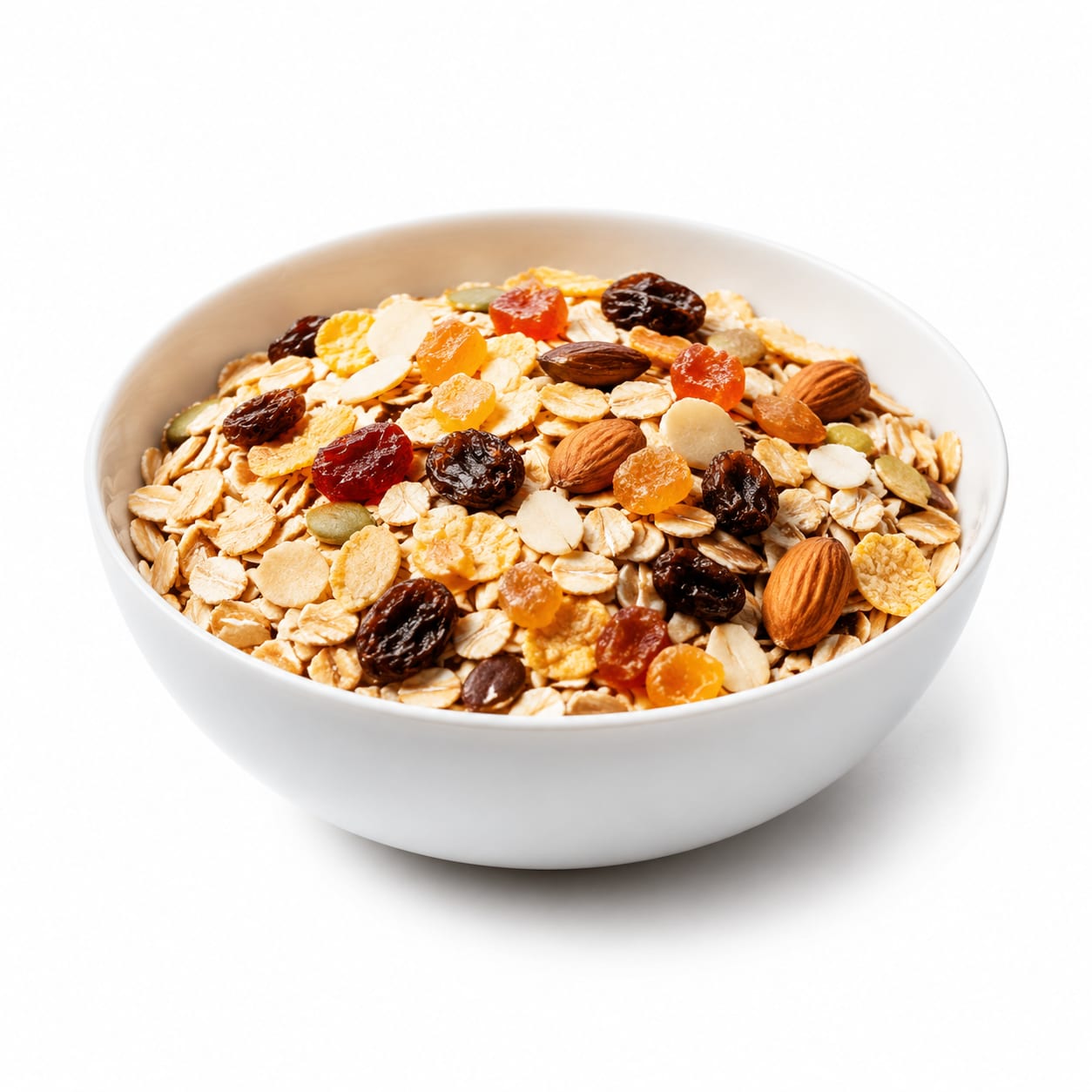
Breakfast Cereal
Muesli
A minimally processed, dry mixture of rolled oats, nuts, seeds, and dried fruit typically eaten soaked or with milk.
A cold oatmeal dish based on rolled oats mixed with ingredients like nuts, seeds, and dried fruit, typically consumed after soaking in milk, yogurt, or juice.
fiber-rich whole grain cereal
Typical serving · 60g
Common varieties · traditional swiss, bircher, gluten-free, no-added-sugar, tropical +1 more
Overall context score across nutrition, safety, and diet fit
At a glance
Quick facts
Simple indicators based on nutrition, processing, and diet fit.
The story
What makes it unique
Muesli consists primarily of intact rolled oats providing beta-glucan, a soluble fiber that slows gastric emptying and moderates postprandial glycemia. The inclusion of nuts and seeds adds unsaturated fats and protein, further stabilizing digestion speed and enhancing satiety. Dried fruits contribute concentrated sugars, which can elevate the glycemic load if proportionally high.
Varieties: traditional swiss · bircher · gluten-free · no-added-sugar · tropical · nut-free
Per 100g
Nutrition breakdown
Macro balance and key metrics at a glance.
Energy
Density 3.60 kcal/g
Protein
Carbs
Fat
Fiber
Sugar
18 g
Sodium
15 mg
Potassium
420 mg
Glycemic index
45
Glycemic load
30
Water content
6%
Standout compounds
Nutrient highlights
Beta-glucan
highLowers cholesterol and stabilizes blood sugar
Dietary Fiber
highPromotes gut health and bowel regularity
Iron
moderateSupports oxygen transport in blood
Magnesium
moderateAids muscle and nerve function
Unsaturated Fats
moderateSupports heart health from nuts and seeds
Wellness map
Health scores & processing
NOVA processing scale
minimally processed · Whole food
Traditional muesli contains only raw, uncooked ingredients like oats, nuts, and dried fruit without added oils or syrups, though commercial versions may include added sugars.
Diet compatibility
- Weight loss
- Muscle gain
- Diabetes
- Gut health
- Low carb
- High protein
- Heart health
Relative standing
Food rankings
Qualitative ranks compared to similar whole foods.
- Satietyexcellent
- Blood sugargood
- Nutrient densitygood
- Fitness fuelgood
- Processing qualityexcellent
Eat with confidence
Food safety profile
Muesli is generally safe, but oats and dried fruits can carry pesticide residues or mycotoxins if not properly sourced.
Evidence confidence 85%
- Pesticidesmoderate
- Antibioticslow
- Heavy metalslow
- Contaminationlow
Watch for
- ochratoxin a
- pesticide residues
Safer choices
Organic certified muesli to minimize pesticide exposure from oats and dried fruits.
Prep tips
Soaking muesli overnight improves digestibility and reduces phytic acid, which can bind minerals.
Standard grain and dried fruit monitoring for mycotoxins and pesticide residues.
Deep dive
Health analysis
How this food may fit different goals and preparation choices.
Weight loss
High fiber and volume when soaked improve satiety, but energy density is moderate to high, requiring portion control to maintain a calorie deficit.
Blood sugar
Beta-glucan from oats slows glucose absorption, but dried fruits add concentrated sugars that can cause sharper glycemic spikes if heavily included.
Fitness & energy
Provides sustained complex carbohydrates for endurance activities, best consumed 1-2 hours before exercise.
Gut health
Excellent source of prebiotic fiber that feeds beneficial gut bacteria; soaking overnight reduces phytic acid and improves mineral absorption.
Processing quality
Typically a minimally processed whole food mix, though some commercial brands add sweeteners, making label reading essential.
Food safety
Low risk of microbial contamination due to low water activity; primary concerns are agricultural chemicals on conventional oats and dried fruits.
Common mistakes
Assuming all muesli is low in sugar, eating large portions without measuring, and consuming it dry which can cause digestive discomfort.
Best preparation
Soaking overnight in milk, yogurt, or plant-based milk to soften oats and improve digestibility, rather than eating it completely dry.
Practical guide
Best use cases
When and how this food fits real eating patterns.
High-fiber breakfast
Starting the day with sustained energy and improved digestion.
Overnight oats base
Soaking muesli overnight creates a convenient, ready-to-eat morning meal.
Pre-workout fuel
Provides slow-releasing carbohydrates for endurance training.
Satiety-enhancing snack
A small portion mixed with yogurt keeps hunger at bay between meals.
Balance sheet
Pros & cons
Upsides
- High in soluble fiber for heart health
- No added oils or fats in traditional mixes
- Low glycemic index slows digestion
- Versatile preparation methods
- Contains prebiotics for gut microbiome
Trade-offs
- Calorie-dense making portion control crucial
- Dried fruit adds concentrated sugar
- Phytic acid can block mineral absorption if unsoaked
- Commercial varieties often contain hidden added sugars
- Not suitable for gluten-free diets unless specifically certified
Fit check
Who is it for?
Great match
- high-fiber breakfast
- sustained morning energy
- heart-healthy diets
- gut microbiome support
Consider alternatives
- strict low-carb diets
- celiac or gluten-sensitive individuals
- those needing precise blood sugar control with high dried fruit intake
Side by side
How it compares
Open the full head-to-head analysis for nutrition, safety, and practical tradeoffs.
This food
Muesli
VS85% alike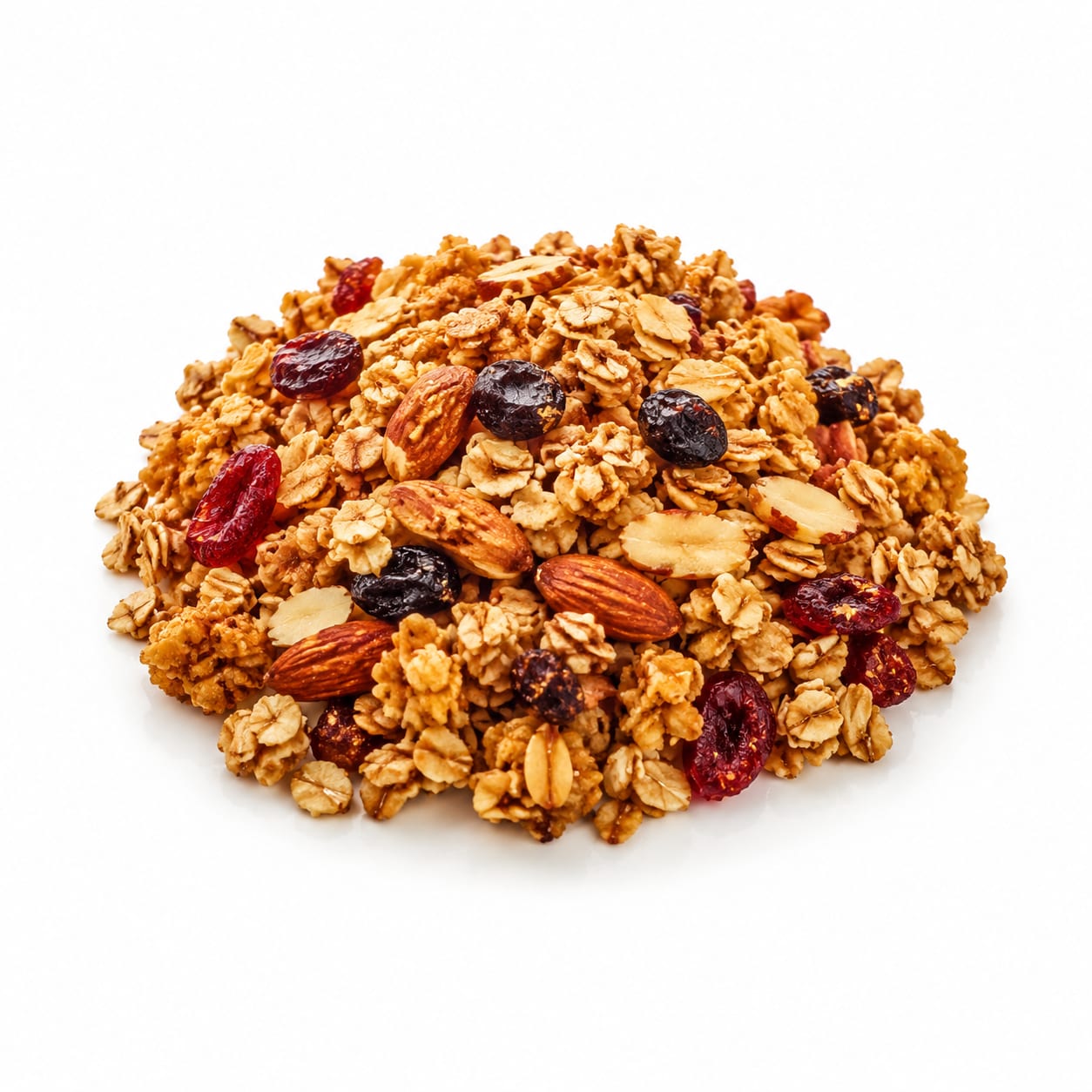
Compare with
Granola
Granola is baked with added oil and sugar, making it crunchier and higher in calories. Muesli is raw, making it lower in fat and sugar.
Muesli is raw and lower in sugar and fat, while granola is baked with oil and sweeteners, making muesli better for weight loss and blood sugar control.
This food
Muesli
VS90% alike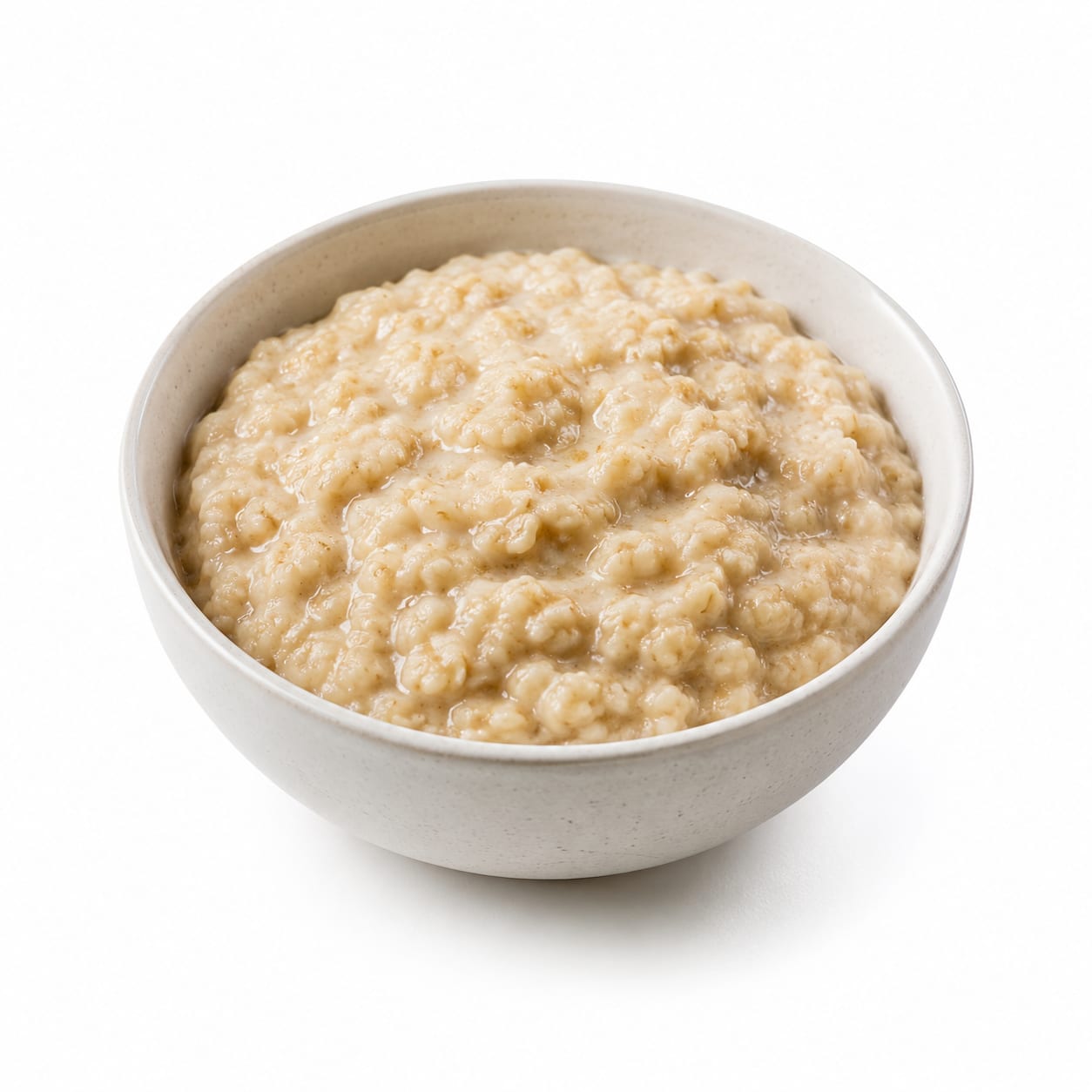
Compare with
Oatmeal
Oatmeal is purely oats, while muesli includes nuts, seeds, and dried fruit. Muesli offers more healthy fats and micronutrients.
Oatmeal is lower in calories and sugar, while muesli provides more healthy fats and sustained energy from nuts and seeds.
This food
Muesli
VS70% alike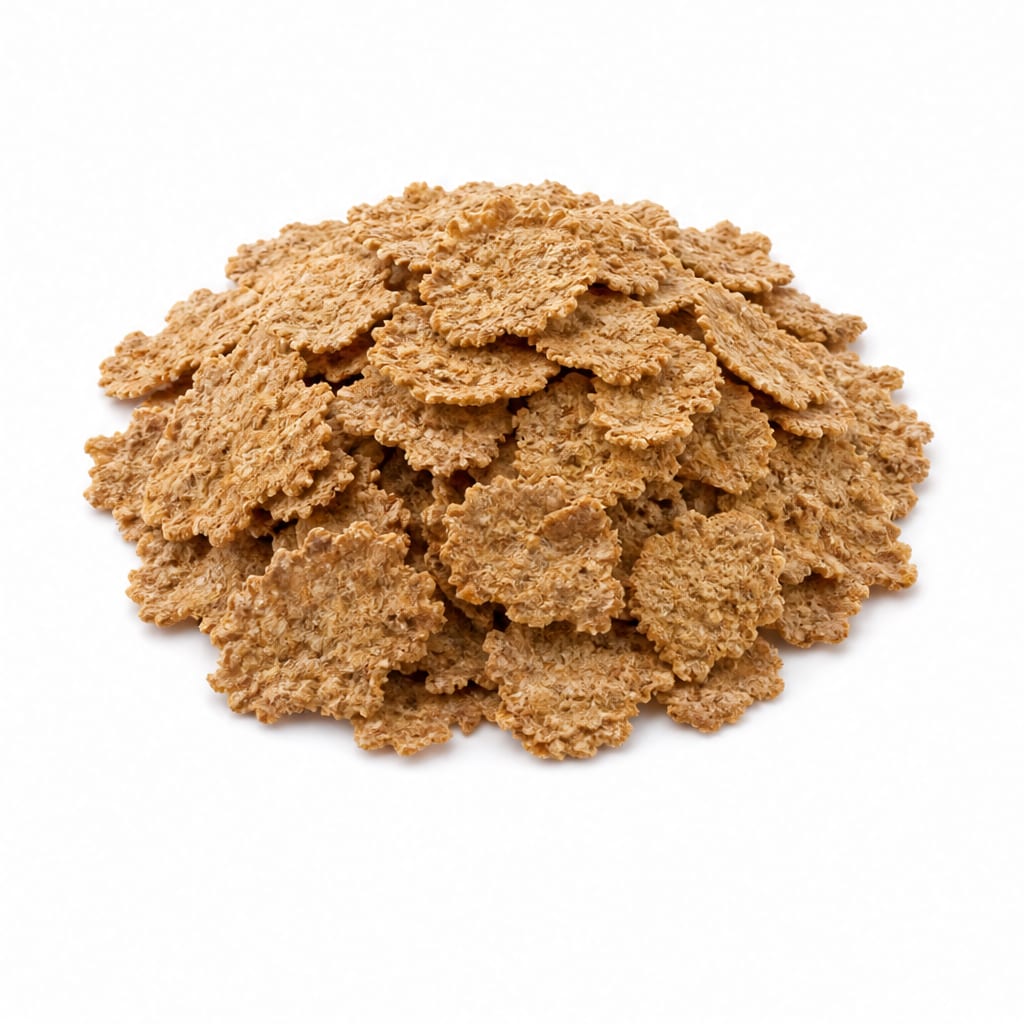
Compare with
Bran Flakes
Bran flakes are more processed but very high in insoluble fiber. Muesli offers whole grains and healthy fats with less processing.
Muesli is less processed and provides better healthy fats and satiety, whereas bran flakes offer higher insoluble fiber for digestion.
This food
Muesli
VS50% alike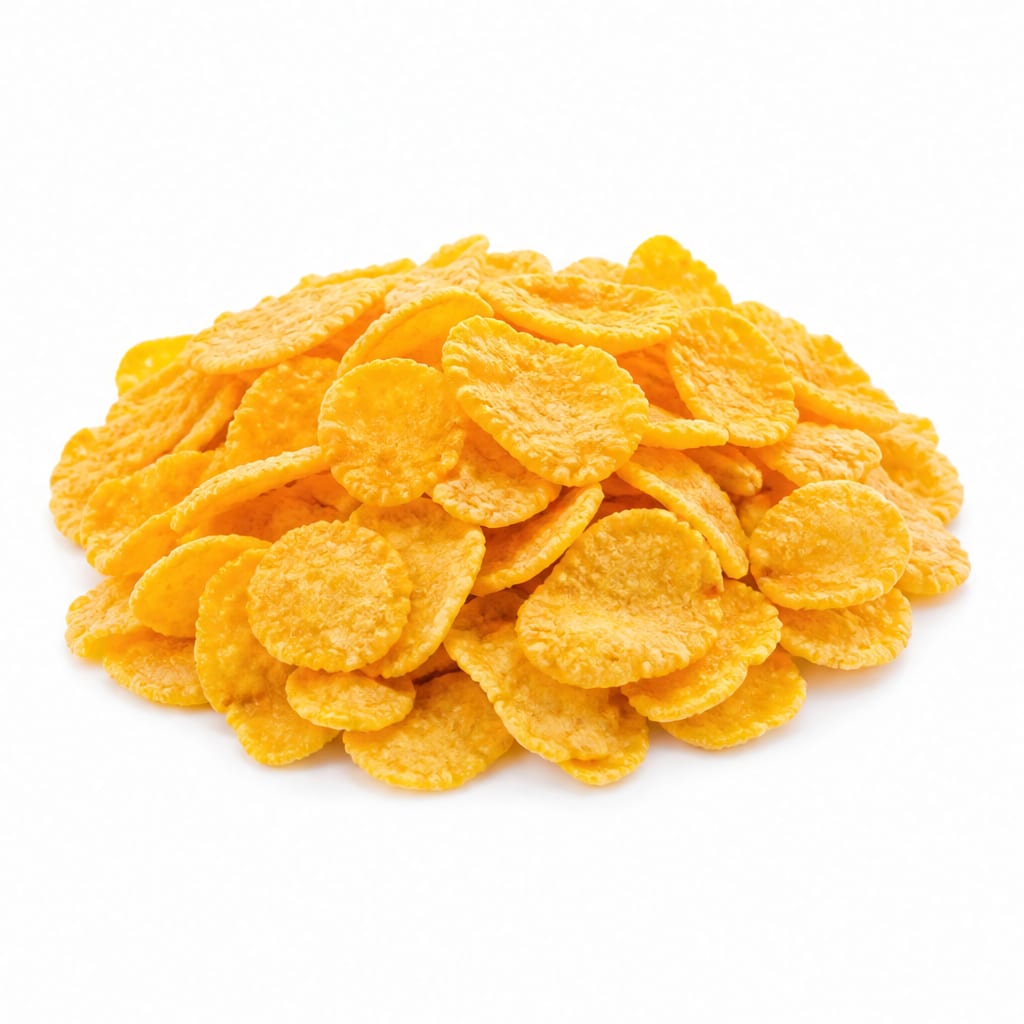
Compare with
Cornflakes
Cornflakes are highly processed and low in fiber, causing rapid blood sugar spikes. Muesli is minimally processed and high in fiber.
Muesli is far superior to cornflakes for satiety and blood sugar control due to its whole grains and high fiber content.
This food
Muesli
VS65% alike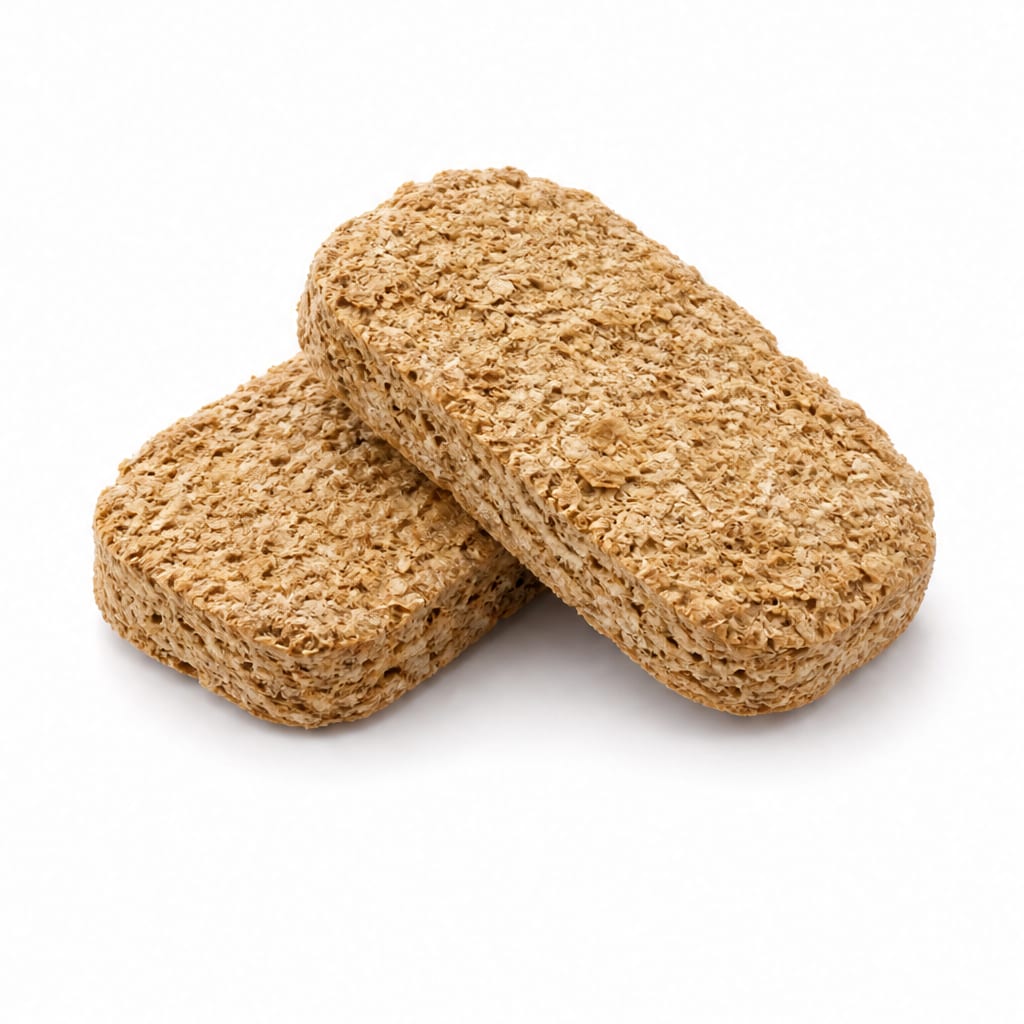
Compare with
Weetabix
Weetabix is lower in calories and fat, but muesli provides more diverse nutrients from nuts and seeds.
Weetabix is lower in calories and sugar, while muesli offers more healthy fats and sustained energy from mixed ingredients.
This food
Muesli
VS55% alike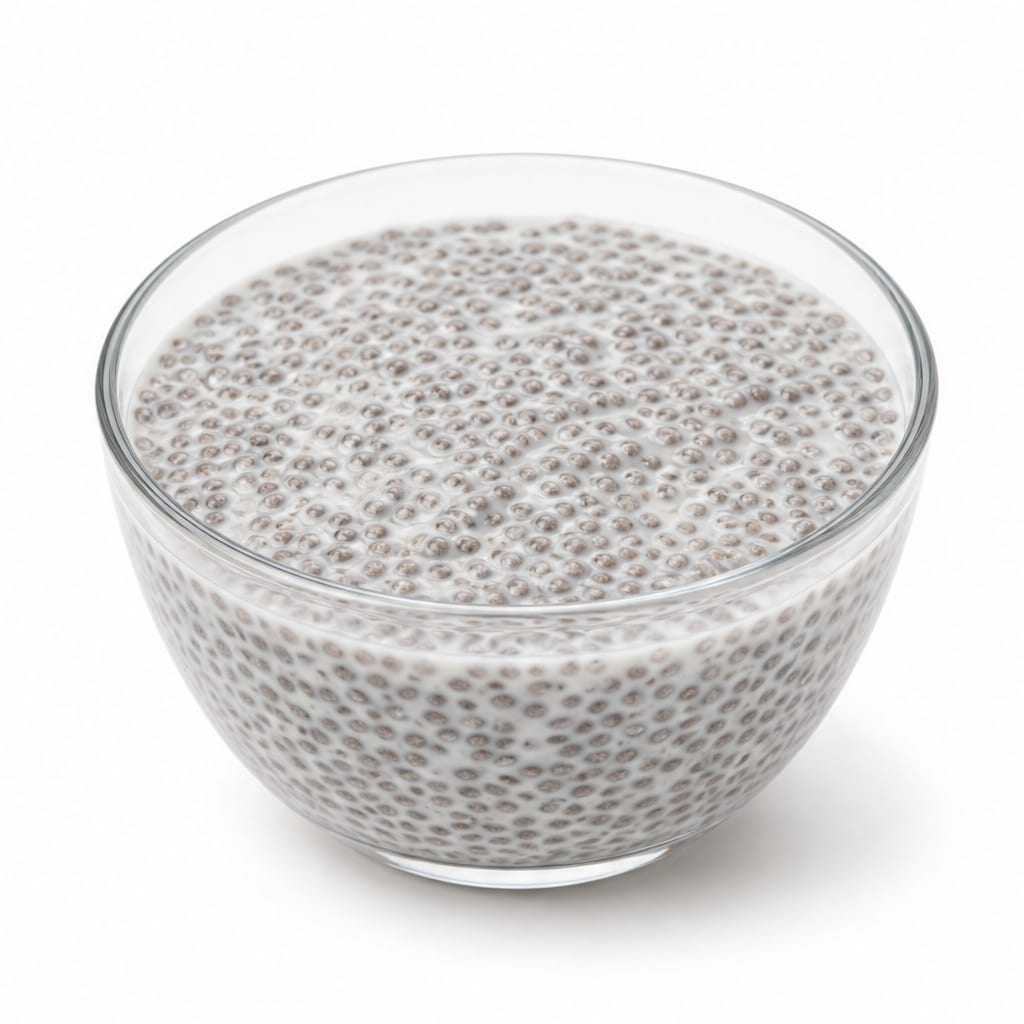
Compare with
Chia Pudding
Chia pudding is lower in carbs and higher in healthy fats and fiber. Muesli provides more carbohydrates for energy.
Chia pudding is lower carb and higher in fat, making it better for blood sugar, while muesli offers better carbs for workout fuel.
This food
Muesli
VS60% alike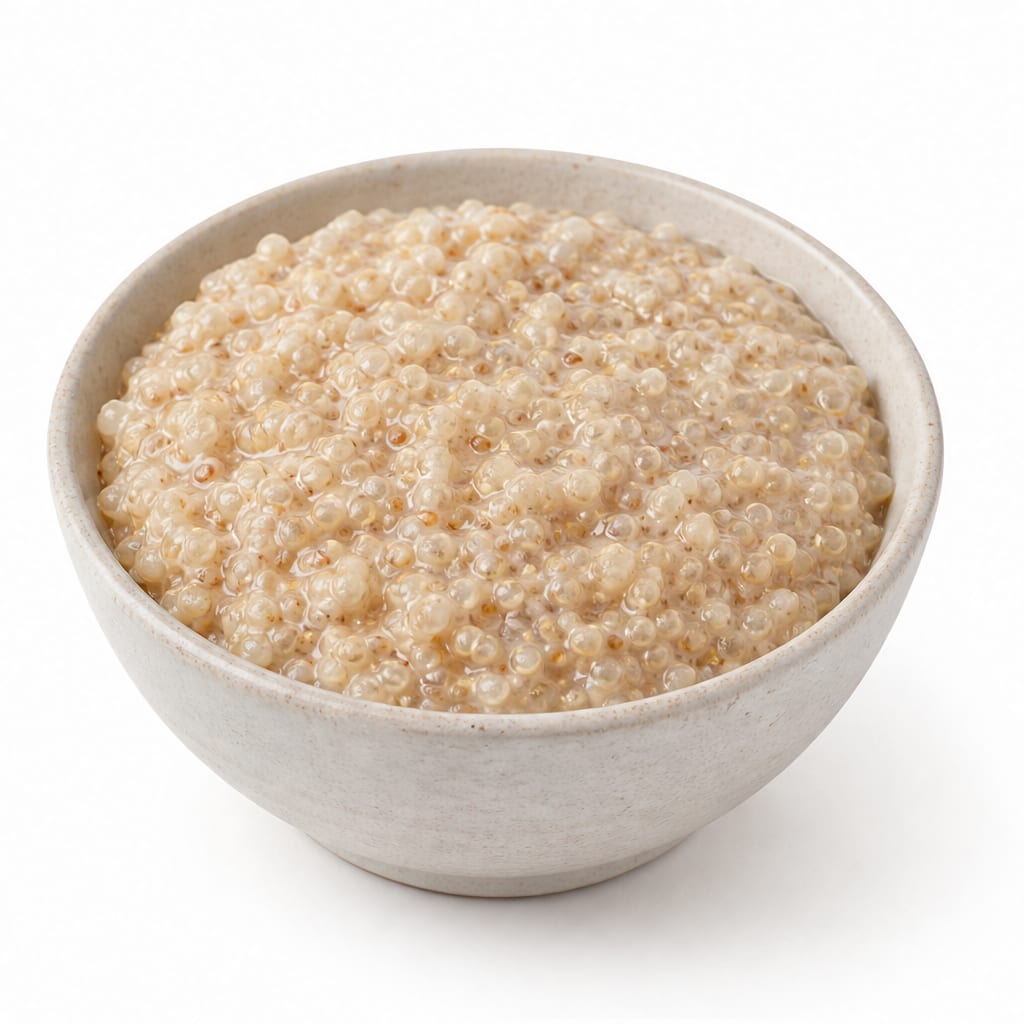
Compare with
Quinoa Porridge
Quinoa is a complete protein and gluten-free. Muesli offers more fiber and heart-healthy beta-glucan from oats.
Quinoa porridge provides complete protein and is gluten-free, while muesli offers superior fiber for cholesterol and gut health.
This food
Muesli
VS75% alike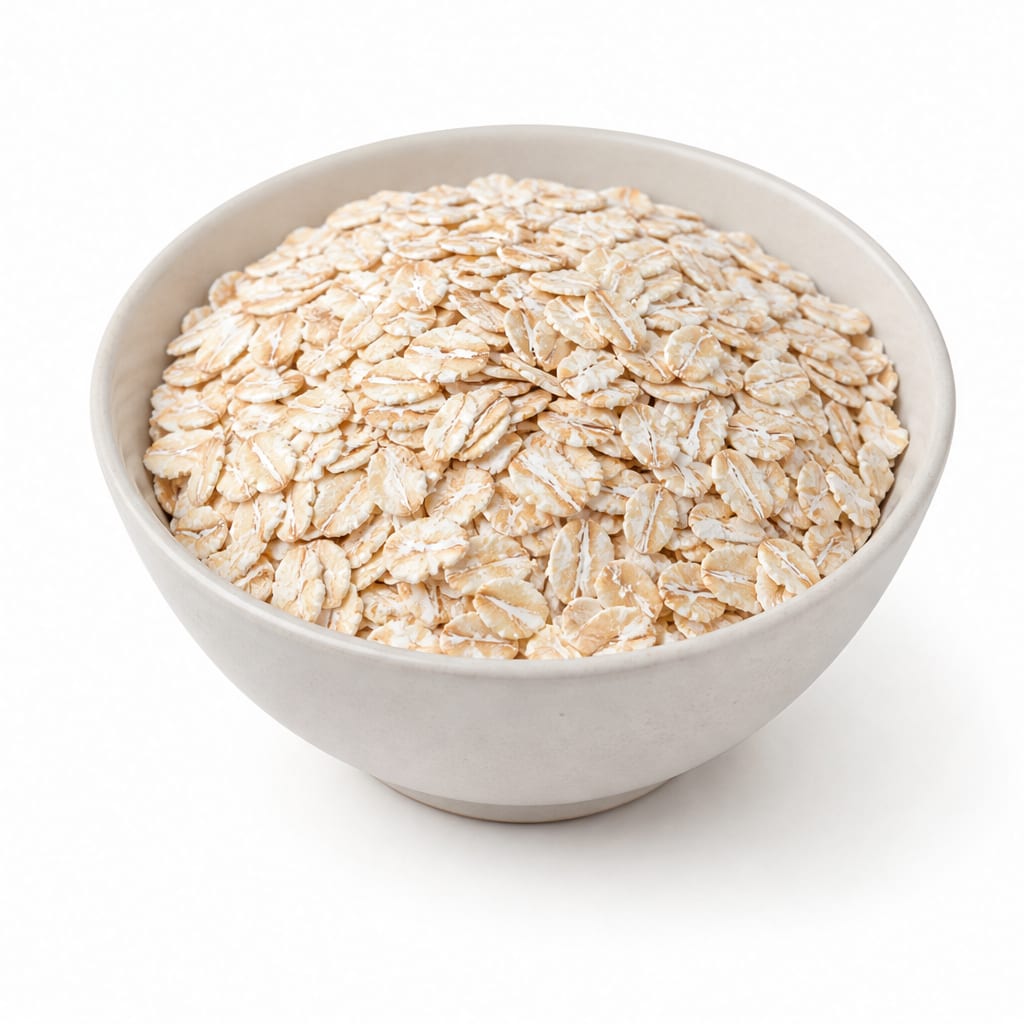
Compare with
Barley Flakes
Barley flakes are slightly lower in fat and also excellent for cholesterol. Muesli provides a more complex nutrient profile with mix-ins.
Barley flakes are slightly lower in calories and excellent for blood sugar, while muesli offers more diverse nutrients from nuts and seeds.
This food
Muesli
VS40% alike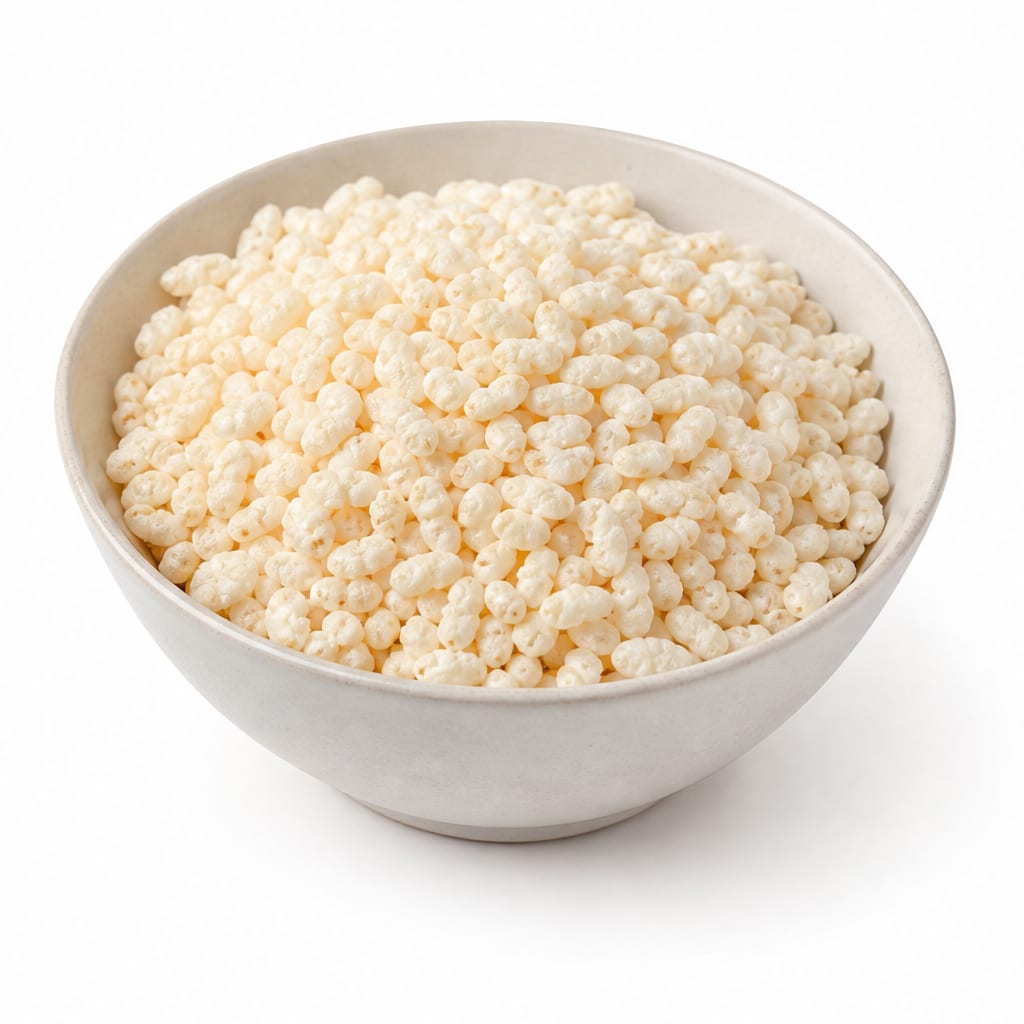
Compare with
Rice Cereal
Rice cereal is highly processed and low in fiber. Muesli is minimally processed and fiber-dense.
Muesli provides significantly more fiber, satiety, and nutritional value than highly processed rice cereal.
This food
Muesli
VS80% alike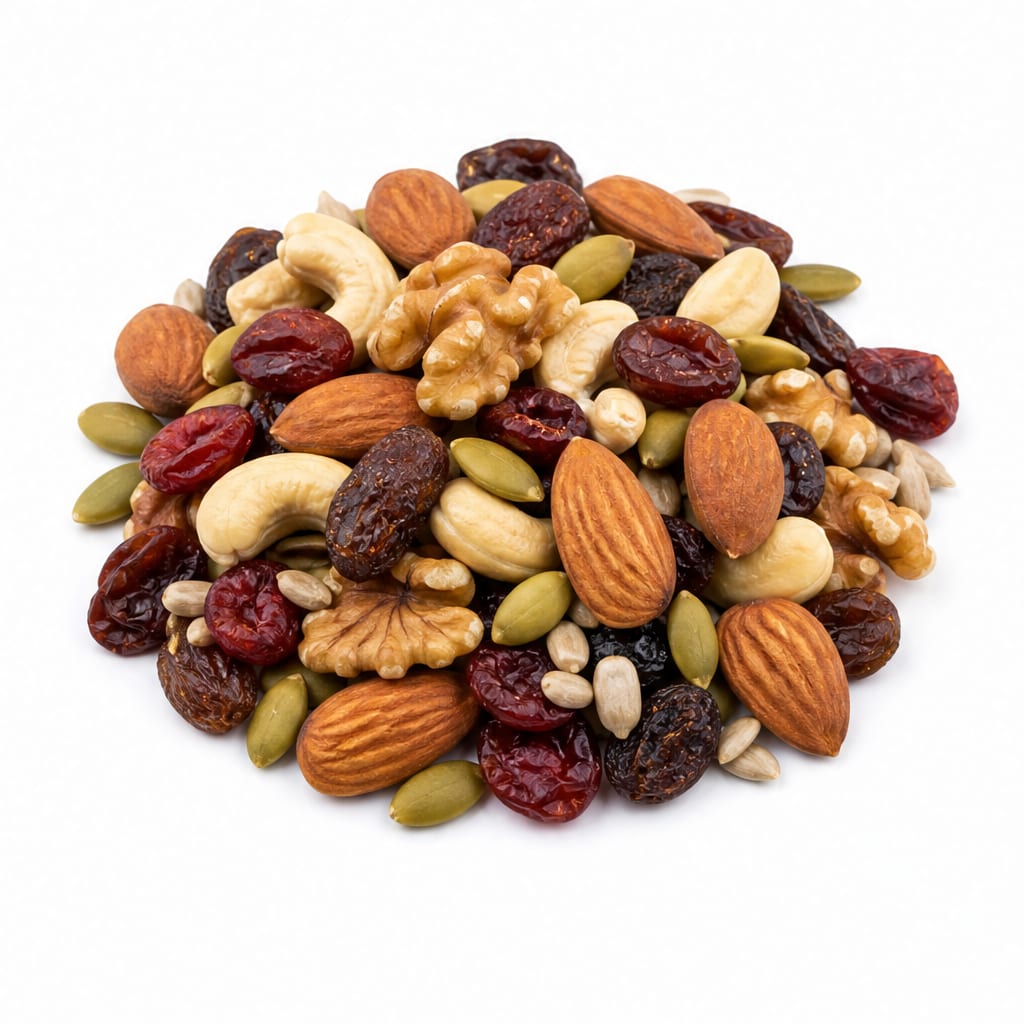
Compare with
Trail Mix
Trail mix lacks the oat base, making it higher in fat and calories. Muesli provides complex carbohydrates for sustained energy.
Muesli includes an oat base for complex carbs and sustained energy, whereas trail mix is denser in fats and calories from nuts.
Common questions
FAQ
Answers aligned with how people search for this food.
Is muesli good for weight loss?
Yes, muesli can be good for weight loss because its high fiber content promotes satiety. However, it is calorie-dense, so portion control is necessary.
What is the difference between muesli and granola?
Granola is baked with oil and sweeteners, making it crunchy and higher in calories and sugar. Muesli is raw, unbaked, and typically lower in sugar and fat.
Can diabetics eat muesli?
Yes, the beta-glucan fiber in oats helps control blood sugar, but diabetics should choose varieties with no added sugar and lower amounts of dried fruit.
Do you eat muesli raw or cooked?
It can be eaten either way, but soaking it overnight in milk or yogurt is the most common and digestible method. It can also be cooked like oatmeal.
Is muesli healthier than oatmeal?
Both are healthy. Muesli offers more variety with added nuts and seeds providing healthy fats, while plain oatmeal is purely oats and slightly lower in calories.
Does muesli make you poop?
Yes, the high fiber content from oats, seeds, and nuts promotes regular bowel movements and supports digestive health.
Can I eat muesli on a low carb diet?
No, muesli is primarily made of oats and dried fruit, making it too high in carbohydrates for strict low-carb or ketogenic diets.
How long should I soak muesli?
Soaking for at least 30 minutes softens the oats, but soaking overnight in the refrigerator provides the best texture and digestibility.
Transparency
Data confidence
Estimated confidence for nutrition data, interpretation, safety notes, and comparisons.
Nutrition data
Health analysis
Food safety
Comparisons