
Nutrition comparison
Tom Yum Goong vs Tom Kha Gai: Which Thai Soup Is Healthier?
Compare Tom Yum Goong and Tom Kha Gai nutrition: calories, fat, protein, and health tradeoffs. Learn which Thai soup fits your diet goals better.
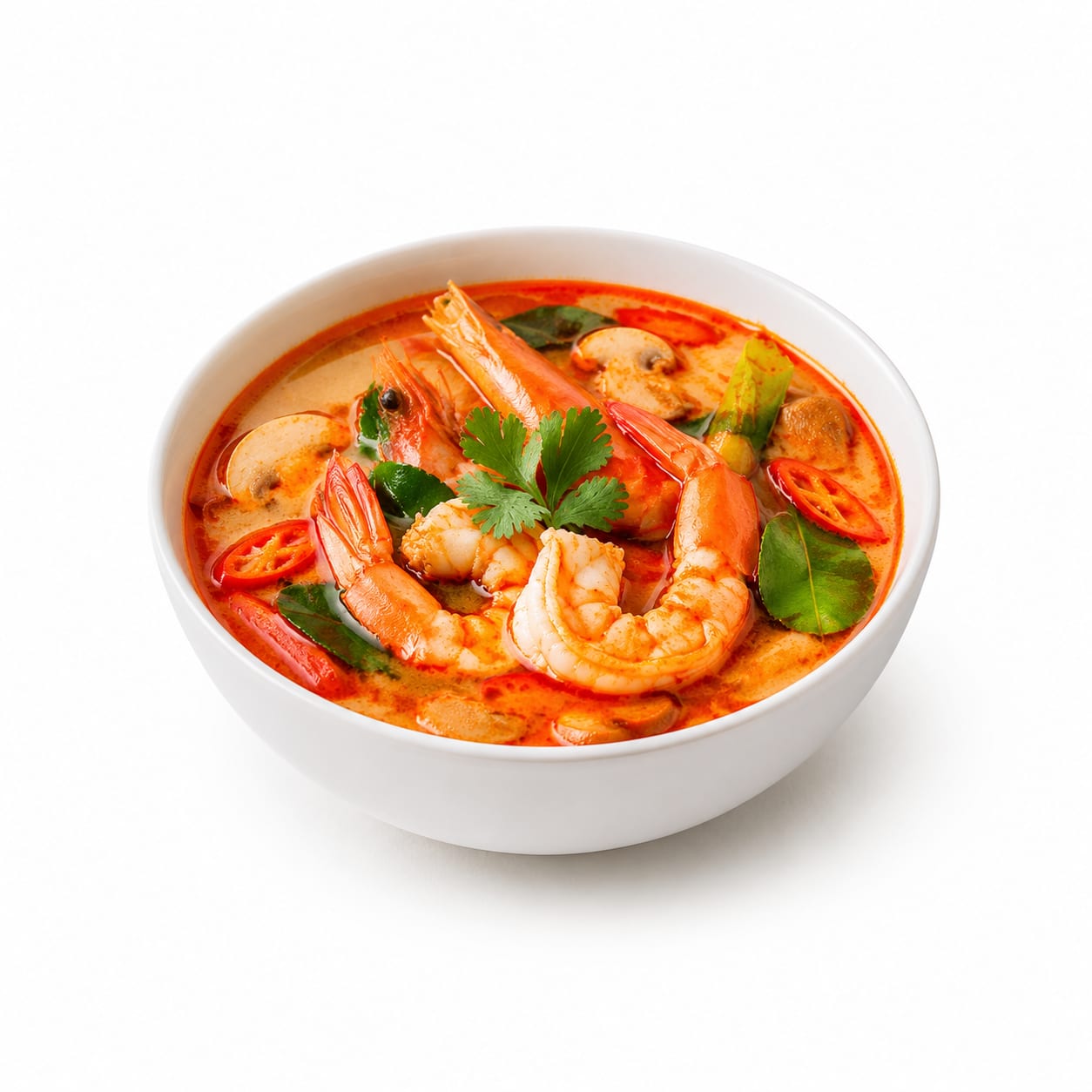
Tom Yum Goong
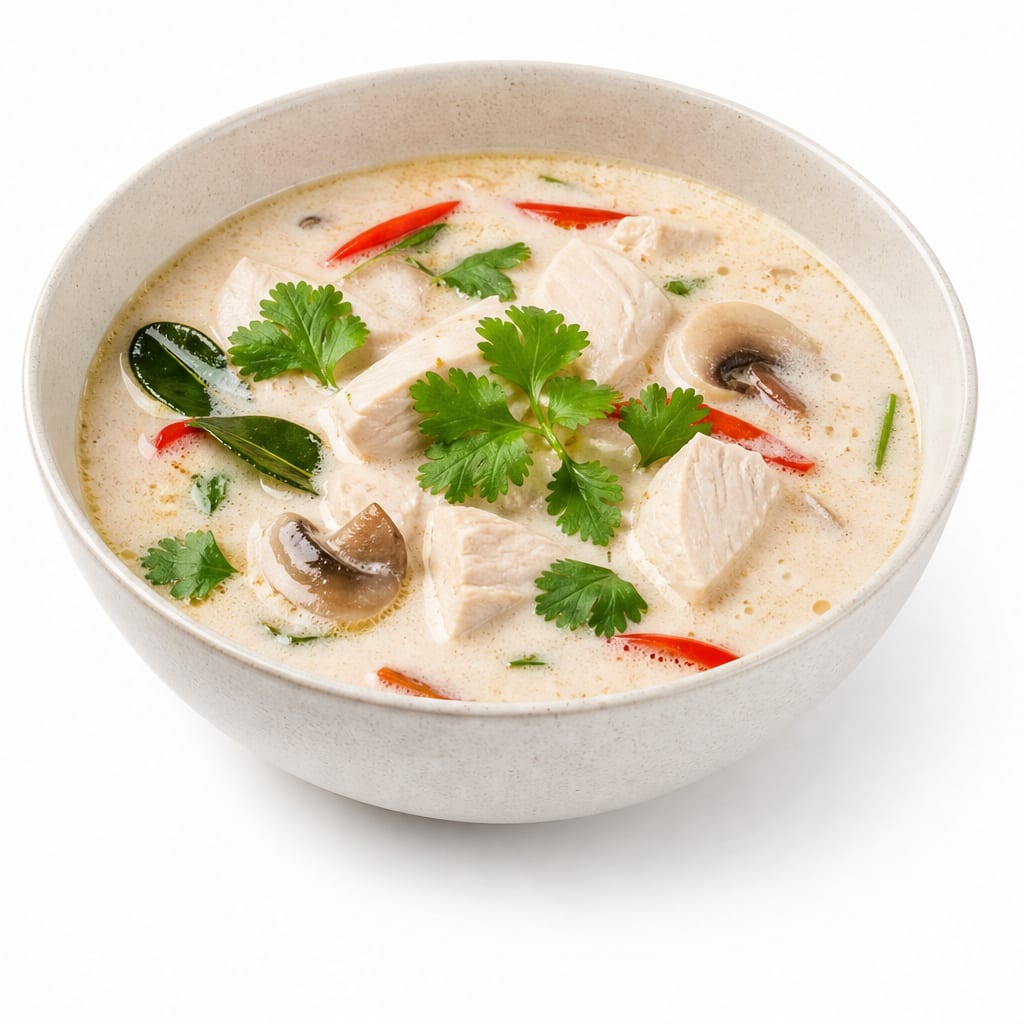
Tom Kha Gai
Tom Yum Goong is the lighter, lower-calorie choice with lean shrimp protein, while Tom Kha Gai is richer and more comforting but significantly higher in calories and saturated fat from coconut milk.
Tom Yum Goong scores higher primarily due to its lower calorie density, leaner protein source, and absence of saturated fat from coconut milk. Tom Kha Gai loses ground on calorie and fat content but remains a nourishing option with its own digestive and comfort benefits. The gap reflects that most people eat these soups as part of a meal where calorie awareness matters.
You trade the creamy comfort and stomach-soothing quality of coconut milk for the calorie savings and lighter feel of a clear broth.
At a glance
Executive summary
Overall
It depends
Healthier
Tom Yum Goong
More practical
It depends
Daily use
Tom Yum Goong
Key comparison lenses
Calorie and fat content comparison between broth-based and coconut milk-based Thai soups
The single biggest difference is the coconut milk base in Tom Kha Gai, which dramatically increases calories and saturated fat compared to the clear broth of Tom Yum Goong
Heart health tradeoffs between shrimp and coconut milk
Shrimp brings cholesterol concerns while coconut milk brings saturated fat concerns, making heart health a key decision factor
Weight management suitability
Users choosing between these soups often want to know which fits better into a calorie-conscious eating pattern
Digestive comfort and spice tolerance
Tom Yum Goong is significantly spicier and more acidic, while Tom Kha Gai's coconut milk soothes the stomach
Protein quality and satiety comparison
Shrimp vs chicken protein sources have different nutritional profiles and satiety effects
Best choice for
Tom Yum Goong
- Weight loss and calorie counting
- Heart-conscious diners avoiding saturated fat
- Hot climate eating where light food feels better
- Those who enjoy bold, spicy, sour flavors
- People watching their fat intake
Tom Kha Gai
- Sensitive stomachs needing gentler food
- Cold or rainy day comfort eating
- People who find clear soups unsatisfying
- Those needing higher calorie intake
- Anyone avoiding shellfish due to allergy
Least suitable for
Tom Yum Goong
- People with shellfish allergies
- Those with acid reflux or GERD triggered by spice and citrus
- Anyone needing gentle, soothing meals during illness
- People on low-sodium diets who are salt-sensitive
Tom Kha Gai
- People strictly limiting saturated fat
- Those on calorie-restricted diets
- Anyone with coconut allergies
- People trying to reduce dietary fat intake
Deep comparison
Dimension by dimension
Each lens scores both foods and breaks down who each option suits.
- Dimension 1 · Priority 95Tom Yum Goong
Calorie Density and Weight Management
Tom Yum Goong · 88Tom Kha Gai · 52Tom Yum Goong is dramatically lower in calories per bowl because it uses a clear broth base instead of coconut milk.
Tradeoff
You save 200-400 calories per bowl with Tom Yum Goong, but you lose the creamy richness that makes Tom Kha Gai feel like a complete, satisfying meal.
Why it matters
A single bowl of Tom Kha Gai can easily reach 400-600 calories, while Tom Yum Goong typically sits at 150-250 calories. That difference compounds quickly if you eat Thai food regularly.
Real-world impact
If you eat Thai soup twice a week, choosing Tom Yum Goong over Tom Kha Gai could save you roughly 3,000-4,000 calories per month — about a pound of body weight.
Tom Yum Goong
- Active weight loss phases
- Maintenance when eating out frequently
- Ordering appetizers before a main course
Better for
- When you need a soup to stand alone as a meal
- Recovery from illness when you need easy calories
Worse for
Tom Kha Gai
- Bulking or needing extra calories
- Replacing a full meal with one dish
- Cold weather eating when you need warmth and substance
Better for
- Frequent restaurant eating where calories add up fast
- Any structured calorie-tracking approach
Worse for
- Dimension 2 · Priority 88Tom Yum Goong
Fat Profile and Heart Health
Tom Yum Goong · 75Tom Kha Gai · 55Tom Yum Goong has minimal fat from the broth, while Tom Kha Gai delivers a significant dose of saturated fat from coconut milk.
Tradeoff
Coconut milk provides medium-chain triglycerides that some research suggests may be metabolized differently than other saturated fats, but the overall saturated fat load still raises LDL cholesterol concerns for heart health.
Why it matters
A typical bowl of Tom Kha Gai contains 20-35 grams of saturated fat, which can approach or exceed the daily recommended limit for someone on a 2,000-calorie diet.
Real-world impact
If heart health is a priority, regularly choosing Tom Kha Gai over Tom Yum Goong could meaningfully impact your saturated fat intake over weeks and months.
Tom Yum Goong
- People with elevated LDL cholesterol
- Those with family history of heart disease
- Anyone following a Mediterranean-style low-sat-fat approach
Better for
- People who need more fat for hormone production or satiety
Worse for
Tom Kha Gai
- People on ketogenic diets who embrace healthy fats
- Those who tolerate saturated fat well genetically
Better for
- Anyone with diagnosed cardiovascular conditions
- People taking statins or managing hyperlipidemia
Worse for
- Dimension 3 · Priority 80Tom Yum Goong
Protein Quality and Satiety
Tom Yum Goong · 78Tom Kha Gai · 72Shrimp in Tom Yum Goong provides slightly more protein per calorie with excellent leucine content, while chicken in Tom Kha Gai offers solid protein but in a higher-calorie package.
Tradeoff
Shrimp delivers more protein density, but the coconut milk in Tom Kha Gai adds fat that slows digestion and can extend satiety despite lower protein efficiency.
Why it matters
Shrimp provides about 20g of protein per 100g with minimal fat, while an equivalent portion of Tom Kha Gai delivers similar protein but with 3-4 times the calories from fat.
Real-world impact
For post-workout recovery or muscle maintenance, Tom Yum Goong gives you more protein per calorie. But Tom Kha Gai may keep you full longer because fat slows gastric emptying.
Tom Yum Goong
- Post-workout meals where lean protein matters
- Older adults needing efficient protein intake without excess calories
Better for
- When you need lasting satiety from fat content
Worse for
Tom Kha Gai
- Long work days where you need sustained fullness
- Situations where your next meal is 5-6 hours away
Better for
- When protein-per-calorie efficiency matters
Worse for
- Dimension 4 · Priority 78Tom Kha Gai
Digestive Tolerance and Comfort
Tom Yum Goong · 48Tom Kha Gai · 85Tom Kha Gai is significantly gentler on the stomach due to the soothing properties of coconut milk, which buffers the chili heat and acid.
Tradeoff
The very ingredients that make Tom Yum Goong exciting — chili, lime, and high acidity — are the same ones that can irritate sensitive stomachs, acid reflux, or ulcer-prone digestive systems.
Why it matters
Coconut milk coats the stomach lining and reduces the irritant effect of spices. Tom Yum Goong's combination of capsaicin, citric acid, and sometimes higher fish sauce content can trigger heartburn or GI discomfort.
Real-world impact
If you have GERD, IBS, or a sensitive stomach, Tom Yum Goong might cause bloating or heartburn within an hour, while Tom Kha Gai is more likely to sit comfortably.
Tom Yum Goong
- People with robust digestion who enjoy intense flavors
- Those who find mild food boring and unsatisfying
Better for
- Active heartburn or GERD episodes
- Gastritis flare-ups
- IBS triggered by spicy or acidic foods
Worse for
Tom Kha Gai
- Acid reflux and GERD sufferers
- Recovery from stomach illness
- Pregnant women with nausea who need gentle food
- Post-antibiotic digestive recovery
Better for
- Gallbladder issues triggered by high fat meals
Worse for
- Dimension 5 · Priority 72It depends
Anti-Inflammatory and Immune Properties
Tom Yum Goong · 76Tom Kha Gai · 74Both soups feature powerful anti-inflammatory ingredients like galangal, lemongrass, and kaffir lime, but they shine in different ways.
Tradeoff
Tom Yum Goong's shrimp provides selenium and astaxanthin for antioxidant support, while Tom Kha Gai's coconut milk offers lauric acid with antimicrobial properties. Both are strong — just through different mechanisms.
Why it matters
Galangal and lemongrass appear in both soups and are genuinely therapeutic spices with research-backed anti-inflammatory compounds. The base differences are secondary to these shared powerhouses.
Real-world impact
When you feel a cold coming on, either soup is a solid choice. Tom Yum Goong's heat may help clear congestion faster, while Tom Kha Gai's warmth and fat help soothe a sore throat.
Tom Yum Goong
- Nasal congestion relief from the intense spice
- Antioxidant support from shrimp's astaxanthin
Better for
- When your throat is raw and spice hurts
Worse for
Tom Kha Gai
- Sore throat soothing from the creamy broth
- Antimicrobial support from coconut lauric acid
Better for
- When you need mucus-clearing heat
Worse for
- Dimension 6 · Priority 70It depends
Sodium Load
Tom Yum Goong · 55Tom Kha Gai · 58Both soups are high in sodium from fish sauce and broth, with Tom Yum Goong sometimes edging slightly higher due to its reliance on fish sauce for flavor depth.
Tradeoff
Neither soup is a low-sodium winner. Tom Kha Gai's coconut milk provides some flavor richness that slightly reduces the need for excessive fish sauce, but the difference is modest.
Why it matters
Restaurant versions of either soup can easily contain 1,500-2,500mg of sodium per bowl, approaching or exceeding the daily recommended limit in a single serving.
Real-world impact
If you have hypertension or salt sensitivity, both soups should be occasional treats rather than daily staples. Asking for reduced fish sauce helps but changes the authentic flavor significantly.
Tom Yum Goong
- Home-cooked versions where you control the fish sauce
Better for
- People on strict sodium-restricted diets
Worse for
Tom Kha Gai
- Restaurant eating where the coconut milk base naturally needs less salt adjustment
Better for
- Same sodium concerns apply
Worse for
Timeline
Health impact over time
Short-term
Hours to days
Tom Yum Goong
- Quick satiety from high protein with minimal calorie cost
- Possible heartburn or stomach irritation from spice and acid
- Congestion relief from chili heat and steam
- Energy boost without the heaviness that follows high-fat meals
Tom Kha Gai
- Comforting fullness from the fat content that lingers for hours
- Smoother digestion with less GI irritation risk
- Possible drowsiness after eating due to higher fat and calorie load
- Gentle throat-soothing effect from warm coconut milk
Long-term
Months to years
Tom Yum Goong
- Better weight maintenance if chosen regularly over coconut-based alternatives
- Shrimp consumption 2-3 times weekly supports thyroid and immune function through selenium and iodine
- Lower saturated fat intake benefits cardiovascular markers over time
- Continued spice exposure may support metabolic health and pain perception
Tom Kha Gai
- Higher saturated fat intake from regular consumption may elevate LDL cholesterol over months
- Calorie density makes weight creep more likely if portion control is inconsistent
- Coconut milk's lauric acid may support immune function with regular consumption
- The comforting nature may support emotional eating patterns if relied on for stress relief
Risk profile
Safety & processing
Both soups are traditionally made from whole, recognizable ingredients. The main processing concern is coconut milk in Tom Kha Gai, which is minimally processed but sometimes contains stabilizers or preservatives in canned versions. Restaurant versions of either soup may use commercial soup bases with MSG and added preservatives, but authentic preparations are clean and whole-food based.
Tom Yum Goong
Shellfish allergy reaction
highShrimp is a top-8 allergen. Reactions can range from hives to anaphylaxis. Cross-contamination in Thai kitchens is common since shrimp paste is used ubiquitously.
Seafood spoilage and foodborne illness
mediumShrimp spoils quickly and can harbor Vibrio bacteria or cause scombroid poisoning if not stored properly. This is a real concern with street food or buffets.
Cholesterol oxidation in reheated shrimp
lowReheating shrimp can oxidize its cholesterol, producing compounds that may be more atherogenic than fresh cholesterol. Best eaten fresh.
Tom Kha Gai
Poultry foodborne illness
mediumChicken carries Salmonella risk if undercooked. Thai kitchens generally cook chicken thoroughly in soup, but the risk exists with poorly managed establishments.
Coconut milk spoilage
lowFresh coconut milk spoils rapidly at room temperature. Canned versions are stable but should be refrigerated after opening. Spoiled coconut milk can cause food poisoning.
Galangal contamination
lowImported galangal has occasionally been flagged for pesticide residue. Washing thoroughly or choosing organic reduces this minor risk.
Who wins for whom
Audience fit
Same foods, different winners depending on your goal.
children
Tom Kha GaiTom Kha Gai's milder, creamier flavor is more appealing to children, and the coconut milk base is gentler on developing digestive systems than the intense sourness and spice of Tom Yum Goong.
daily consumption
Tom Yum GoongTom Yum Goong's lower calorie and saturated fat profile makes it more sustainable as a regular choice. Daily Tom Kha Gai would likely exceed healthy saturated fat limits for most people.
diabetes
Tom Yum GoongBoth soups are relatively low in carbohydrates, but Tom Yum Goong's lower calorie density and absence of saturated fat from coconut milk makes it a better regular choice for metabolic health.
elderly
Tom Kha GaiThe softer texture and stomach-soothing quality of Tom Kha Gai suits aging digestive systems better, and the extra calories can benefit elderly people with reduced appetites.
muscle gain
Tom Yum GoongShrimp provides more protein per calorie than chicken in a coconut milk base, making Tom Yum Goong more efficient for muscle support without excess calories.
weight loss
Tom Yum GoongTom Yum Goong delivers satisfying protein and bold flavor at roughly half the calories of Tom Kha Gai, making it far easier to fit into a calorie deficit.
Your move
Decision guide
Choose Tom Yum Goong
- You are watching your weight or counting calories
- You want lean protein without the fat overhead
- You enjoy intense, bold, spicy-sour flavors
- You have no shellfish allergy and robust digestion
- You eat Thai food frequently and need the lighter option
Choose Tom Kha Gai
- Your stomach is sensitive or you have acid reflux
- It is cold outside and you want deeply comforting food
- You need a soup that can serve as a satisfying standalone meal
- You are avoiding shellfish due to allergy
- You are on a higher-fat or ketogenic eating approach
Either works if
- You want anti-inflammatory benefits from galangal and lemongrass
- You are looking for a warming, hydrating meal
- You are eating Thai food occasionally as a treat
- You have no specific dietary restrictions
Avoid both if
- You are on a strict low-sodium diet for hypertension
- You have severe MSG sensitivity and are eating at restaurants
- You are allergic to both shellfish and coconut
- You are on a strict low-FODMAP diet, as both contain galangal and shallots
Final recommendation
For most people eating Thai food regularly, Tom Yum Goong is the smarter default — it delivers incredible flavor with far fewer calories and less saturated fat. Save Tom Kha Gai for when you specifically need comfort, have a sensitive stomach, or are treating yourself on a cold day. If you order Tom Kha Gai, consider asking for it with light coconut milk to cut the calorie and fat load while keeping the creamy character.
Practical
Consumer tips
- 1
Ask for Tom Kha Gai with 'light coconut milk' or a mix of coconut milk and broth — you will save 100-200 calories with minimal flavor sacrifice
- 2
Restaurant Tom Yum Goong sometimes adds a splash of evaporated milk or coconut milk for body — ask for the clear version if you want the authentic low-calorie style
- 3
Both soups are extremely high in sodium at restaurants. If you have blood pressure concerns, ask for half the fish sauce and add lime instead
- 4
Tom Yum Goong made with fresh shrimp at home has far less sodium and no preservatives compared to restaurant versions
- 5
If you love Tom Kha Gai but want it lighter, try a half-and-half version using coconut milk for flavor and chicken broth for volume
- 6
Canned coconut milk varies wildly in fat content. Look for 'light' versions with 5-8g fat per serving rather than 18-20g for regular
- 7
Both soups freeze poorly due to texture changes in shrimp and coconut milk separation — best enjoyed fresh
- 8
For the best nutritional profile, pair either soup with a side of steamed vegetables instead of white rice to add fiber without refined carbs