
Nutrition comparison
Sour Cream vs Mayonnaise: Which is Healthier?
Compare Sour Cream vs Mayonnaise for calories, fat, gut health, and processing. Find out which condiment is better for weight loss, keto, and daily use.
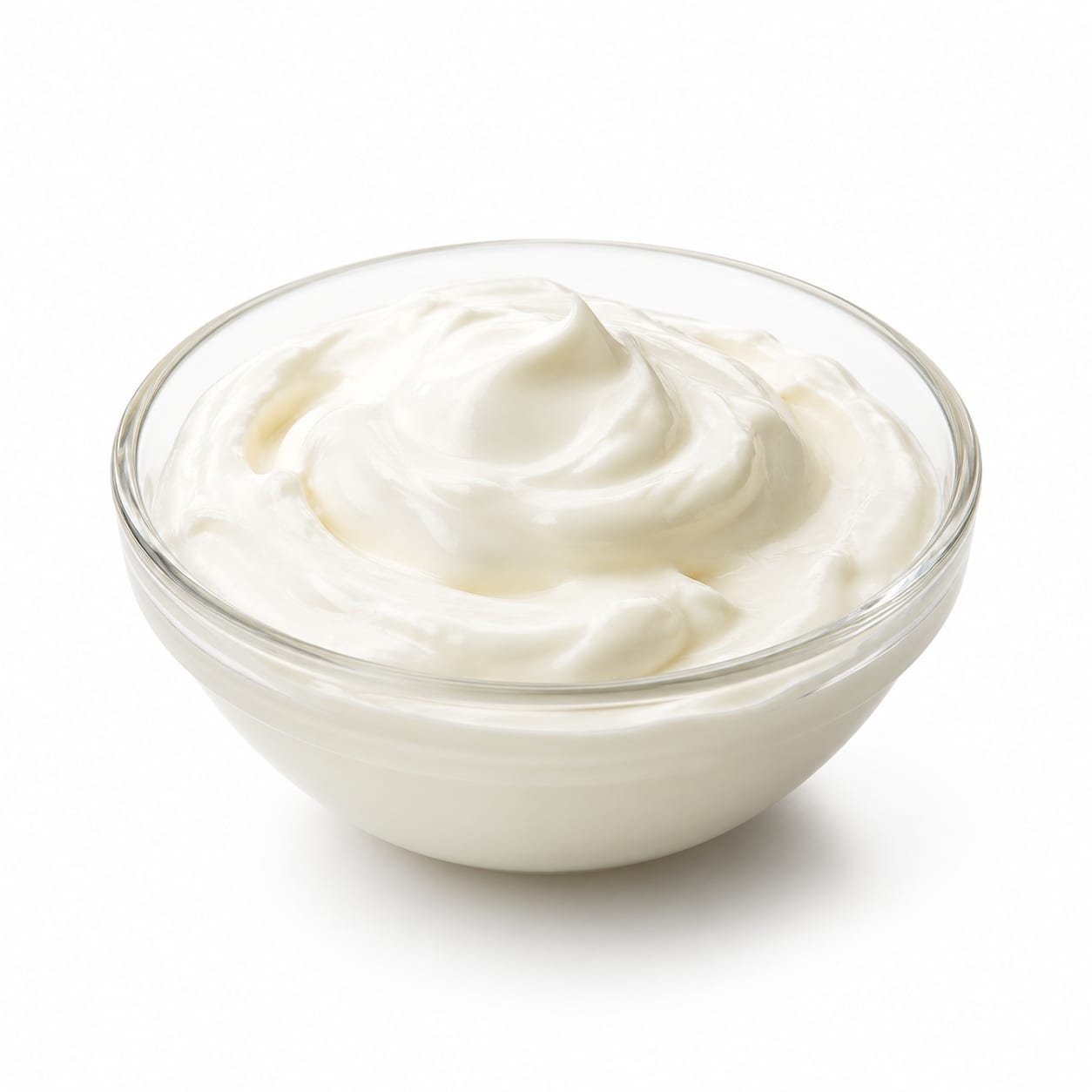
Sour Cream

Mayonnaise
Sour Cream is lighter and gut-friendly, while Mayonnaise is richer and lower in carbs.
Sour Cream scores higher due to lower calorie density, probiotic content, and less reliance on refined seed oils. Mayonnaise is more calorie-dense and often highly processed, though it fits strict keto diets well.
Fermented dairy benefits and fewer calories versus richer flavor and zero sugar.
At a glance
Executive summary
Overall
It depends
Healthier
Sour Cream
More practical
It depends
Daily use
Sour Cream
Key comparison lenses
Calorie density and weight management
Both are fat-heavy condiments, but their calorie loads per serving differ drastically, which heavily impacts daily intake.
Fat quality and inflammatory impact
Sour Cream brings saturated dairy fat, while Mayonnaise typically brings inflammatory omega-6 seed oils, making fat quality a central concern.
Gut health and digestion
Sour Cream is fermented and offers probiotics, whereas Mayonnaise is an egg-oil emulsion with no digestive benefits.
Processing level and additives
Commercial Mayonnaise often contains preservatives and emulsifiers, while Sour Cream has a simpler, less processed ingredient list.
Best choice for
Sour Cream
- People watching their calorie intake
- Those seeking gut-friendly probiotics
- Baked potato and taco lovers
Mayonnaise
- Making creamy dressings and sandwiches
- People on strict keto diets
- Those wanting rich mouthfeel without carbs
Least suitable for
Sour Cream
- Lactose intolerant individuals
- Strict dairy-free diets
Mayonnaise
- Low-fat diets
- People avoiding seed oils or eggs
Deep comparison
Dimension by dimension
Each lens scores both foods and breaks down who each option suits.
- Dimension 1 · Priority 95Sour Cream
Calorie Density and Portion Control
Sour Cream · 80Mayonnaise · 40Sour Cream has roughly half the calories of Mayonnaise per serving, making it easier to enjoy without overdoing it.
Tradeoff
You get a lighter mouthfeel with Sour Cream, but Mayonnaise delivers a richer, more indulgent texture.
Why it matters
Condiments are easy to over-pour. A heavy hand with Mayonnaise can quickly add hundreds of hidden calories.
Real-world impact
A generous dollop of Sour Cream on a taco adds satisfying creaminess without derailing your daily calorie goals.
Sour Cream
- Controlling total calorie intake
- Adding creaminess to meals without heavy guilt
Better for
- Those needing maximum calories in small volumes
Worse for
Mayonnaise
- High-calorie bulking for weight gain
- Strict ketogenic macro tracking
Better for
- Anyone trying to maintain or lose weight
Worse for
- Dimension 2 · Priority 85It depends
Fat Quality and Heart Health
Sour Cream · 60Mayonnaise · 55Sour Cream contains saturated fat from dairy, while Mayonnaise usually contains inflammatory omega-6 heavy seed oils, though premium olive oil mayos exist.
Tradeoff
Dairy saturated fat versus refined seed oil omega-6 fats. Both require moderation, but high-quality mayo can edge out conventional options.
Why it matters
The type of fat you eat daily impacts inflammation and heart health over time.
Real-world impact
Using conventional Mayonnaise daily can contribute to an imbalanced omega-6 to omega-3 ratio, promoting inflammation.
Sour Cream
- Those who tolerate saturated dairy fat well
- Avoiding refined seed oils
Better for
- People strictly limiting saturated fat
Worse for
Mayonnaise
- Those using avocado or olive oil based mayos
- People avoiding dairy fats
Better for
- Those avoiding inflammatory seed oils like soybean or canola
Worse for
- Dimension 3 · Priority 75Sour Cream
Gut Health and Digestion
Sour Cream · 85Mayonnaise · 20Sour Cream is a fermented food that provides probiotics, whereas Mayonnaise offers no digestive benefits.
Tradeoff
You get gut-friendly bacteria with Sour Cream, while Mayonnaise sits heavier and offers no microbiome support.
Why it matters
Fermented foods support digestion and immune function, making everyday eating work harder for your health.
Real-world impact
Adding Sour Cream to a bowl of chili can actually help your gut process the meal better.
Sour Cream
- Improving microbiome diversity
- Easier digestion of heavy meals
Better for
- People with severe lactose intolerance
Worse for
Mayonnaise
- Those completely averse to dairy or fermented flavors
Better for
- Anyone looking to support gut health through condiments
Worse for
- Dimension 4 · Priority 70Sour Cream
Processing and Additives
Sour Cream · 65Mayonnaise · 35Sour Cream is generally closer to its whole-food origins with minimal ingredients, while commercial Mayonnaise often contains emulsifiers, preservatives, and refined oils.
Tradeoff
Simpler ingredient lists in Sour Cream versus the highly engineered shelf-stability of Mayonnaise.
Why it matters
Fewer additives and less ultra-processing usually mean better long-term metabolic health.
Real-world impact
Reading the label on standard Mayonnaise often reveals calcium disodium EDTA and modified food starch, which you avoid with plain Sour Cream.
Sour Cream
- Minimizing exposure to emulsifiers and preservatives
- Eating closer to whole foods
Better for
- Situations requiring long unrefrigerated storage
Worse for
Mayonnaise
- Shelf-stable meal prep needs
Better for
- Those avoiding ultra-processed food additives
Worse for
Timeline
Health impact over time
Short-term
Hours to days
Sour Cream
- Quick satisfying creaminess with fewer calories
- Mild digestive support from probiotics
- Possible bloating if lactose intolerant
Mayonnaise
- High satiety from fat content
- Rapid calorie intake if portion is not measured
- Sluggish feeling if eaten in large amounts
Long-term
Months to years
Sour Cream
- Better gut microbiome diversity from regular fermented dairy
- Moderate saturated fat intake requires mindful consumption
Mayonnaise
- Potential increased inflammation from high omega-6 seed oils
- Significant calorie creep contributing to weight gain if used daily
Risk profile
Safety & processing
Sour Cream is a fermented dairy product with a relatively simple ingredient list. Commercial Mayonnaise is an ultra-processed emulsion often containing preservatives, stabilizers, and refined seed oils.
Sour Cream
Spoilage and bacterial growth
mediumDairy spoils quickly at room temperature, posing a risk if left out at picnics or parties.
Lactose intolerance reactions
mediumCan cause bloating, gas, and discomfort in those with dairy sensitivities.
Mayonnaise
Foodborne illness from raw eggs
lowCommercial mayo uses pasteurized eggs, but homemade versions carry a slight salmonella risk.
Oxidized oils
mediumSeed oils in commercial mayonnaise can oxidize over time, especially if not refrigerated properly.
Who wins for whom
Audience fit
Same foods, different winners depending on your goal.
children
Sour CreamSour Cream provides some calcium and is less processed, making it a better addition to kids' meals in moderation.
daily consumption
Sour CreamLower calorie density and probiotic content make Sour Cream a more sustainable daily choice than calorie-heavy Mayonnaise.
diabetes
MayonnaiseMayonnaise has virtually zero carbs, preventing blood sugar spikes, whereas Sour Cream contains a few grams of lactose sugar.
elderly
Sour CreamThe probiotics and calcium in Sour Cream support aging gut health and bone density better than the empty calories in Mayonnaise.
muscle gain
It dependsNeither is a significant protein source, but Mayonnaise can add easy calories for hard gainers.
weight loss
Sour CreamSour Cream has about half the calories per serving, making it much easier to fit into a calorie deficit.
Your move
Decision guide
Choose Sour Cream
- You want a creamy topping without massive calorie intake
- You value gut-friendly fermented foods
- You are topping baked potatoes, tacos, or chili
- You prefer simpler, less processed ingredients
Choose Mayonnaise
- You are making sandwiches, wraps, or potato salad
- You are on a strict zero-carb or keto diet
- You need a rich, neutral-flavored fat base for dressings
- You need a shelf-stable condiment for lunches
Either works if
- You just need a satisfying fat source to make a bland meal more enjoyable
- You are mixing it into a recipe where the flavor difference is cooked out
Avoid both if
- You are following a strict low-fat diet for heart disease
- You have severe dairy and egg allergies
Final recommendation
Reach for Sour Cream when you want a lighter, gut-friendly dollop on savory meals. Choose Mayonnaise when you need its unique binding power for salads or a rich spread for sandwiches, but opt for olive oil-based versions to avoid seed oils.
Practical
Consumer tips
- 1
Measure both condiments instead of free-pouring to avoid massive calorie underestimation.
- 2
Look for full-fat, plain Sour Cream with live active cultures to get the probiotic benefits.
- 3
Buy Mayonnaise made with avocado or olive oil to eliminate inflammatory seed oils.
- 4
Mix plain Greek yogurt with a squeeze of lemon as a brilliant low-calorie substitute for either.