
Nutrition comparison
Roti Canai vs Puri: Which Fried Flatbread Is Healthier?
Compare Roti Canai and Puri on nutrition, blood sugar impact, calories, and health effects. Find out which fried bread is the smarter choice for your diet.
Overall winner · Puri
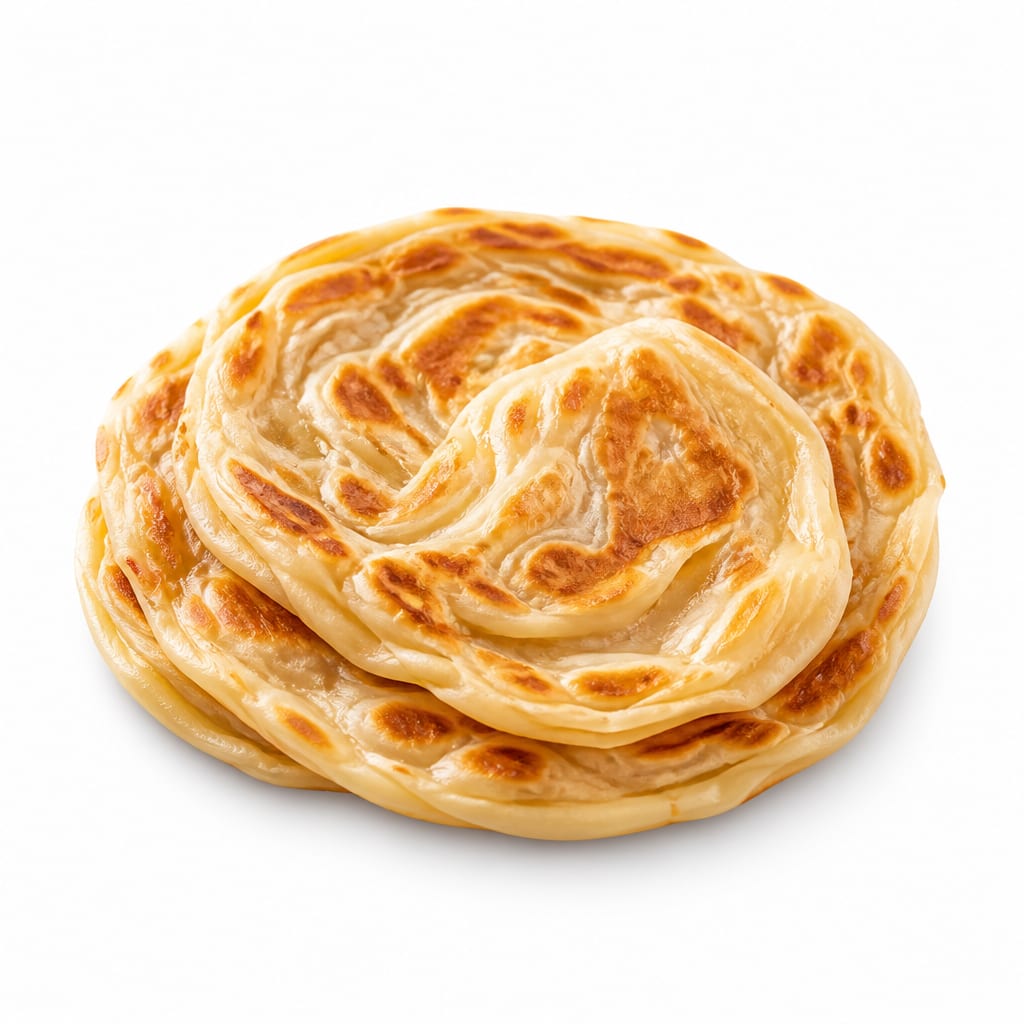
Roti Canai

Puri
Puri edges ahead thanks to whole wheat flour providing more fiber and steadier energy, though both are indulgent fried breads best enjoyed in moderation.
Puri scores moderately higher due to whole wheat flour offering more fiber and nutrients. However, both lose significant points for being fried and calorie-dense, keeping scores in the lower range overall.
Roti Canai delivers a more satisfying flaky texture and richer taste, but its refined flour spikes blood sugar faster. Puri uses whole wheat for better nutrition but is still deep-fried and calorie-dense.
At a glance
Executive summary
Overall
Puri
Healthier
Puri
More practical
It depends
Daily use
Puri
Key comparison lenses
Which fried flatbread is less harmful for regular consumption
Both are oil-heavy breads, so the real question is which does less damage when eaten frequently
Blood sugar and energy stability comparison
Refined flour versus whole wheat creates a meaningful glycemic difference that affects daily energy
Weight management tradeoff between two calorie-dense options
Neither is a weight-loss food, but portion and satiety differences matter for people trying to control intake
Digestive comfort and heaviness comparison
Both are fried and can feel heavy, but the oil quantity and flour type create different digestive experiences
Cultural meal pairing and practical eating context
These breads are rarely eaten alone, so what they're served with changes their nutritional impact significantly
Best choice for
Roti Canai
- People wanting a richer, more indulgent breakfast treat
- Those who prefer eating with dhal and curry as a dipping bread
- Anyone prioritizing taste and texture over nutritional optimization
Puri
- People managing blood sugar who still want a fried bread
- Those seeking slightly more fiber and satiety from their carb
- Families wanting a festive bread with marginally better nutrition
Least suitable for
Roti Canai
- People with diabetes or insulin resistance
- Anyone strictly managing calorie intake
- Those avoiding refined flour
Puri
- People on low-fat diets
- Those with gallbladder issues who cannot tolerate fried food
- Anyone monitoring sodium if served with salty accompaniments
Deep comparison
Dimension by dimension
Each lens scores both foods and breaks down who each option suits.
- Dimension 1 · Priority 92Puri
Blood Sugar Stability
Roti Canai · 25Puri · 48Roti Canai's refined flour causes rapid blood sugar spikes, while Puri's whole wheat slows glucose absorption noticeably.
Tradeoff
Neither is ideal for blood sugar control, but Puri is the lesser evil by a meaningful margin.
Why it matters
A refined-flour breakfast can trigger an energy crash within 2 hours, leaving you hungry again sooner.
Real-world impact
After Roti Canai, you may feel sleepy or hungry by mid-morning. Puri keeps energy slightly steadier.
Roti Canai
- Quick pre-workout energy if you need fast carbs
Better for
- Anyone with diabetes or metabolic syndrome
- Sedentary mornings where excess glucose gets stored as fat
Worse for
Puri
- Morning meals where you want to avoid the 10am crash
- People with prediabetes who still want a treat
Better for
- Those who assume whole wheat makes it safe to eat freely
Worse for
- Dimension 2 · Priority 88Puri
Satiety and Fullness
Roti Canai · 40Puri · 55Puri's whole wheat fiber keeps you full longer despite both being fried. Roti Canai's refined carbs digest quickly.
Tradeoff
Roti Canai feels more immediately satisfying from fat and texture, but hunger returns faster.
Why it matters
Staying full longer means less snacking and better portion control across the day.
Real-world impact
A Puri meal might hold you 3-4 hours. Roti Canai often leaves you reaching for a snack within 2-3 hours.
Roti Canai
- Situations where you want a rich, satisfying bite and will eat again soon
Better for
- Anyone prone to overeating when hunger returns quickly
Worse for
Puri
- Longer gaps between meals
- Active days where sustained energy matters
Better for
- Those who eat multiple puris and end up overconsuming calories
Worse for
- Dimension 3 · Priority 85It depends
Calorie and Fat Load
Roti Canai · 30Puri · 35Both are calorie-dense fried breads. Roti Canai absorbs more oil through its layered structure, while Puri is deep-fried but typically smaller per piece.
Tradeoff
A single Roti Canai can pack 300+ calories. One Puri is smaller at 100-150 calories, but people rarely eat just one.
Why it matters
Total calorie intake depends heavily on how many pieces you eat, not just the bread type.
Real-world impact
Two Roti Canai with dhal can hit 700+ calories. Four Puris with curry can reach similar territory.
Roti Canai
- When you naturally stop at one piece
Better for
- The flaky layers hide more oil than most people realize
Worse for
Puri
- Portion control through smaller individual pieces
Better for
- It is easy to lose count when puris keep coming at gatherings
Worse for
- Dimension 4 · Priority 75Puri
Nutrient Density
Roti Canai · 20Puri · 42Whole wheat gives Puri more B vitamins, iron, and fiber. Roti Canai's refined flour is nutritionally hollow beyond calories.
Tradeoff
The difference is real but modest since both are primarily carb-fat vehicles with limited micronutrients.
Why it matters
If a food is going to be calorie-dense, it should at least bring some nutrients along.
Real-world impact
Puri offers slightly more nutritional value per calorie, which matters when fried breads are a regular part of your diet.
Roti Canai
- Not applicable — Roti Canai does not win on nutrient density
Better for
- Essentially empty calories from refined flour and oil
Worse for
Puri
- Getting small amounts of iron and B vitamins alongside indulgence
- Slightly better daily nutritional accounting
Better for
- Still far from a nutrient-dense food — the margin is small
Worse for
- Dimension 5 · Priority 72It depends
Digestive Comfort
Roti Canai · 40Puri · 38Roti Canai's refined flour is easier to break down but the high oil content can cause bloating. Puri's whole wheat adds fiber that some find heavy when fried.
Tradeoff
Sensitive stomachs may handle Roti Canai better in small amounts, while others find Puri more comfortable due to slower digestion.
Why it matters
Fried bread on an upset stomach or before physical activity can cause discomfort regardless of type.
Real-world impact
After either bread, avoid vigorous activity for at least an hour. Both can cause heaviness and mild bloating.
Roti Canai
- People with mild IBS who tolerate low-fiber foods better
- Recovery meals when digestion needs to be gentle
Better for
- The combination of refined flour and high fat can trigger acid reflux
Worse for
Puri
- Those who benefit from fiber's bowel-regulating effects
Better for
- Fiber plus deep frying can feel heavy for sensitive digestive systems
Worse for
- Dimension 6 · Priority 68Puri
Inflammatory Potential
Roti Canai · 30Puri · 40Refined flour and repeated reheating of oil in Roti Canai preparation increases inflammatory compounds. Puri's whole wheat and typically fresh frying oil are slightly less concerning.
Tradeoff
Both involve high-heat oil cooking, which creates some inflammatory byproducts regardless.
Why it matters
Chronic low-grade inflammation from frequent fried food consumption contributes to long-term health risks.
Real-world impact
Eating either daily is not ideal, but Roti Canai from stalls that reuse oil extensively poses more concern.
Roti Canai
- Home-prepared Roti Canai with fresh oil reduces this gap significantly
Better for
- Street stall Roti Canai often uses repeatedly heated oil
Worse for
Puri
- Fresh oil and whole wheat make it marginally less inflammatory overall
Better for
- Any deep-fried food carries some inflammatory risk from high-heat cooking
Worse for
Timeline
Health impact over time
Short-term
Hours to days
Roti Canai
- Rapid blood sugar spike followed by energy dip within 2 hours
- Feeling of fullness that fades quickly due to low fiber
- Possible bloating from high oil content, especially on an empty stomach
Puri
- More gradual blood sugar rise compared to refined flour breads
- Longer-lasting satiety from whole wheat fiber
- Heavy feeling from deep-frying that may reduce physical activity comfort
Long-term
Months to years
Roti Canai
- Regular consumption contributes to insulin resistance risk from refined flour
- Frequent intake of reheated frying oil may increase inflammatory markers
- Higher likelihood of weight gain if eaten as a daily breakfast staple
Puri
- Marginally better metabolic profile from whole wheat, but still calorie-dense
- Fiber contribution supports bowel health when eaten regularly
- Deep-fried food frequency still raises cardiovascular concern over years
Risk profile
Safety & processing
Both are traditionally made from simple ingredients. The key difference is that Roti Canai uses refined white flour which is more processed, while Puri uses whole wheat flour that retains the grain's natural bran and germ. Neither typically contains artificial additives when made traditionally.
Roti Canai
Reused frying oil at street stalls
mediumRoti Canai is commonly sold at mamak stalls where oil is reused extensively, creating oxidized compounds and trans fats that increase health risks.
Hygiene variability at open-air vendors
mediumOpen kitchen preparation in tropical climates introduces contamination risk if food handling practices are inconsistent.
Puri
Deep-frying oil quality
lowPuri is typically fried at home with fresher oil, reducing oxidized fat exposure compared to commercial Roti Canai stalls.
Overconsumption leading to digestive distress
lowMultiple puris at gatherings can cause uncomfortable fullness and indigestion, especially when eaten quickly.
Who wins for whom
Audience fit
Same foods, different winners depending on your goal.
children
PuriWhole wheat provides more nutrients for growing bodies. Puri's smaller size also helps with portion control for smaller appetites.
daily consumption
PuriNeither should be daily, but if one must be chosen, Puri's whole wheat makes it slightly more sustainable as an occasional staple.
diabetes
PuriWhole wheat causes a slower glycemic response than refined flour. Still, both should be limited and paired with protein and fiber-rich curries.
elderly
PuriFiber from whole wheat supports digestive regularity, which becomes more important with age. Both should be eaten in moderation due to oil content.
muscle gain
It dependsNeither offers meaningful protein. Both provide carbs for energy, but muscle gain depends far more on what you eat alongside these breads.
weight loss
PuriPuri's whole wheat fiber provides better satiety per calorie, helping control overall intake. Neither is ideal, but Puri makes portion awareness easier.
Your move
Decision guide
Choose Roti Canai
- You want the richer, flakier indulgence and accept the nutritional cost
- You are eating at a mamak stall and Roti Canai is the freshest option
- You plan to eat just one piece with a protein-rich dhal to balance the meal
Choose Puri
- You want slightly better nutrition without giving up fried bread entirely
- Blood sugar management matters to you or your family
- You are cooking at home with fresh oil and whole wheat flour
Either works if
- It is a rare treat and nutritional differences barely matter
- You are pairing it with a large serving of vegetables and lean protein
- You are eating socially and the experience matters more than optimization
Avoid both if
- You have gallbladder issues and cannot tolerate fried food
- You are managing active heart disease and need to minimize fried food entirely
- You are on a strict low-calorie or low-fat diet for medical reasons
Final recommendation
For regular enjoyment, Puri is the smarter choice thanks to whole wheat's fiber and slower energy release. But the real win is limiting either bread to 2-3 times per week and always pairing with protein and vegetables. The biggest health risk is not which one you pick — it is eating either one daily as a breakfast staple.
Practical
Consumer tips
- 1
Pair either bread with dhal or egg curry instead of sugary condensations to reduce blood sugar impact
- 2
Limit yourself to one Roti Canai or two Puris per meal to control calories without feeling deprived
- 3
If making Puri at home, try shallow frying or using an air fryer for a lighter version with similar taste
- 4
Avoid Roti Canai from stalls with visibly dark or smoking oil — oxidized oil is genuinely harmful
- 5
Ask for Roti Canai without added sugar if the stall offers it, as some versions include sweetened dough
- 6
Freeze leftover whole wheat dough for Puri to make fresh batches easier and reduce the temptation to buy refined-flour alternatives