
Nutrition comparison
Kung Pao Chicken vs General Tso's Chicken: Which Is Healthier?
Kung Pao Chicken beats General Tso's on calories, sugar, and protein quality. Compare nutrition, sodium, and health impacts to make the smarter takeout choice.
Overall winner · Kung Pao Chicken
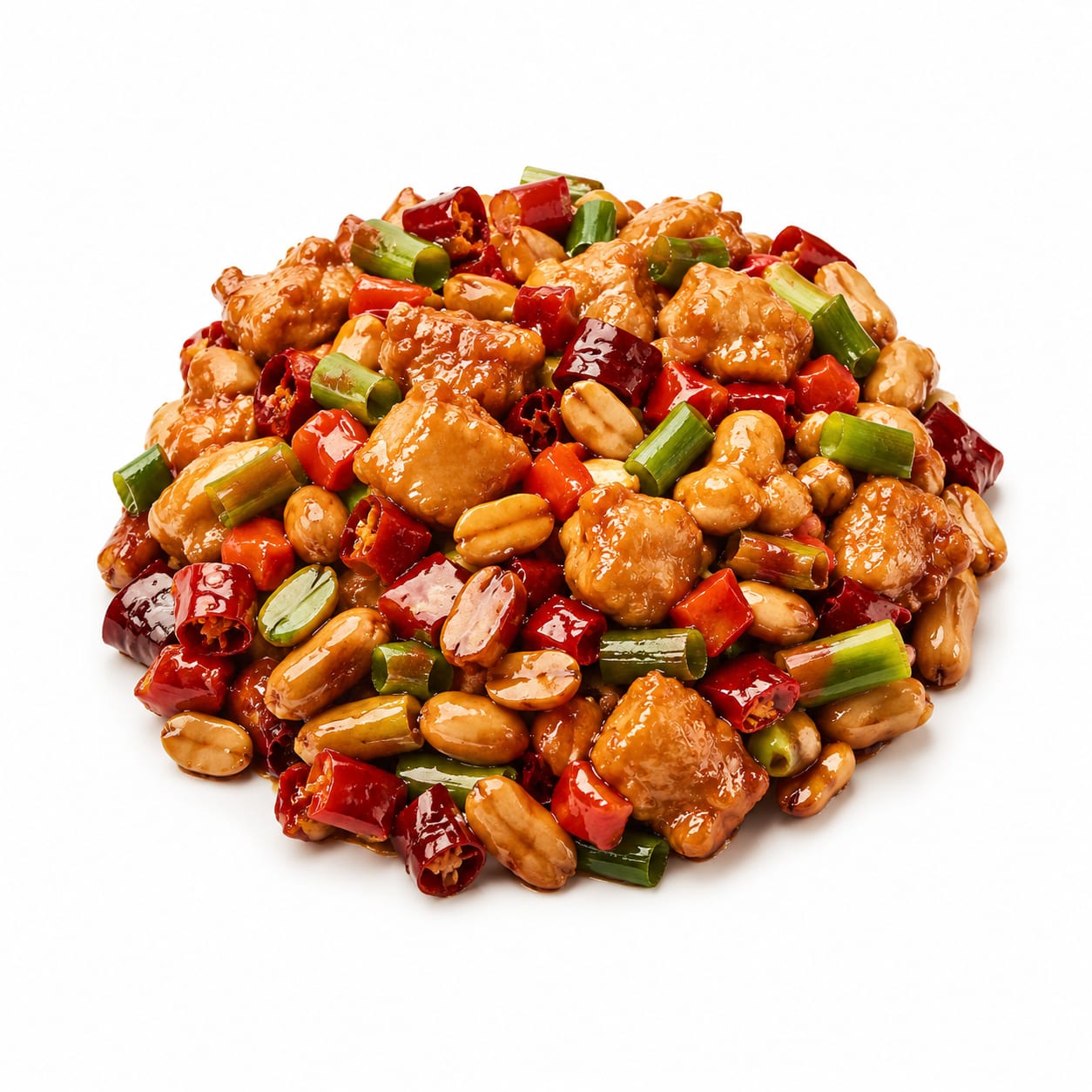
Kung Pao Chicken

General Tso's Chicken
Kung Pao Chicken wins fairly convincingly — less fried, less sugary, more protein-dense, and more vegetables. General Tso's is essentially candy-coated fried chicken.
Kung Pao Chicken scores moderately well because it's still restaurant Chinese food with high sodium, but its stir-fried preparation and lower sugar keep it in a different league. General Tso's scores poorly due to deep-frying, heavy sugary sauce, and minimal vegetable content — it's closer to dessert than dinner nutritionally.
You're trading the sweet, indulgent comfort of General Tso's for the leaner, spicier, more nutritionally honest profile of Kung Pao Chicken.
At a glance
Executive summary
Overall
Kung Pao Chicken
Healthier
Kung Pao Chicken
More practical
Kung Pao Chicken
Daily use
Kung Pao Chicken
Key comparison lenses
calorie and fat comparison between stir-fried vs deep-fried Chinese takeout
The cooking method difference is the single biggest nutritional divider here — stir-frying versus deep-frying creates a massive calorie gap
sugar and carbohydrate load from sauce differences
General Tso's sauce is heavily sweetened, while Kung Pao leans savory and spicy, creating very different blood sugar impacts
practical takeout ordering decisions
This comparison almost always happens while staring at a restaurant menu, so real-world ordering guidance matters enormously
sodium exposure from restaurant Chinese food
Both dishes are sodium bombs, but users need to understand the scale and whether one is meaningfully worse
weight management and satiety differences
People choosing between these dishes often care about which one will satisfy them without derailing their eating goals
Best choice for
Kung Pao Chicken
- People watching their weight who still want satisfying takeout
- Anyone managing blood sugar or reducing sugar intake
- Those who prefer savory-spicy flavors over sweet-heavy sauces
- Diners wanting more protein and less breading per bite
General Tso's Chicken
- Occasional indulgence when you're craving something sweet and fried
- People who find spicy food uncomfortable and prefer mild sweetness
- Those prioritizing comfort food satisfaction over nutritional profile
Least suitable for
Kung Pao Chicken
- People with peanut allergies — the peanuts are integral and cross-contamination is high
- Anyone sensitive to spicy food or Sichuan peppercorns
- Diners seeking mild, kid-friendly flavors
General Tso's Chicken
- Anyone managing diabetes or insulin resistance
- People on calorie-restricted diets — the calorie density is deceptively high
- Those watching cholesterol or fried food intake
- Anyone seeking a meal that won't cause an energy crash afterward
Deep comparison
Dimension by dimension
Each lens scores both foods and breaks down who each option suits.
- Dimension 1 · Priority 95Kung Pao Chicken
Calorie Density and Weight Impact
Kung Pao Chicken · 55General Tso's Chicken · 25Kung Pao Chicken typically runs 300-400 calories per cup, while General Tso's can hit 500-700 calories for the same portion due to deep-frying and sugary coating.
Tradeoff
You sacrifice the crispy, indulgent texture of deep-fried breading for significantly fewer calories and less post-meal heaviness.
Why it matters
A single General Tso's dinner can easily exceed 1,200 calories before rice. Kung Pao keeps you closer to a reasonable meal range.
Real-world impact
After General Tso's, you'll likely feel stuffed and sluggish. After Kung Pao, you'll feel full but not weighed down — the difference is noticeable by mid-afternoon.
Kung Pao Chicken
- Steadier energy after eating
- Easier portion control without feeling deprived
- Less post-meal food coma
Better for
- Less of that craveable crispy-fried mouthfeel
Worse for
General Tso's Chicken
- Maximum indulgence satisfaction per meal
Better for
- Easy to accidentally consume a full day's calories in one sitting
- High likelihood of overeating due to sugar-driven appetite stimulation
Worse for
- Dimension 2 · Priority 92Kung Pao Chicken
Sugar and Blood Sugar Impact
Kung Pao Chicken · 52General Tso's Chicken · 18General Tso's sauce is loaded with sugar — often 20-30g per serving. Kung Pao sauce is primarily savory and spicy with minimal added sweetness.
Tradeoff
General Tso's delivers a sweet flavor hit that feels comforting in the moment but causes a blood sugar spike and crash cycle.
Why it matters
The sugar in General Tso's turns a protein-centered meal into something metabolically closer to eating chicken nuggets with candy sauce.
Real-world impact
Two hours after General Tso's, you'll likely feel hungry again despite having eaten a heavy meal. Kung Pao's lower sugar means steadier energy for hours.
Kung Pao Chicken
- Stable blood sugar after eating
- No sugar crash or rebound hunger
- Better choice for anyone with insulin resistance or prediabetes
Better for
- May feel too savory for those expecting sweetness
Worse for
General Tso's Chicken
- Satisfies sweet cravings in a meal format
Better for
- Blood sugar roller coaster that triggers more cravings
- Particularly problematic for anyone with metabolic syndrome
Worse for
- Dimension 3 · Priority 80Kung Pao Chicken
Protein Quality and Satiety
Kung Pao Chicken · 62General Tso's Chicken · 35Kung Pao delivers more actual chicken per bite with less breading interference. General Tso's breading-to-meat ratio is often 50/50 or worse.
Tradeoff
You get more functional protein from Kung Pao, but General Tso's breading creates a more texturally satisfying bite.
Why it matters
The protein in Kung Pao actually fills you up. General Tso's fills you with fried flour coating that digests quickly and leaves you hungry sooner.
Real-world impact
Kung Pao keeps you satisfied for 4-5 hours. General Tso's often has you eyeing snacks within 2-3 hours despite higher calories.
Kung Pao Chicken
- More usable protein per calorie
- Longer-lasting fullness
- Peanuts add complementary protein and healthy fats
Better for
- Peanut calories add up quickly if portions are large
Worse for
General Tso's Chicken
- Crispy texture makes each bite feel more rewarding
Better for
- Breading displaces real protein
- Frying degrades some protein quality
Worse for
- Dimension 4 · Priority 78It depends
Sodium Load
Kung Pao Chicken · 28General Tso's Chicken · 25Both dishes are sodium landmines — typically 1,500-2,500mg per serving. Kung Pao may be slightly higher due to soy sauce intensity, but the difference is marginal.
Tradeoff
Neither dish is a good choice for sodium-sensitive individuals. The small edge here doesn't meaningfully protect you.
Why it matters
A single serving of either dish can approach or exceed your daily sodium limit. This is a shared weakness, not a differentiator.
Real-world impact
After either dish, you'll likely feel thirsty and may notice puffiness the next morning. The sodium impact is similarly rough from both.
Kung Pao Chicken
- Slightly less sodium in some restaurant preparations
Better for
- Soy sauce and salt content is still very high
- Sichuan preparations often add extra salt for flavor balance
Worse for
General Tso's Chicken
- Marginally less soy sauce intensity in some versions
Better for
- Sauce is still extremely sodium-dense
- Fried coating absorbs and retains more salty sauce
Worse for
- Dimension 5 · Priority 72Kung Pao Chicken
Vegetable Content and Micronutrients
Kung Pao Chicken · 48General Tso's Chicken · 15Kung Pao typically includes bell peppers, zucchini, and scallions. General Tso's is almost entirely chicken and sauce with a token broccoli garnish at best.
Tradeoff
Kung Pao gives you some actual vegetable matter and fiber. General Tso's is essentially a meat-and-sugar delivery system.
Why it matters
The vegetables in Kung Pao add fiber, vitamins, and volume that help fill you up without adding many calories.
Real-world impact
Kung Pao feels more like a complete meal. General Tso's feels like an appetizer that forgot to include anything green.
Kung Pao Chicken
- Contains actual vegetables with fiber and micronutrients
- More volume per calorie helps with satisfaction
- Scallions and peppers add vitamin C and antioxidants
Better for
- Vegetable portions are still modest compared to a proper stir-fry
Worse for
General Tso's Chicken
- No vegetable interference if you purely want meat and sauce
Better for
- Almost zero fiber or micronutrient contribution
- No vegetable volume to slow eating pace
Worse for
- Dimension 6 · Priority 75Kung Pao Chicken
Fat Profile and Inflammatory Impact
Kung Pao Chicken · 50General Tso's Chicken · 22Kung Pao's fat comes partly from peanuts and stir-frying oil. General Tso's fat is dominated by deep-frying oil, often repeatedly heated and inflammatory.
Tradeoff
Kung Pao includes some healthier fat sources from peanuts, while General Tso's delivers mostly oxidized frying oil.
Why it matters
Repeatedly heated deep-frying oil creates inflammatory compounds. Peanut fat, while calorie-dense, offers monounsaturated fats and satiety.
Real-world impact
General Tso's is more likely to trigger bloating or digestive discomfort. Kung Pao's fat profile is gentler on your system despite still being heavy.
Kung Pao Chicken
- Peanuts contribute anti-inflammatory monounsaturated fats
- Stir-frying uses less oil overall
- Less oxidized fat intake
Better for
- Still a high-fat dish with significant oil
- Peanut allergies make this completely inaccessible for some
Worse for
General Tso's Chicken
- Deep-frying creates a more satisfying crispy texture
Better for
- Deep-fried oil is pro-inflammatory
- Higher total fat content with worse quality fat
- Can trigger digestive upset in sensitive individuals
Worse for
Timeline
Health impact over time
Short-term
Hours to days
Kung Pao Chicken
- Satisfying fullness without heavy sluggishness
- Possible mild heartburn from spice and Sichuan peppercorns
- Thirst from high sodium content
- Sustained energy for 3-4 hours after eating
General Tso's Chicken
- Immediate satisfaction from sweet and fried combination
- Noticeable food coma and energy crash within 1-2 hours
- Strong thirst from sodium and sugar combination
- Possible bloating from heavy fried batter and thick sauce
Long-term
Months to years
Kung Pao Chicken
- More sustainable for occasional takeout without major weight impact
- Spice compounds like capsaicin may offer mild metabolic benefits
- Sodium intake remains a concern with regular consumption
- Peanut consumption linked to heart health when portion-controlled
General Tso's Chicken
- Regular consumption significantly increases risk of weight gain
- High sugar intake from sauce contributes to insulin resistance risk
- Deep-fried food regularly linked to increased inflammation markers
- Sodium load compounds cardiovascular risk over time
Risk profile
Safety & processing
Kung Pao Chicken uses relatively whole ingredients — chicken, peanuts, vegetables, and a sauce built from soy sauce, vinegar, and chili. General Tso's requires thick breading, deep-frying, and a heavily sweetened sauce that often includes corn syrup, food coloring, and modified starches. The processing gap is significant.
Kung Pao Chicken
Peanut cross-contamination
highPeanuts are a core ingredient, making this dish dangerous for anyone with peanut allergies. Restaurant kitchens may not adequately separate allergens.
Sodium-related health impact
mediumConsistently high sodium levels pose cardiovascular risk, especially for salt-sensitive individuals eating this regularly.
MSG sensitivity
lowSome restaurants add MSG, which can cause mild symptoms in sensitive individuals, though the science on MSG harm is largely debunked.
General Tso's Chicken
Oxidized frying oil
mediumDeep-frying in repeatedly heated oil creates compounds linked to inflammation and oxidative stress. Budget restaurants may reuse oil extensively.
Added food coloring
lowThe characteristic red-orange color often comes from artificial dyes, which some consumers prefer to avoid.
Sodium and sugar combination
highThe dual hit of extreme sodium and sugar creates a particularly challenging metabolic load, more concerning than either alone.
Who wins for whom
Audience fit
Same foods, different winners depending on your goal.
children
General Tso's ChickenKids typically prefer the sweet, mild, crispy profile of General Tso's over the spicy, peanut-heavy Kung Pao, though neither is an ideal children's meal.
daily consumption
It dependsNeither dish should be eaten daily due to sodium levels. If forced to choose, Kung Pao is less harmful as a regular option, but both are best limited to weekly or less.
diabetes
Kung Pao ChickenDramatically less sugar in the sauce and a lower glycemic impact make Kung Pao safer for blood sugar management, though sodium remains a concern.
elderly
Kung Pao ChickenKung Pao offers better protein density and vegetable content, which matters more for older adults. However, sodium is a shared concern for blood pressure management.
muscle gain
Kung Pao ChickenHigher usable protein content and less breading filler mean more amino acids per calorie for muscle recovery and growth.
weight loss
Kung Pao ChickenFewer calories, less sugar, more protein per bite, and better satiety make Kung Pao the clearly better choice for weight management.
Your move
Decision guide
Choose Kung Pao Chicken
- You want takeout that won't completely derail your eating goals
- Blood sugar management matters to you
- You prefer savory and spicy over sweet and fried
- You want more actual protein and less breading per bite
- You find that heavy fried food causes bloating or sluggishness
Choose General Tso's Chicken
- It's a rare treat and you want maximum comfort food satisfaction
- Spicy food genuinely bothers you or causes digestive issues
- You're sharing with someone who prefers milder, sweeter flavors
- You've already had a low-sodium day and can afford the indulgence
Either works if
- You're ordering takeout as an occasional treat regardless of nutritional profile
- You plan to eat only a small portion and pair it with steamed vegetables and brown rice
- Neither dish is a regular part of your diet
Avoid both if
- You have severe hypertension and are on a strict low-sodium diet
- You're managing kidney disease and need to limit sodium, potassium, and phosphorus
- You have peanut allergies — Kung Pao is unsafe, and cross-contamination risk exists in most Chinese kitchens
- You're following a clean-eating or whole-food protocol
Final recommendation
Kung Pao Chicken is the clear winner for anyone making a health-conscious takeout choice. It delivers more protein, less sugar, fewer calories, and some actual vegetables. General Tso's Chicken is essentially fried chicken in candy sauce — fine as an occasional indulgence, but a rough choice for regular consumption. If you're staring at a takeout menu, Kung Pao is the move your body will thank you for tomorrow.
Practical
Consumer tips
- 1
Ask for sauce on the side — this works for both dishes and can cut sugar and sodium by 30-40%
- 2
Pair either dish with steamed broccoli and brown rice instead of white rice to add fiber and slow sugar absorption
- 3
Request light oil preparation for Kung Pao — many restaurants will accommodate and reduce calories significantly
- 4
Split a General Tso's order with someone and supplement with a vegetable dish if you're craving it
- 5
Avoid eating either dish late at night — the sodium and fat will disrupt sleep quality
- 6
Drink extra water before and after either meal to help manage the sodium load
- 7
Consider making Kung Pao at home — you control the oil, sugar, and sodium, and it's genuinely not hard to prepare