
Nutrition comparison
Green Curry vs Tom Yum Soup: Which Thai Dish Is Healthier?
Compare Green Curry and Tom Yum Soup on calories, fat, satiety, and health impact. Find out which Thai classic fits your diet and lifestyle better.
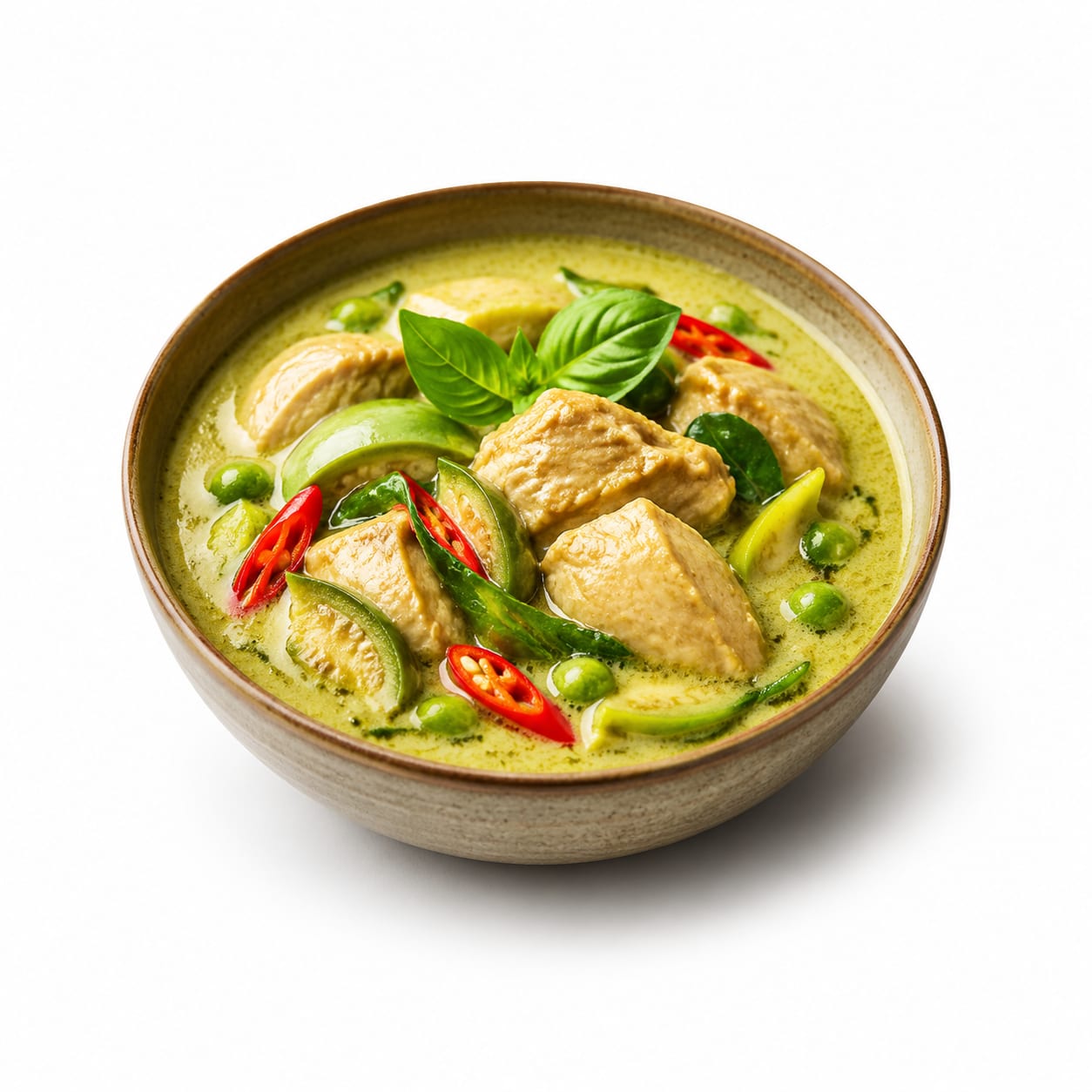
Green Curry
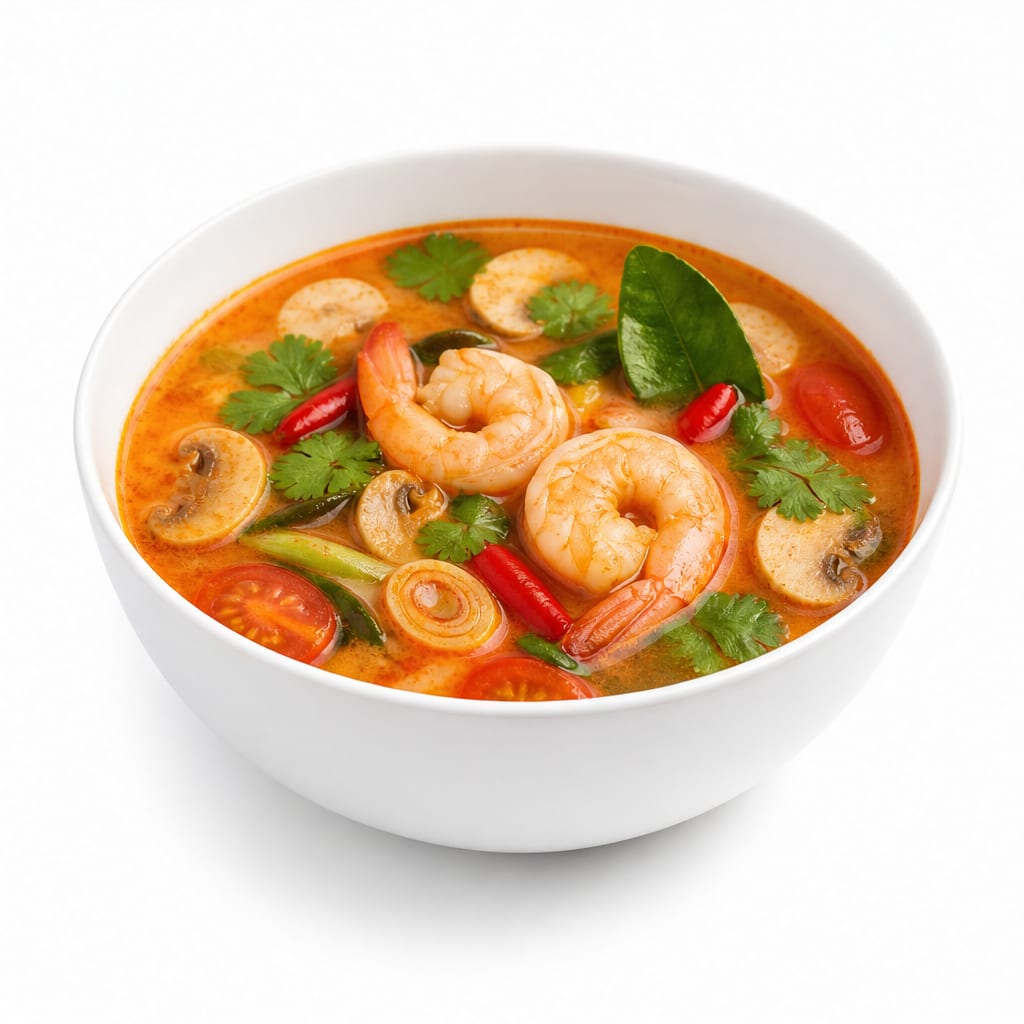
Tom Yum Soup
Tom Yum Soup is the lighter, lower-calorie choice ideal for weight management, while Green Curry delivers more satiety and comfort but at a significant calorie and fat cost.
Tom Yum Soup scores higher primarily due to its dramatically lower calorie density and saturated fat content. Green Curry loses ground on heart health and weight management but earns points for satiety and as a more complete meal. The gap reflects that most people eat these dishes regularly, where calorie and fat accumulation matters more than occasional indulgence.
Creamy satisfaction versus caloric lightness — Green Curry fills you up with coconut milk richness, Tom Yum keeps you lean with a broth base.
At a glance
Executive summary
Overall
It depends
Healthier
Tom Yum Soup
More practical
It depends
Daily use
Tom Yum Soup
Key comparison lenses
Calorie and fat consciousness
Coconut milk makes Green Curry dramatically higher in calories and saturated fat compared to broth-based Tom Yum
Weight management suitability
Users choosing between these two Thai classics are often deciding between a rich meal and a lighter option
Satiety vs lightness tradeoff
Green Curry fills you up more but feels heavier; Tom Yum is refreshing but may leave you hungry sooner
Sodium and heart health awareness
Both dishes rely on fish sauce and salty seasonings, but the fat profile difference matters more for cardiovascular risk
Anti-inflammatory and immune benefits
Both feature potent herbs like lemongrass and galangal, but delivery and concentration differ
Best choice for
Green Curry
- People needing higher calorie intake or healthy weight gain
- Those seeking a comforting, filling meal after physical labor
- Anyone wanting a more complete one-dish meal with protein and fat
- Fans of creamy textures who find broth-based soups unsatisfying
Tom Yum Soup
- People actively managing their weight
- Those watching saturated fat or calorie intake
- Anyone wanting a flavorful appetizer without heavy fullness
- Hot weather eating where lighter food feels better
Least suitable for
Green Curry
- People with heart conditions needing low saturated fat
- Anyone strictly counting calories
- Those with gallbladder issues triggered by high-fat meals
- People who feel sluggish after rich, creamy dishes
Tom Yum Soup
- People who need a substantial meal to feel satisfied
- Those with sensitive stomachs bothered by high acidity and spice
- Anyone needing sustained energy from a single dish
- People on low-sodium diets who already consume salty foods daily
Deep comparison
Dimension by dimension
Each lens scores both foods and breaks down who each option suits.
- Dimension 1 · Priority 95Tom Yum Soup
Calorie Density and Weight Management
Green Curry · 35Tom Yum Soup · 88Tom Yum Soup has roughly one-third the calories of Green Curry per serving due to its broth base versus coconut milk.
Tradeoff
You sacrifice the creamy richness and staying power of Green Curry, but you gain a dish you can eat more freely without weight concerns.
Why it matters
A single bowl of Green Curry can easily hit 400-600 calories from coconut milk alone. Tom Yum typically lands around 100-200 calories per bowl.
Real-world impact
Eating Green Curry twice a week instead of Tom Yum could mean an extra 400-800 calories weekly — enough to gain nearly a pound per month if nothing else changes.
Green Curry
- Underweight individuals needing calorie density
- Endurance athletes refueling after intense sessions
Better for
- Consistent weight gain if eaten frequently
- Difficulty staying within calorie budgets
Worse for
Tom Yum Soup
- Anyone tracking calories for weight loss
- People who want to eat a full bowl without guilt
Better for
- May need to eat more food afterward to feel full
- Less suitable as a standalone meal
Worse for
- Dimension 2 · Priority 85Green Curry
Satiety and Fullness
Green Curry · 82Tom Yum Soup · 45Green Curry's coconut milk fat and typically larger protein portions keep you full much longer than Tom Yum's light broth.
Tradeoff
That fullness comes with a heavy calorie price tag. Tom Yum digests quickly, which is great for lightness but bad for hunger control.
Why it matters
Fat slows gastric emptying and triggers satiety hormones. Green Curry delivers this naturally; Tom Yum relies on spice and acid which stimulate but do not sustain fullness.
Real-world impact
After Tom Yum, you may feel hungry again within 1-2 hours. Green Curry can keep you satisfied for 3-4 hours easily.
Green Curry
- Long work shifts where you cannot snack
- Replacing a full dinner with one dish
Better for
- That overly stuffed feeling that kills productivity
- Post-meal food coma during afternoon work
Worse for
Tom Yum Soup
- Appetizer before a main course
- Late-night eating where you want to sleep comfortably
Better for
- Reaching for snacks shortly after your meal
- Overeating later because you never felt satisfied
Worse for
- Dimension 3 · Priority 88Tom Yum Soup
Heart Health and Fat Profile
Green Curry · 38Tom Yum Soup · 78Tom Yum's broth base avoids the significant saturated fat load that coconut milk brings to Green Curry.
Tradeoff
Coconut fat does have some medium-chain triglycerides with potential benefits, but the overall saturated fat load still raises LDL cholesterol concerns for regular consumption.
Why it matters
A typical Green Curry serving contains 20-35g of saturated fat — near or exceeding the daily recommended limit. Tom Yum has negligible fat content.
Real-world impact
Eating Green Curry several times a week could meaningfully impact cholesterol levels over months. Tom Yum poses essentially no fat-related cardiovascular risk.
Green Curry
- Healthy active people who metabolize fat efficiently
- Ketogenic dieters who want flavorful high-fat meals
Better for
- Consistent LDL cholesterol elevation with frequent consumption
- Potential arterial health concerns over years
Worse for
Tom Yum Soup
- People with family history of heart disease
- Anyone with elevated LDL cholesterol
Better for
- Missing out on fat-soluble vitamin absorption that dietary fat supports
Worse for
- Dimension 4 · Priority 70It depends
Anti-Inflammatory and Immune Benefits
Green Curry · 72Tom Yum Soup · 75Both dishes feature powerful anti-inflammatory herbs like lemongrass, galangal, and kaffir lime. Tom Yum has slightly higher herb concentration relative to volume.
Tradeoff
Green Curry's fat actually helps absorb fat-soluble beneficial compounds, but its saturated fat has inflammatory potential that partially offsets the herb benefits.
Why it matters
Galangal and lemongrass have documented anti-inflammatory and antimicrobial properties. The question is whether the delivery vehicle helps or hinders.
Real-world impact
Both soups can help with mild congestion, cold symptoms, and general inflammation. Tom Yum feels more immediately therapeutic when you are sick because it is lighter and steamier.
Green Curry
- Better absorption of fat-soluble antioxidants from herbs
- Warming comfort that supports recovery when you are run down
Better for
- Saturated fat may promote low-grade inflammation with frequent intake
Worse for
Tom Yum Soup
- Higher relative concentration of therapeutic herbs per calorie
- Lighter on the stomach when you feel unwell
Better for
- Lower absorption of some beneficial compounds without fat present
Worse for
- Dimension 5 · Priority 72It depends
Sodium Load
Green Curry · 42Tom Yum Soup · 40Both dishes are sodium-heavy from fish sauce and curry paste. Neither is a low-sodium winner.
Tradeoff
Tom Yum sometimes uses more fish sauce to compensate for the absence of coconut milk's flavor richness, making sodium levels surprisingly comparable.
Why it matters
A single serving of either dish can contain 800-1500mg sodium, which is a substantial portion of the recommended daily limit of 2300mg.
Real-world impact
If you have blood pressure concerns, both dishes require caution. Requesting reduced fish sauce helps either option significantly.
Green Curry
- Coconut milk adds flavor depth so slightly less fish sauce may be needed
Better for
- Curry paste itself contributes significant sodium beyond fish sauce
Worse for
Tom Yum Soup
- Easier to request broth on the side and control sodium intake
Better for
- Restaurants often over-salt broth-based soups to enhance perceived flavor
Worse for
- Dimension 6 · Priority 68It depends
Digestive Comfort
Green Curry · 55Tom Yum Soup · 60Green Curry's fat can soothe or irritate depending on your digestive system. Tom Yum's acidity and spice can trigger reflux but feels lighter overall.
Tradeoff
If you have acid reflux, Tom Yum's lime and chili may be worse. If you have gallbladder issues, Green Curry's fat is the bigger problem.
Why it matters
Both dishes are spicy and herb-forward, but the nature of digestive discomfort differs — fat-heavy versus acid-heavy.
Real-world impact
After Green Curry, you might feel heavy and bloated. After Tom Yum, you might feel heartburn. Pick your digestive discomfort based on your body's tendencies.
Green Curry
- Fat can coat the stomach and reduce direct spice irritation for some people
Better for
- High fat triggers gallbladder symptoms in susceptible people
- Slower digestion can worsen reflux when lying down
Worse for
Tom Yum Soup
- Broth-based meals empty from the stomach faster
- Less likely to cause that heavy, sluggish digestive feeling
Better for
- High acidity from lime juice aggravates GERD and acid reflux
- Chili-heavy broth can irritate sensitive stomachs
Worse for
Timeline
Health impact over time
Short-term
Hours to days
Green Curry
- Strong satiety and reduced hunger for hours
- Possible post-meal drowsiness from high fat content
- Warming comfort that feels emotionally satisfying
- Potential bloating or heaviness if portion is large
Tom Yum Soup
- Quick feeling of lightness and refreshment
- Possible heartburn from acidity and spice on empty stomach
- Clearing of sinuses from aromatic steam and chili
- Hunger returning within 1-2 hours
Long-term
Months to years
Green Curry
- Elevated LDL cholesterol with frequent consumption due to saturated fat
- Possible weight gain if eaten regularly without portion control
- Consistent intake of anti-inflammatory herbs supports immune function
- Risk of cardiovascular concerns if coconut milk intake is excessive
Tom Yum Soup
- Better weight maintenance due to low calorie density
- Minimal cardiovascular risk from fat content
- Consistent exposure to beneficial herbs and spices
- Potential blood pressure concerns if sodium intake from restaurant versions is high
Risk profile
Safety & processing
Both dishes rely on curry paste or chili paste which often contains preservatives and added sodium. Restaurant versions of both may include MSG and commercial sauce concentrates. Home-cooked versions with fresh paste are significantly cleaner for both Green Curry and Tom Yum.
Green Curry
Coconut milk spoilage
mediumCoconut milk can spoil quickly at room temperature. Left out at buffets or reheated improperly, it becomes a foodborne illness risk.
Shrimp or seafood contamination
mediumIf Green Curry contains shrimp, undercooking or poor storage increases risk of bacterial contamination.
Tom Yum Soup
Seafood spoilage in broth
highTom Yum typically features shrimp which sits in warm broth. If not kept at proper temperature, bacterial growth is a significant concern.
Raw herb contamination
lowFresh herbs like cilantro and lemongrass can carry pesticide residue or bacteria if not washed properly.
Who wins for whom
Audience fit
Same foods, different winners depending on your goal.
children
Green CurryGreen Curry's creamy, milder versions are more appealing to kids. Tom Yum's intense sourness and spice often overwhelm young palates.
daily consumption
Tom Yum SoupThe lower calorie and fat burden makes Tom Yum more sustainable as a regular choice without negative metabolic accumulation.
diabetes
Tom Yum SoupLower in calories and saturated fat, Tom Yum has less impact on insulin resistance. Both are similar in carbohydrate content.
elderly
Tom Yum SoupLighter digestion and lower saturated fat make Tom Yum more appropriate for older adults managing heart health and appetite.
muscle gain
Green CurryGreen Curry typically contains more protein from chicken or tofu and the calorie surplus supports muscle-building goals.
weight loss
Tom Yum SoupTom Yum's broth base delivers bold flavor at a fraction of the calories, making it far easier to stay in a calorie deficit.
Your move
Decision guide
Choose Green Curry
- You want a satisfying, filling meal that stands alone without sides
- You are at a healthy weight and not concerned about calorie intake
- You are eating after intense physical activity and need substantial fuel
- You find broth-based soups unsatisfying and end up snacking afterward
- You are following a higher-fat or ketogenic dietary approach
Choose Tom Yum Soup
- You are actively managing your weight or watching calories
- You want a flavorful starter without ruining your appetite for the main course
- Heavy, creamy meals make you feel sluggish or unfocused
- You are eating in hot weather and want something refreshing
- You have heart health concerns and need to limit saturated fat
Either works if
- You want anti-inflammatory benefits from Thai herbs and spices
- You are eating at a quality Thai restaurant where both are made fresh
- You are dining socially and either fits the mood
Avoid both if
- You are on a strict low-sodium diet for blood pressure management
- You have severe spice intolerance or GI conditions triggered by chili
- You have seafood allergies and cannot verify ingredients
Final recommendation
For most people eating Thai food regularly, Tom Yum Soup is the smarter default — it delivers incredible flavor with far fewer metabolic consequences. Save Green Curry for when you genuinely need the comfort and fullness of a rich meal, not as a routine choice. If you love Green Curry, consider requesting light coconut milk or splitting the portion with rice to reduce the calorie density while still enjoying the taste.
Practical
Consumer tips
- 1
Ask for Tom Yum with less fish sauce to cut sodium by 30-40% without sacrificing the herb flavors
- 2
Order Green Curry with light coconut milk — most Thai restaurants will accommodate this and it reduces calories by roughly 40%
- 3
Pair Tom Yum with a small portion of rice or a satay side to improve satiety without adding excessive calories
- 4
Avoid buffet versions of either soup — temperature control and freshness suffer, increasing food safety risks
- 5
Make both at home using fresh curry paste to eliminate preservatives and control sodium precisely
- 6
If ordering Green Curry, eat it with extra vegetables to dilute the calorie density per bite