
Nutrition comparison
Green Curry vs Thai Basil Stir-Fry: Which Thai Dish Is Healthier?
Compare Green Curry and Thai Basil Stir-Fry nutrition facts including calories, saturated fat, sodium, and health impact. Find out which Thai dish is better for weight loss, heart health, and daily eating.
Overall winner · Thai Basil Stir-Fry
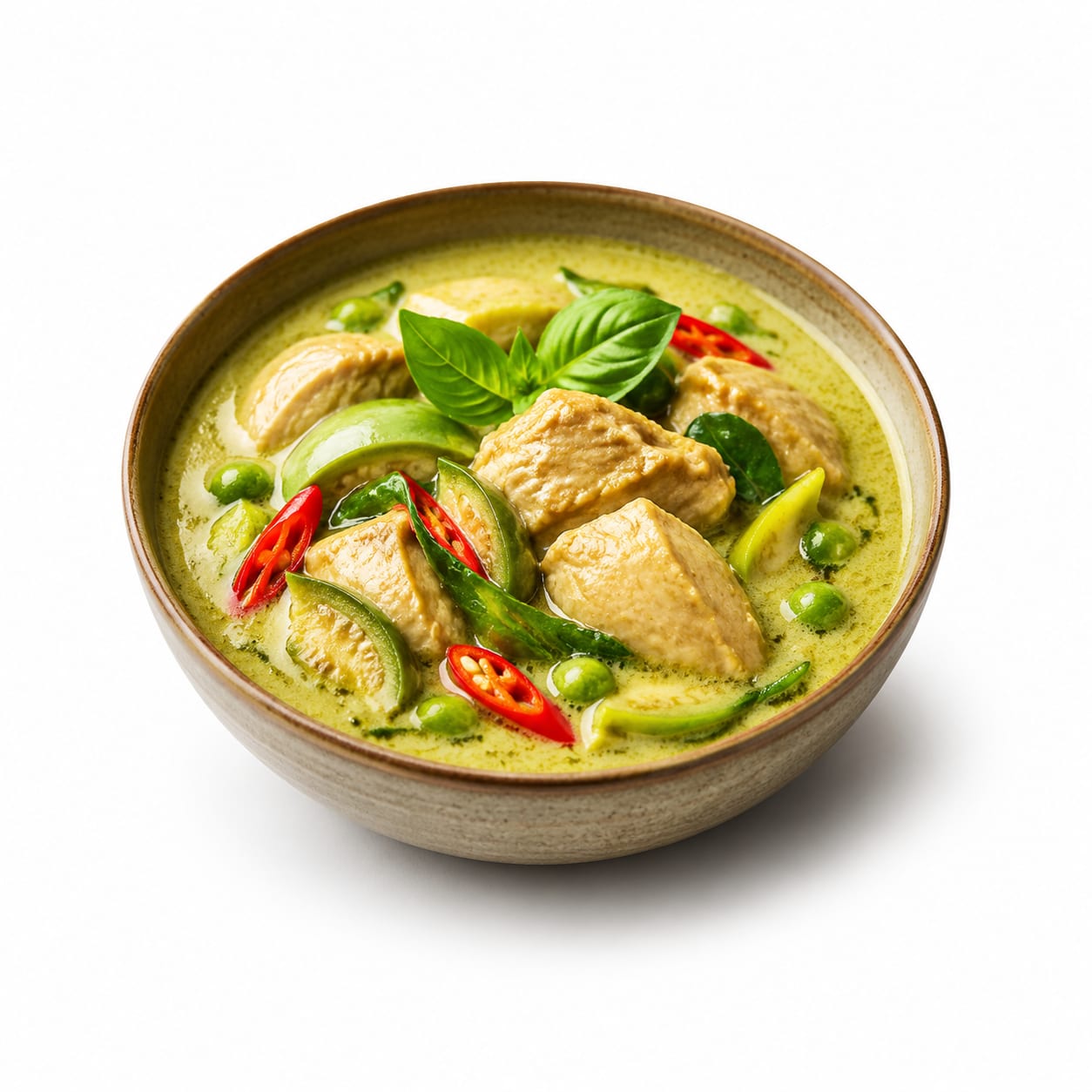
Green Curry
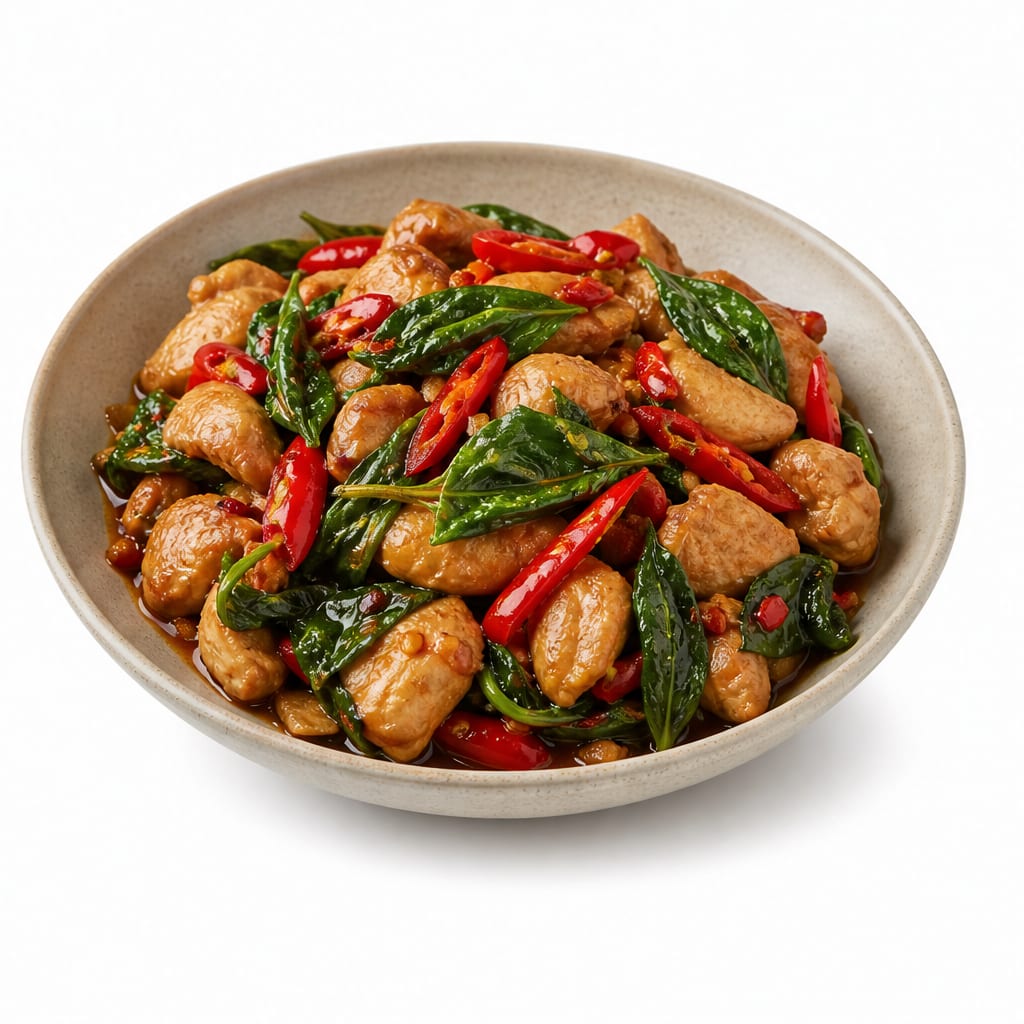
Thai Basil Stir-Fry
Thai Basil Stir-Fry wins for regular eating thanks to lower saturated fat and fewer calories, but Green Curry offers richer micronutrients from its spice paste and vegetable variety.
Thai Basil Stir-Fry scores moderately higher primarily due to its lighter fat profile and lower calorie density. Green Curry remains nutritionally valuable but its coconut milk base creates a significant saturated fat load that pulls its score down for regular consumption.
Creamy satisfaction and broader nutrient profile versus lighter calorie load and better heart health markers.
At a glance
Executive summary
Overall
Thai Basil Stir-Fry
Healthier
Thai Basil Stir-Fry
More practical
Thai Basil Stir-Fry
Daily use
Thai Basil Stir-Fry
Key comparison lenses
Which Thai dish is healthier for regular consumption
Both are popular Thai restaurant staples, users want to know which to order more often
Saturated fat and heart health tradeoffs
Coconut milk in Green Curry dramatically changes the fat profile compared to oil-based stir-fry
Calorie density and weight management
Coconut cream makes Green Curry significantly more calorie-dense per bite
Sodium load comparison
Both dishes rely on high-sodium sauces but from different sources
Everyday meal sustainability
Users eating Thai food weekly need to know which dish supports long-term health goals
Best choice for
Green Curry
- People needing higher calorie intake
- Those seeking anti-inflammatory spice benefits
- Anyone wanting a more filling, comforting meal
Thai Basil Stir-Fry
- Weight-conscious diners
- People managing heart health or cholesterol
- Those who prefer lighter, quicker-cooking meals
Least suitable for
Green Curry
- People with high cholesterol concerns
- Those on calorie-restricted diets
- Anyone monitoring saturated fat intake
Thai Basil Stir-Fry
- People sensitive to spicy food
- Those needing higher calorie meals
- Anyone avoiding fish sauce due to allergies
Deep comparison
Dimension by dimension
Each lens scores both foods and breaks down who each option suits.
- Dimension 1 · Priority 95Thai Basil Stir-Fry
Saturated Fat and Heart Health
Green Curry · 35Thai Basil Stir-Fry · 70Green Curry's coconut milk delivers a heavy dose of saturated fat, while Thai Basil Stir-Fry uses modest cooking oil with far less saturated content.
Tradeoff
You gain creamy texture and MCTs with Green Curry but at the cost of substantially more saturated fat per serving.
Why it matters
Regular high saturated fat intake raises LDL cholesterol, making Green Curry a riskier choice for heart health when eaten frequently.
Real-world impact
Ordering Green Curry twice a week could meaningfully impact cholesterol levels over months; Thai Basil Stir-Fry is gentler on your arteries.
Green Curry
- Quick energy from MCTs
- More satiating fat content
Better for
- High saturated fat raises cardiovascular risk
- Less suitable for daily consumption
Worse for
Thai Basil Stir-Fry
- Lower LDL cholesterol impact
- Better lipid profile for heart patients
Better for
- Less satisfying mouthfeel
- Fewer beneficial MCTs
Worse for
- Dimension 2 · Priority 90Thai Basil Stir-Fry
Calorie Density and Weight Management
Green Curry · 40Thai Basil Stir-Fry · 72Coconut milk makes Green Curry nearly twice as calorie-dense as Thai Basil Stir-Fry per serving.
Tradeoff
Green Curry feels more filling per bowl, but the calories add up fast if you eat it regularly.
Why it matters
For anyone tracking weight, the calorie difference between these dishes can be 200-400 calories per meal depending on portion size.
Real-world impact
Swapping Green Curry for Thai Basil Stir-Fry a few times a week could save you 600-1200 calories weekly without feeling deprived.
Green Curry
- Higher calorie density supports bulking goals
- More satiating per serving for some eaters
Better for
- Easy to overeat calories without realizing
- Coconut cream portions vary wildly at restaurants
Worse for
Thai Basil Stir-Fry
- Easier to maintain calorie deficit
- Less risk of accidental overconsumption
Better for
- May feel less satisfying as a standalone meal
- Could trigger snacking later if portions are small
Worse for
- Dimension 3 · Priority 78Green Curry
Micronutrient and Spice Benefits
Green Curry · 78Thai Basil Stir-Fry · 65Green Curry paste contains turmeric, galangal, lemongrass, and kaffir lime, delivering broader anti-inflammatory compounds than Thai Basil Stir-Fry's simpler chili-garlic base.
Tradeoff
More diverse phytonutrients in Green Curry come packaged with more fat and calories.
Why it matters
The spice blend in Green Curry provides measurable antioxidant and anti-inflammatory benefits that Thai Basil Stir-Fry matches only partially through its basil and chili content.
Real-world impact
If you eat Thai food for its medicinal spice properties, Green Curry delivers a wider spectrum of beneficial compounds per meal.
Green Curry
- Broader anti-inflammatory spice profile
- More vegetable variety typically included
- Galangal and lemongrass support digestion
Better for
- Fat-soluble vitamins require the coconut milk for absorption, adding calories
- Spice benefits can be overstated relative to portion sizes
Worse for
Thai Basil Stir-Fry
- Thai basil provides unique flavonoids
- Garlic offers allicin benefits
Better for
- Narrower range of beneficial spices
- Fewer vegetables typically included
Worse for
- Dimension 4 · Priority 82It depends
Sodium Load
Green Curry · 38Thai Basil Stir-Fry · 35Both dishes are sodium bombs. Green Curry relies on curry paste and fish sauce, while Thai Basil Stir-Fry leans heavily on fish sauce and soy sauce.
Tradeoff
Neither dish wins on sodium. Both can easily exceed 1000mg per serving at restaurants.
Why it matters
For blood pressure management, both dishes require caution. Restaurant versions are consistently high-sodium.
Real-world impact
If you have hypertension, neither dish is ideal. Requesting less sauce helps both equally.
Green Curry
- Homemade versions allow curry paste portion control
Better for
- Curry paste sodium is hidden and hard to reduce
- Bowl format means everything sits in salty liquid
Worse for
Thai Basil Stir-Fry
- Slightly easier to request light sauce at restaurants
Better for
- Fish sauce and soy sauce combo is extremely sodium-dense
- Stir-fry sauce clings directly to meat and vegetables
Worse for
- Dimension 5 · Priority 75It depends
Protein Quality and Satiety
Green Curry · 65Thai Basil Stir-Fry · 68Thai Basil Stir-Fry typically features ground meat with higher protein density per calorie, while Green Curry's protein is diluted by coconut milk volume.
Tradeoff
Green Curry feels heavier due to fat content, but Thai Basil Stir-Fry provides more actual protein per bite.
Why it matters
Protein drives true satiety and muscle maintenance. The fat-based fullness from Green Curry fades faster than protein-based fullness from Thai Basil Stir-Fry.
Real-world impact
After Thai Basil Stir-Fry, you are less likely to feel hungry again within two hours compared to Green Curry despite its heavier initial feel.
Green Curry
- Fat content provides immediate satiety signals
- Works well with tofu for plant-based protein
Better for
- Protein gets lost in coconut milk volume
- Fat-based satiety is shorter-lived
Worse for
Thai Basil Stir-Fry
- Higher protein-to-calorie ratio
- Ground meat absorbs flavor efficiently, encouraging adequate portions
Better for
- Leaner versions may feel less satisfying initially
- Smaller vegetable volume means less fiber-based fullness
Worse for
- Dimension 6 · Priority 70Thai Basil Stir-Fry
Digestive Comfort
Green Curry · 55Thai Basil Stir-Fry · 68Coconut milk can cause bloating in sensitive individuals, while Thai Basil Stir-Fry's simpler preparation is generally easier on the stomach.
Tradeoff
Green Curry's lemongrass and galangal aid digestion, but the heavy coconut milk counteracts those benefits for many people.
Why it matters
Post-meal comfort affects productivity and mood. Heavy coconut-based dishes are common triggers for afternoon sluggishness.
Real-world impact
A lunchtime Thai Basil Stir-Fry is less likely to leave you fighting food coma at your desk than a creamy Green Curry.
Green Curry
- Galangal and lemongrass have carminative properties
- Warming spices can soothe some digestive issues
Better for
- High fat content slows digestion significantly
- Coconut milk is a common bloating trigger
Worse for
Thai Basil Stir-Fry
- Lighter preparation reduces bloating risk
- Less fat means faster gastric emptying
Better for
- Spicy versions can irritate sensitive stomachs
- Less liquid means less hydration during the meal
Worse for
Timeline
Health impact over time
Short-term
Hours to days
Green Curry
- Heavy fullness that may cause afternoon sluggishness
- Potential bloating from coconut milk richness
- Warming spice blend can promote sweating and perceived detox
Thai Basil Stir-Fry
- Quick energy from leaner protein and less fat
- Possible heartburn from chili and garlic on empty stomach
- Lighter post-meal feeling supports afternoon productivity
Long-term
Months to years
Green Curry
- Regular consumption may elevate LDL cholesterol from saturated fat
- Anti-inflammatory spices could support joint and immune health
- Higher calorie intake may contribute to gradual weight gain if not managed
Thai Basil Stir-Fry
- Better cardiovascular markers from lower saturated fat intake
- Consistent high sodium intake remains a concern for blood pressure
- Thai basil's flavonoids may support cellular health over time
Risk profile
Safety & processing
Both dishes use processed sauce components. Commercial curry paste often contains preservatives and added MSG, while Thai Basil Stir-Fry relies on fish sauce and oyster sauce with similar additive concerns. Homemade versions of both can be quite clean; restaurant versions are the real wildcard.
Green Curry
Coconut milk spoilage
mediumCoconut milk can spoil quickly at room temperature. Leftover Green Curry should be refrigerated within two hours and consumed within three days.
Bacterial growth in slow-cooked curry
lowExtended simmering typically kills pathogens, but cross-contamination from raw proteins before cooking remains a concern.
Thai Basil Stir-Fry
High-heat stir-fry compound formation
lowQuick high-heat cooking can produce small amounts of advanced glycation end products, though the short cooking time limits this significantly.
Undercooked ground meat
mediumGround meat in stir-fry must be cooked thoroughly. Quick cooking times mean restaurants sometimes serve slightly pink centers.
Who wins for whom
Audience fit
Same foods, different winners depending on your goal.
children
Green CurryGreen Curry's milder versions are creamier and more approachable for kids, while Thai Basil Stir-Fry's intense chili and garlic flavors often overwhelm young palates.
daily consumption
Thai Basil Stir-FryLower saturated fat and calorie load make Thai Basil Stir-Fry more sustainable as a regular meal without negative cardiovascular markers building up over time.
diabetes
Thai Basil Stir-FryLower calorie density and higher protein ratio help stabilize blood sugar better than the fat-heavy Green Curry, though both should be paired with modest rice portions.
elderly
Green CurryThe softer texture of Green Curry is easier to chew and digest for older adults, and the warming spices can stimulate appetite in those with diminished hunger cues.
muscle gain
Thai Basil Stir-FryHigher protein density per serving supports muscle protein synthesis more efficiently without excess calories from fat.
weight loss
Thai Basil Stir-FryThai Basil Stir-Fry delivers more protein per calorie and significantly less saturated fat, making it easier to maintain a calorie deficit while staying satisfied.
Your move
Decision guide
Choose Green Curry
- You want a comforting, filling meal after a physically demanding day
- Heart health is not a primary concern for you right now
- You are eating Thai food as an occasional treat rather than a staple
- You need anti-inflammatory spice benefits for joint or immune support
- You find creamier meals more emotionally satisfying and sustainable
Choose Thai Basil Stir-Fry
- You eat Thai food multiple times per week
- Weight management or fat loss is a current priority
- You have elevated cholesterol or cardiovascular risk factors
- You want a lighter meal that will not slow down your afternoon
- You prefer higher protein density without excess calories
Either works if
- You are ordering at a quality restaurant with fresh ingredients
- You pair the dish with plenty of vegetables and controlled rice portions
- You are generally healthy and eat either dish only occasionally
Avoid both if
- You have severe sodium restrictions due to hypertension or kidney disease
- You are following a strict low-fat diet for medical reasons
- You have known allergies to fish sauce or coconut products
Final recommendation
For most people eating Thai food regularly, Thai Basil Stir-Fry is the smarter default. It delivers strong flavor with less saturated fat and fewer calories. Save Green Curry for when you specifically want that creamy comfort experience, and consider requesting light coconut milk when ordering. Both dishes deserve a place in your rotation, but the ratio matters: aim for Thai Basil Stir-Fry three times for every one Green Curry order.
Practical
Consumer tips
- 1
Ask for light coconut milk when ordering Green Curry to cut saturated fat by roughly 40%
- 2
Request extra vegetables in either dish to improve fiber content and reduce calorie density
- 3
Order brown rice instead of white rice to slow blood sugar spikes from both dishes
- 4
For Thai Basil Stir-Fry, ask for less fish sauce to reduce sodium by 25-35%
- 5
Split a Green Curry with a friend and add a side salad to manage portion size
- 6
Make Green Curry at home using lite coconut milk to get the flavor with half the saturated fat
- 7
Choose chicken or tofu over beef in Thai Basil Stir-Fry for a leaner protein profile