
Nutrition comparison
Falafel vs Veggie Burger: Which Plant-Based Patty Is Actually Healthier?
Compare Falafel and Veggie Burger on processing, protein, calories, sodium, and fiber. Find out which fits your health goals and when each makes sense.

Falafel
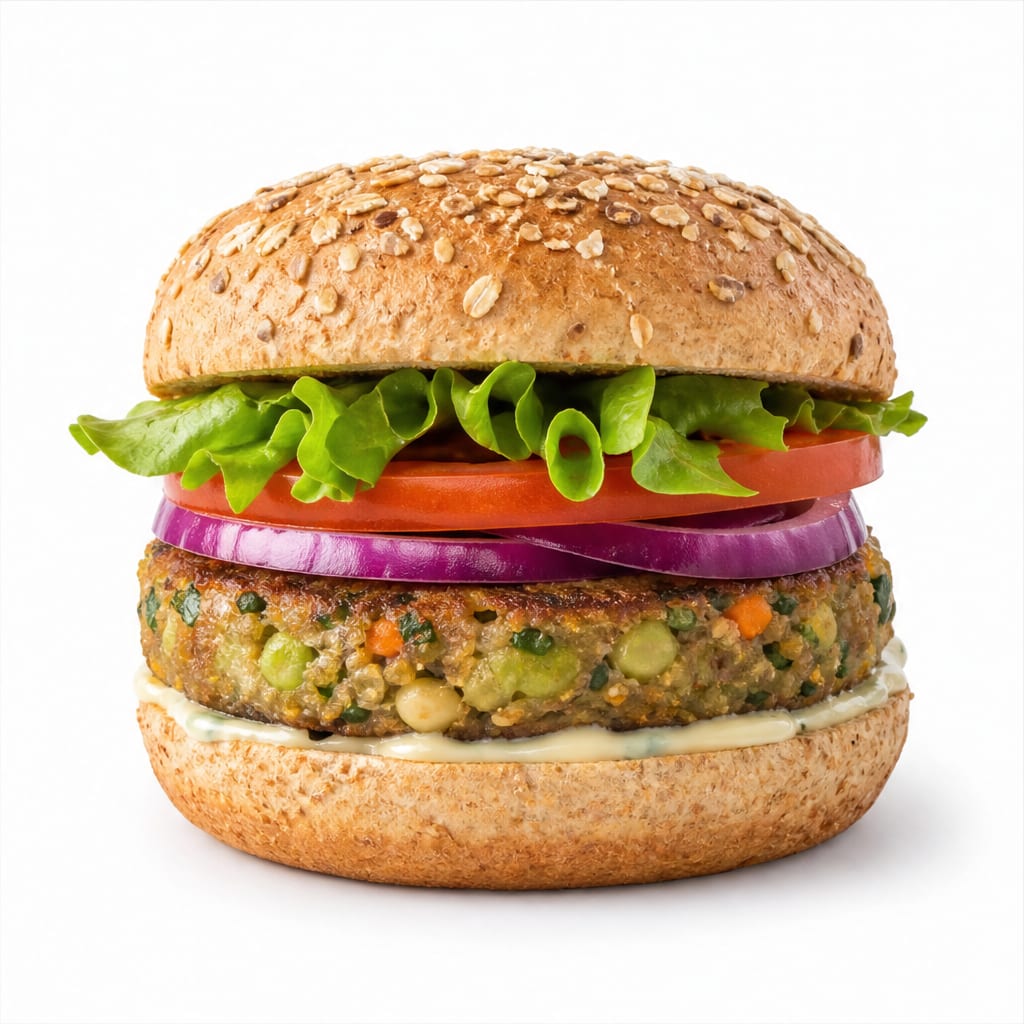
Veggie Burger
Falafel wins on ingredient purity and fiber; Veggie Burger wins on convenience and lower fat. Your priority determines the winner.
Falafel scores higher due to whole-food ingredients and better fiber, but loses ground on calorie density from frying. Veggie Burger trails mainly because processing levels and additive loads vary wildly by brand, dragging down its average.
Whole-food simplicity versus grab-and-cook speed, with a side of frying calories versus processing additives.
At a glance
Executive summary
Overall
It depends
Healthier
Falafel
More practical
Veggie Burger
Daily use
It depends
Key comparison lenses
Processing level and ingredient transparency
The biggest real-world difference: Falafel is typically whole-food based while Veggie Burgers range widely from simple to ultra-processed
Convenience and meal prep effort
People choosing between these often need a quick plant-based meal and time matters
Calorie density and fat from frying
Deep-fried Falafel carries a hidden calorie cost many people underestimate
Protein adequacy for plant-based diets
Both are go-to plant proteins, but neither is a protein powerhouse
Sodium and hidden additives
Commercial Veggie Burgers can pack surprising sodium and preservative loads
Best choice for
Falafel
- People who value ingredient transparency and minimal processing
- Home cooks meal-prepping on weekends
- Anyone watching sodium intake
- Those seeking steady, long-lasting energy from whole legumes
Veggie Burger
- Busy professionals needing a hot meal in under 10 minutes
- Anyone new to plant-based eating who wants familiar burger format
- People tracking calories who prefer pan-cooked over deep-fried
- Families needing a freezer staple for unpredictable schedules
Least suitable for
Falafel
- Anyone strictly managing fat or calorie intake due to deep-frying
- People who need grab-and-go meals with zero prep
- Those with chickpea or sesame allergies
Veggie Burger
- People avoiding ultra-processed foods and long ingredient lists
- Anyone sensitive to sodium or preservatives
- Those seeking a truly whole-food plant meal
Deep comparison
Dimension by dimension
Each lens scores both foods and breaks down who each option suits.
- Dimension 1 · Priority 95Falafel
Ingredient Quality & Processing
Falafel · 82Veggie Burger · 42Traditional Falafel uses chickpeas, herbs, onion, and spices — nothing you cannot pronounce. Most commercial Veggie Burgers rely on protein isolates, binders, and preservatives.
Tradeoff
You trade ingredient simplicity for shelf stability and convenience.
Why it matters
Less processing generally means better nutrient retention and fewer mystery compounds your body has to handle.
Real-world impact
A homemade Falafel ingredient list fits on one line. A frozen Veggie Burger list often fills half the box.
Falafel
- Clean-label eaters
- People avoiding emulsifiers and gums
- Anyone with chemical sensitivities
Better for
- Anyone who assumes all Falafel is homemade — restaurant versions can cut corners too
Worse for
Veggie Burger
- People who cannot cook and need store-bought reliability
- Those who prioritize consistent taste and texture every time
Better for
- Long-term health-conscious eaters concerned about daily ultra-processed food intake
Worse for
- Dimension 2 · Priority 88Veggie Burger
Convenience & Preparation
Falafel · 38Veggie Burger · 86Frozen Veggie Burgers go from freezer to plate in under 10 minutes. Making Falafel from scratch takes soaking, chopping, and frying — easily 45 minutes or more.
Tradeoff
Speed now versus ingredient control later.
Why it matters
When hunger hits after a long day, convenience often overrides nutrition intentions.
Real-world impact
On a Tuesday at 8 PM, the Veggie Burger gets eaten. The dried chickpeas stay in the pantry.
Falafel
- Weekend meal preppers who batch-cook and freeze their own Falafel
Better for
- Last-minute meals
- Anyone without a food processor or deep fryer
Worse for
Veggie Burger
- Weeknight dinners with zero prep energy
- Office lunches with only a microwave available
- Travel and dorm cooking
Better for
- Those who find repeated convenience meals emotionally unsatisfying
Worse for
- Dimension 3 · Priority 82Veggie Burger
Calorie & Fat Profile
Falafel · 42Veggie Burger · 66Deep-fried Falafel absorbs significant oil, pushing calories up fast. Many Veggie Burgers are pan-cooked or baked with far less added fat.
Tradeoff
Falafel gives you richer flavor and mouthfeel from frying oil; Veggie Burgers give you a lighter calorie footprint.
Why it matters
A single Falafel patty can pack double the calories of a Veggie Burger patty, which adds up quickly in a meal.
Real-world impact
That Falafel wrap you consider a light lunch may quietly deliver 600+ calories before sauce.
Falafel
- Active people who need calorie density to fuel their day
- Those who find low-fat meals unsatisfying and end up overeating later
Better for
- Consistent daily lunchers unaware of the oil load
- People with gallbladder or fat digestion issues
Worse for
Veggie Burger
- Anyone managing weight or tracking calories
- People who feel sluggish after heavy midday meals
Better for
- Those who find them too light and end up snacking within an hour
Worse for
- Dimension 4 · Priority 78Veggie Burger
Protein Content
Falafel · 52Veggie Burger · 68Chickpeas provide decent protein in Falafel, but many Veggie Burgers add soy or pea protein isolates, pushing protein higher per calorie.
Tradeoff
More total protein in Veggie Burgers, but from isolated sources rather than whole food.
Why it matters
For plant-based eaters, every gram of protein matters, especially at main meals.
Real-world impact
A Veggie Burger can deliver 18-22g protein per patty. Falafel typically lands around 8-12g per serving — unless you eat several.
Falafel
- Those who prefer protein from whole foods rather than isolates
- Moderate-protein diets where chickpea protein is sufficient
Better for
- People relying on Falafel as their primary protein source at a meal
Worse for
Veggie Burger
- Athletes and active people needing higher protein intake
- Anyone building a post-workout meal around a plant patty
Better for
- Those concerned about protein isolate absorption and processing
Worse for
- Dimension 5 · Priority 75Falafel
Sodium Load
Falafel · 74Veggie Burger · 38Traditional Falafel is lightly seasoned with modest salt. Commercial Veggie Burgers often contain 400-700mg sodium per patty to boost flavor and preservation.
Tradeoff
Lower sodium in Falafel but blander flavor without added sauces; Veggie Burgers taste seasoned out of the box but at a salt cost.
Why it matters
Regular high-sodium meals quietly raise blood pressure over years, even in young healthy people.
Real-world impact
Two Veggie Burger patties with a bun can hit half your daily sodium budget before ketchup.
Falafel
- People with hypertension or sodium-sensitive blood pressure
- Anyone eating multiple processed meals per day and needing a low-sodium anchor
Better for
- Restaurant Falafel drenched in salty tahini or pickled toppings
Worse for
Veggie Burger
- Those who otherwise eat very low-sodium and can afford the intake
Better for
- Anyone already exceeding sodium guidelines from other meals
Worse for
- Dimension 6 · Priority 72Falafel
Fiber & Digestive Health
Falafel · 80Veggie Burger · 55Whole chickpeas in Falafel deliver excellent fiber that supports digestion and gut bacteria. Processing in Veggie Burgers strips some fiber away.
Tradeoff
Better gut support from Falafel, but the deep frying may cause digestive discomfort for some.
Why it matters
Fiber is the nutrient most people consistently under-eat, and it affects everything from digestion to cholesterol.
Real-world impact
A Falafel meal keeps your digestive system moving. A Veggie Burger meal may leave you reaching for fiber elsewhere.
Falafel
- People with sluggish digestion
- Anyone trying to hit 25-30g fiber daily without supplements
Better for
- People sensitive to fried foods who experience bloating or reflux after heavy meals
Worse for
Veggie Burger
- Those with IBS who need lower-fiber options during flare-ups
Better for
- Those relying on Veggie Burgers as a vegetable serving when fiber is minimal
Worse for
- Dimension 7 · Priority 68Falafel
Blood Sugar Stability
Falafel · 70Veggie Burger · 58Chickpeas have a low glycemic index and provide slow-releasing carbs. Some Veggie Burgers use refined binders and starches that digest faster.
Tradeoff
Steadier energy from Falafel, but the frying oil can slow digestion too much for comfort in some people.
Why it matters
Stable blood sugar means fewer afternoon energy crashes and less cravings later.
Real-world impact
After a Falafel meal you feel satisfied for hours. After some Veggie Burgers, you may be hunting for a snack within 90 minutes.
Falafel
- People managing prediabetes or insulin resistance
- Anyone prone to afternoon energy dips
Better for
- People eating Falafel in white pita with sweet sauces — the overall meal glycemic load can still spike
Worse for
Veggie Burger
- Those eating a balanced plate with whole grains and vegetables that compensate for the patty
Better for
- People eating the patty alone as a snack without balancing carbs
Worse for
Timeline
Health impact over time
Short-term
Hours to days
Falafel
- Heavy fullness after eating due to calorie density and fiber
- Possible bloating or reflux from deep-fried oil, especially if eaten quickly
- Steady energy for 3-4 hours without a crash
Veggie Burger
- Quick satisfaction from familiar burger format
- Possible thirst after eating from higher sodium content
- May feel hungry sooner if the patty is low in fiber and fat
Long-term
Months to years
Falafel
- Better gut health from consistent whole-food fiber intake
- Potential weight gain if deep-fried Falafel is a daily habit without portion awareness
- Lower sodium exposure supports healthier blood pressure over decades
Veggie Burger
- Convenience may improve diet consistency for busy people who would otherwise skip meals or choose worse options
- Regular intake of processed Veggie Burgers may increase exposure to emulsifiers and preservatives linked to gut lining changes
- Sodium accumulation becomes a concern if eaten multiple times per week
Risk profile
Safety & processing
Traditional Falafel is one of the cleanest plant-based proteins you can eat — ground chickpeas, herbs, and spices. Most commercial Veggie Burgers are formulated products with protein isolates, methylcellulose binders, flavor enhancers, and preservatives. The gap here is substantial and is the single biggest differentiator between these two foods.
Falafel
Oil oxidation from reused frying oil
mediumRestaurants and street vendors often reuse frying oil multiple times, creating inflammatory compounds. Homemade Falafel with fresh oil avoids this entirely.
Sesame cross-contamination in tahini pairings
mediumFalafel is almost always served with tahini, a sesame paste. Sesame is a top allergen and often present in the same kitchen environment.
Undercooked center in thick patties
lowDense Falafel balls can brown on the outside while remaining raw chickpea inside, which may cause digestive upset.
Veggie Burger
Undeclared allergens from complex supply chains
mediumCommercial Veggie Burgers contain many ingredients from different sources, increasing the chance of cross-contamination with soy, dairy, or gluten.
Preservative and additive sensitivities
mediumIngredients like carrageenan, modified food starch, and natural flavors can trigger reactions in sensitive individuals.
Pathogen risk from frozen product mishandling
lowIf a frozen Veggie Burger thaws and is refrozen, bacterial growth becomes possible. Less of an issue with freshly cooked Falafel.
Who wins for whom
Audience fit
Same foods, different winners depending on your goal.
children
Veggie BurgerThe familiar burger format is more appealing to kids, and the softer texture is easier for small mouths. Just watch the sodium.
daily consumption
It dependsHomemade baked Falafel can be eaten daily with benefits. A whole-food Veggie Burger brand can too. But most commercial Veggie Burgers eaten daily would accumulate too much sodium and processing exposure.
diabetes
FalafelChickpeas provide slower-digesting carbohydrates with less blood sugar spiking compared to refined binders in many Veggie Burgers.
elderly
FalafelLower sodium and higher fiber support cardiovascular and digestive health concerns common in older adults.
muscle gain
Veggie BurgerHigher protein content from added isolates supports muscle protein synthesis better than chickpeas alone.
weight loss
Veggie BurgerLower calorie density per patty makes portion control easier, though reading labels is essential to avoid high-fat versions.
Your move
Decision guide
Choose Falafel
- You value knowing exactly what is in your food
- You have time to meal-prep or can find a trusted restaurant that uses fresh oil
- Lower sodium and higher fiber are priorities for your health goals
- You find whole-food meals more emotionally satisfying than processed alternatives
Choose Veggie Burger
- You need a plant-based meal ready in under 10 minutes on busy nights
- You are tracking protein and want more per calorie
- You are transitioning to plant-based eating and want familiar formats
- You will pair it with a big salad and whole grain to round out the meal
Either works if
- You are building a balanced bowl with plenty of vegetables and whole grains alongside
- You mix up your plant proteins throughout the week and neither is a daily staple
Avoid both if
- You have a legume allergy that rules out chickpeas and many Veggie Burger bases
- You are strictly limiting both fried foods and processed foods simultaneously
- You need a complete protein source and are not supplementing elsewhere in the meal
Final recommendation
Make Falafel your default when you can control the preparation — bake instead of fry, and you get a genuinely whole-food meal with excellent fiber and minimal sodium. Keep a box of Veggie Burgers for the nights when cooking is not happening, but read the label and choose brands with short, recognizable ingredient lists. Neither should be your only plant protein, but both have a legitimate place in a smart weekly rotation.
Practical
Consumer tips
- 1
Bake Falafel at 400°F for 20-25 minutes instead of deep-frying to cut calories by roughly 40% while keeping the crunch
- 2
Look for Veggie Burger brands with fewer than 10 ingredients and under 400mg sodium per patty
- 3
If buying frozen Falafel, check the ingredient list — some commercial versions are just as processed as Veggie Burgers
- 4
Pair either option with a large serving of non-starchy vegetables to balance the meal and improve satiety
- 5
Make a double batch of Falafel and freeze the extras — you get the convenience of a Veggie Burger with the ingredient quality of homemade
- 6
Avoid Veggie Burgers with 'natural flavors' as a top ingredient — it is a catch-all that hides dozens of sub-ingredients