
Nutrition comparison
Enoki vs Portobello Mushrooms: Safety, Nutrition, and Which to Choose
Compare enoki and portobello mushrooms on nutrition, food safety, satiety, and culinary use. Learn why portobello is the safer daily choice and when enoki shines.
Overall winner · Portobello Mushroom
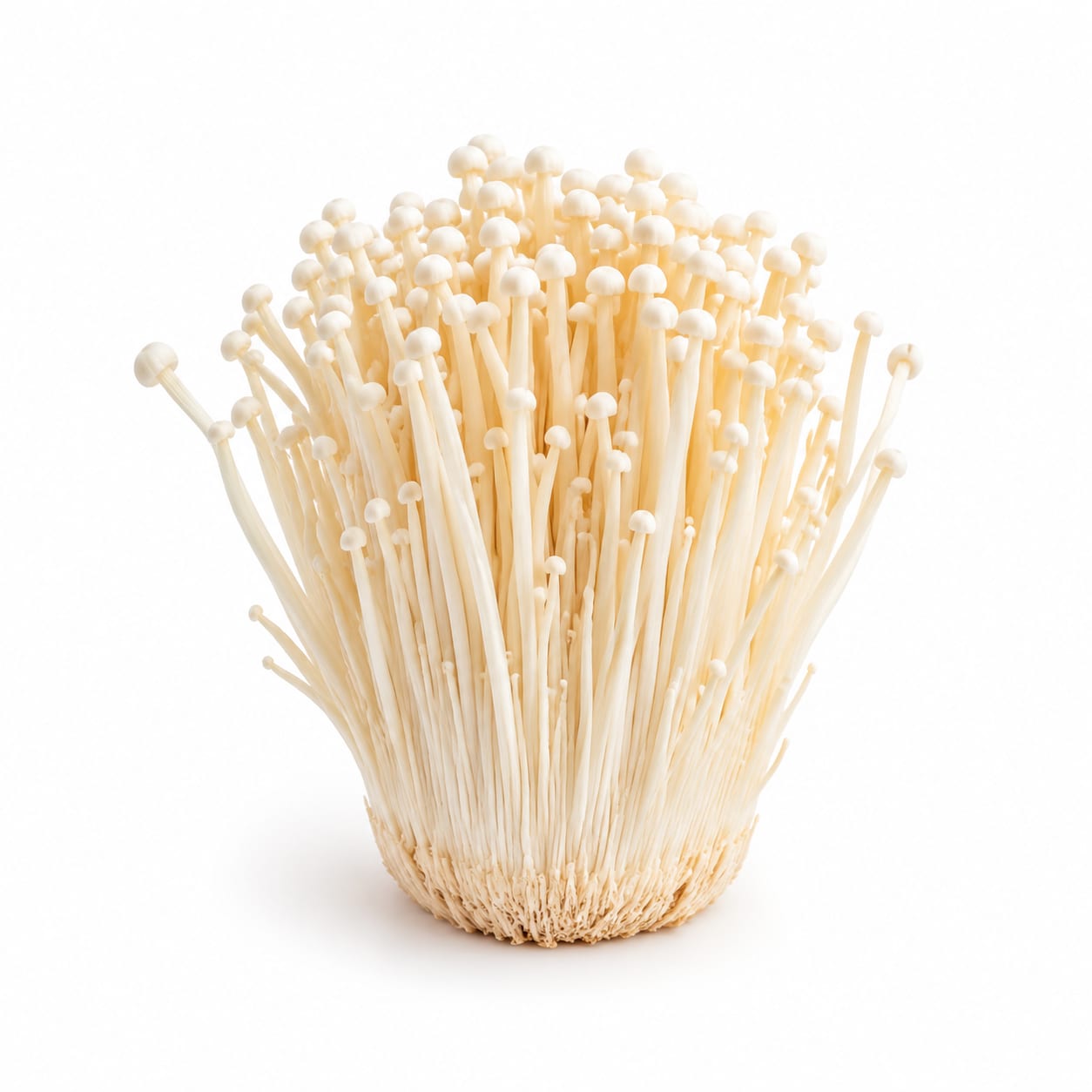
Enoki Mushroom
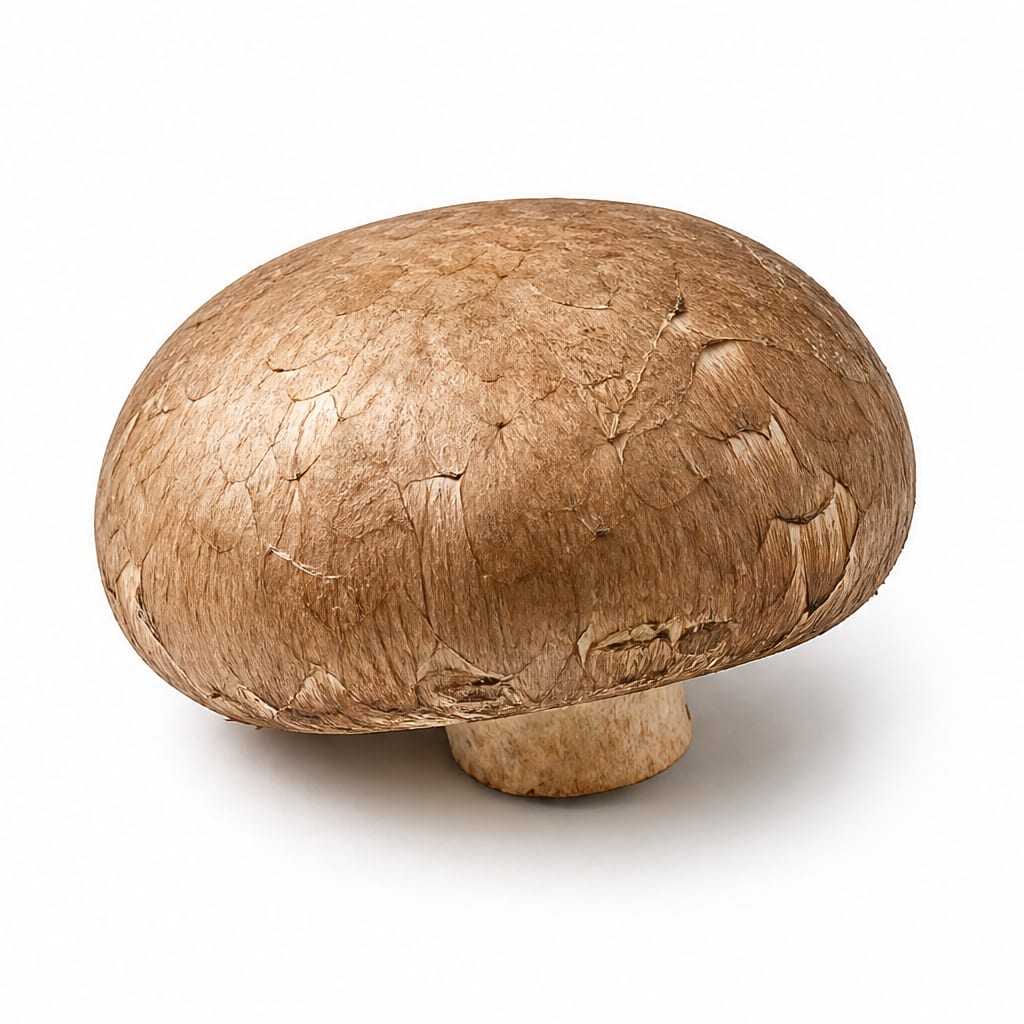
Portobello Mushroom
Portobello mushrooms deliver more nutrition, better satiety, and lower safety risk, while enoki mushrooms offer a unique delicate texture and specific immune-supporting compounds but carry a notable Listeria concern.
Portobello scores notably higher due to superior nutrient density, better satiety, greater culinary versatility, and significantly lower food safety risk. Enoki's unique bioactive compounds and texture keep it relevant, but its safety profile and limited nutritional contribution per serving pull its score down.
Enoki provides rare immune-modulating polysaccharides and a delicate crunch, but Portobello gives you a safer, more filling, nutrient-dense experience that works as an actual meal component rather than a garnish.
At a glance
Executive summary
Overall
Portobello Mushroom
Healthier
Portobello Mushroom
More practical
Portobello Mushroom
Daily use
Portobello Mushroom
Key comparison lenses
food safety and contamination risk
Enoki mushrooms have been linked to multiple Listeria outbreaks, making safety the most critical differentiator
nutrient density per serving
Portobello offers substantially more vitamins and minerals per realistic serving due to its larger size and meatier texture
culinary role and meal satisfaction
These mushrooms serve completely different purposes in cooking — garnish versus main dish
immune and antioxidant benefits
Both offer unique bioactive compounds but through different mechanisms
weight management and calorie efficiency
Both are extremely low calorie, but Portobello provides more satiety per calorie
Best choice for
Enoki Mushroom
- Asian hot pot and soup enthusiasts wanting authentic texture
- People seeking enoki-specific immune-supporting polysaccharides
- Low-calorie crunch seekers who find regular mushrooms too soft
- Garnish and topping needs where visual appeal matters
Portobello Mushroom
- Anyone wanting a satisfying meat substitute for burgers or steaks
- People prioritizing B vitamins, selenium, and potassium intake
- Those concerned about food safety who want lower contamination risk
- Meal-preppers needing a versatile, filling ingredient
Least suitable for
Enoki Mushroom
- Pregnant women or immunocompromised individuals due to Listeria risk
- People wanting a filling main dish component
- Those who dislike delicate textures or find them unsatisfying
- Anyone eating mushrooms primarily for substantial nutrient intake
Portobello Mushroom
- Traditional Asian soup recipes where enoki's texture is expected
- People who find earthy mushroom flavor too intense
- Dishes requiring a light, delicate visual presentation
Deep comparison
Dimension by dimension
Each lens scores both foods and breaks down who each option suits.
- Dimension 1 · Priority 95Portobello Mushroom
Food Safety and Contamination Risk
Enoki Mushroom · 35Portobello Mushroom · 80Enoki mushrooms have been recalled multiple times for Listeria monocytogenes contamination, including outbreaks causing serious illness and death. Portobello has a much cleaner safety record.
Tradeoff
Enoki's delicate growing conditions and minimal processing make it more vulnerable to bacterial contamination, while Portobello's thicker flesh and different farming practices reduce this risk substantially.
Why it matters
For pregnant women, elderly, or immunocompromised people, this difference is not minor — it can be the deciding factor between safe and dangerous.
Real-world impact
If you cook enoki thoroughly, risk drops significantly. But in hot pot or quick-soup preparations where enoki may not reach safe temperatures, the risk remains real.
Enoki Mushroom
- Dishes where prolonged cooking ensures thorough heating
Better for
- Raw or lightly cooked preparations
- Vulnerable populations who might skip thorough cooking
Worse for
Portobello Mushroom
- Any preparation where food safety is a priority
- Households with pregnant or immunocompromised members
- Quick-cook meals where mushrooms may not reach high temperatures
Better for
- No significant safety disadvantage compared to enoki
Worse for
- Dimension 2 · Priority 85Portobello Mushroom
Nutrient Density Per Serving
Enoki Mushroom · 40Portobello Mushroom · 78A typical Portobello serving delivers meaningful amounts of selenium, B vitamins, potassium, and copper. Enoki provides minimal nutrients per serving because portions are small and the mushroom itself is mostly water.
Tradeoff
You would need to eat a massive volume of enoki to match the nutrient content of a single Portobello cap, which is impractical given enoki's delicate nature and typical use as a garnish.
Why it matters
If mushrooms are one of your few vegetable sources, Portobello actually contributes to your daily nutrient needs. Enoki barely moves the needle.
Real-world impact
One grilled Portobello cap covers about 20% of your daily selenium needs. A typical enoki serving covers less than 5% of almost everything.
Enoki Mushroom
- Situations where you eat very large volumes of enoki in hot pot
Better for
- People expecting meaningful vitamin or mineral contribution from their mushrooms
Worse for
Portobello Mushroom
- Anyone tracking micronutrient intake
- People relying on mushrooms as a significant nutrient source
- Those wanting B12 alternatives in plant-based diets
Better for
- No real nutrient density disadvantage
Worse for
- Dimension 3 · Priority 80Portobello Mushroom
Satiety and Meal Satisfaction
Enoki Mushroom · 25Portobello Mushroom · 75Portobello has a meaty, dense bite that can anchor a meal. Enoki is wispy and delicate — more texture than substance.
Tradeoff
Enoki adds pleasant crunch and visual appeal but leaves you hungry. Portobello can actually make you feel full and satisfied as a main ingredient.
Why it matters
If you are trying to eat less meat or need filling plant-based options, Portobello works as a standalone centerpiece. Enoki never will.
Real-world impact
A Portobello burger leaves you satisfied for hours. A bowl of enoki soup is appetizing but you will be hungry again within an hour.
Enoki Mushroom
- Light snackers who prefer small, delicate portions
- Appetizer courses where you do not want to fill up
Better for
- Main meal situations where hunger satisfaction matters
- Athletes or active people needing substantial fuel
Worse for
Portobello Mushroom
- Anyone replacing meat with mushrooms
- Lunch or dinner where staying full matters
- People who find light meals unsatisfying
Better for
- Multi-course meals where you want to save room for other dishes
Worse for
- Dimension 4 · Priority 70It depends
Immune and Antioxidant Compounds
Enoki Mushroom · 72Portobello Mushroom · 68Enoki contains unique polysaccharides (like flammulin) with promising immune-modulating research. Portobello offers ergothioneine, a potent antioxidant that protects cells from oxidative damage.
Tradeoff
Enoki's compounds are more studied for immune activation, while Portobello's ergothioneine is more studied for long-term cellular protection. Both are valuable but through different pathways.
Why it matters
If you are specifically looking for immune support during cold season, enoki has an edge. For daily cellular defense and healthy aging, Portobello's ergothioneine may be more relevant.
Real-world impact
Regular enoki consumption is associated with lower cancer rates in some Asian populations, but this is correlational. Portobello's ergothioneine accumulates in tissues and provides ongoing antioxidant protection.
Enoki Mushroom
- Cold and flu season immune support
- People interested in traditional Asian medicinal mushroom benefits
Better for
- Those who want well-established, widely-studied antioxidant compounds
Worse for
Portobello Mushroom
- Long-term antioxidant and cellular health strategy
- People focused on healthy aging and inflammation reduction
Better for
- People specifically seeking immune-stimulating mushroom compounds
Worse for
- Dimension 5 · Priority 75Portobello Mushroom
Culinary Versatility
Enoki Mushroom · 45Portobello Mushroom · 82Portobello can be grilled, stuffed, roasted, used as a burger bun replacement, sliced into pasta, or eaten as a steak substitute. Enoki works well in soups, hot pots, and as a garnish but has a narrow range.
Tradeoff
Enoki excels in its niche — Asian soups and hot pot — but struggles outside it. Portobello adapts to dozens of cuisines and cooking methods.
Why it matters
If you want one mushroom that can do almost anything, Portobello is the clear choice. If you cook mostly Asian cuisine, enoki earns its place.
Real-world impact
Portobello can replace meat in at least 10 different meal types. Enoki really shines in about 3-4 specific dishes.
Enoki Mushroom
- Japanese, Korean, and Chinese home cooks making traditional recipes
- Hot pot and ramen enthusiasts
Better for
- Cooks who want maximum versatility from a single ingredient
Worse for
Portobello Mushroom
- Western-style cooking and meal prep
- Grilling and barbecue season
- People who want one mushroom that works everywhere
Better for
- Authentic Asian soup recipes where enoki's texture is irreplaceable
Worse for
- Dimension 6 · Priority 60It depends
Calorie Efficiency and Weight Management
Enoki Mushroom · 65Portobello Mushroom · 70Both are extremely low calorie, but Portobello provides more satiety per calorie, making it more effective for weight management despite slightly higher calories per gram.
Tradeoff
Enoki has fewer calories per cup but leaves you hungry sooner. Portobello has marginally more calories but keeps you full much longer, which matters more for actual weight control.
Why it matters
The best low-calorie food is one you do not need to supplement with snacks an hour later. Portobello wins on practical satiety.
Real-world impact
A 35-calorie Portobello cap as a burger replacement satisfies like a meal. A 20-calorie enoki serving feels like a garnish because it is one.
Enoki Mushroom
- Strict calorie counters who eat frequent small meals
- Volume eaters who want large portions of very low-calorie food in soups
Better for
- Those whose low-calorie meals trigger later snacking
Worse for
Portobello Mushroom
- People who need low-calorie meals that actually keep them full
- Anyone replacing higher-calorie main dishes
Better for
- No real disadvantage for weight management
Worse for
Timeline
Health impact over time
Short-term
Hours to days
Enoki Mushroom
- Very light on the stomach, easy to digest when cooked
- Minimal blood sugar impact due to extremely low carbohydrate content
- Quick-cooking texture means it can be undercooked easily, increasing food safety risk
Portobello Mushroom
- Satisfying and filling, reduces hunger for hours after eating
- Gentle on blood sugar with moderate fiber content
- May cause mild bloating in sensitive individuals due to higher volume and fiber
Long-term
Months to years
Enoki Mushroom
- Immune-modulating polysaccharides may support regular immune function when consumed consistently
- Extremely low calorie contribution means it cannot serve as a nutritional anchor in your diet
- Repeated consumption without thorough cooking poses cumulative Listeria risk for vulnerable people
Portobello Mushroom
- Ergothioneine accumulates in tissues and may protect against age-related cellular damage over years
- Selenium and B vitamin contribution supports thyroid function and energy metabolism long-term
- Regular use as a meat substitute may improve cardiovascular markers by displacing higher-fat proteins
Risk profile
Safety & processing
Both mushrooms are whole, minimally processed foods. Enoki is typically sold fresh with minimal packaging. Portobello is also sold fresh, though pre-sliced or pre-marinated versions may include added oils, sodium, or preservatives. Choose whole, uncut caps for the cleanest option.
Enoki Mushroom
Listeria monocytogenes contamination
highMultiple outbreaks linked to enoki mushrooms have caused serious illness and deaths, particularly affecting pregnant women and immunocompromised individuals. Always cook thoroughly to at least 165°F/74°C.
Inadequate cooking in traditional preparations
mediumHot pot and quick-soup cooking methods may not heat enoki sufficiently to kill Listeria, especially when added at the table.
Portobello Mushroom
Agaritine content
lowPortobello contains agaritine, a naturally occurring compound that showed carcinogenic effects in very high-dose animal studies. Cooking reduces agaritine significantly, and typical human consumption poses negligible risk.
Mold or spoilage from improper storage
lowLike all fresh mushrooms, Portobello can develop mold if stored too long. Use within 5-7 days of purchase and refrigerate properly.
Who wins for whom
Audience fit
Same foods, different winners depending on your goal.
children
Portobello MushroomPortobello is safer from a contamination standpoint and its mild, meaty texture is more kid-friendly than enoki's stringy appearance.
daily consumption
Portobello MushroomPortobello's versatility, safety profile, and nutrient contribution make it more suitable as an everyday ingredient. Enoki is better enjoyed occasionally in specific dishes.
diabetes
Portobello MushroomBoth have minimal blood sugar impact, but Portobello's fiber content and satiety help prevent the snacking cycles that destabilize blood sugar.
elderly
Portobello MushroomLower Listeria risk and higher nutrient density make Portobello the safer and more beneficial choice for older adults, who are more vulnerable to foodborne illness.
muscle gain
Portobello MushroomNeither mushroom is a protein powerhouse, but Portobello's higher protein content per serving and meal-size portions make it more useful alongside protein-rich foods.
weight loss
Portobello MushroomPortobello provides more satiety per calorie, making it easier to stick with a calorie deficit without feeling deprived.
Your move
Decision guide
Choose Enoki Mushroom
- You are making Asian hot pot, ramen, or sukiyaki and want authentic texture
- You have no vulnerability to Listeria and always cook enoki thoroughly
- You are specifically interested in enoki's immune-supporting polysaccharides
- You want a visually delicate garnish for plating
Choose Portobello Mushroom
- You want a filling, satisfying mushroom that works as a main dish
- Food safety is a priority, especially for pregnant or immunocompromised household members
- You are looking for a versatile everyday mushroom for multiple cuisines
- You want meaningful selenium, B vitamin, and potassium intake from your mushrooms
- You are meal-prepping or batch cooking for the week
Either works if
- You enjoy both and rotate based on the cuisine you are cooking
- You want variety in your mushroom intake for broader nutrient coverage
- Budget allows keeping both on hand for different recipes
Avoid both if
- You have a confirmed mushroom allergy
- You are strictly following a low-FODMAP diet and are in the elimination phase, as both contain moderate FODMAPs
Final recommendation
Make Portobello your daily driver mushroom — it is safer, more nutritious, and more versatile. Keep enoki as an occasional treat for Asian soups and hot pot, but always cook it thoroughly. The safety gap alone is reason enough to favor Portobello for regular use, and the bonus of better satiety and nutrient density makes it the stronger everyday choice.
Practical
Consumer tips
- 1
Always cook enoki mushrooms to at least 165°F/74°C — never eat them raw or lightly blanched
- 2
Store both mushroom types in paper bags in the refrigerator to absorb moisture and prevent sliminess
- 3
Choose whole Portobello caps over pre-sliced to avoid potential cross-contamination and get fresher product
- 4
If you love enoki but worry about safety, consider adding them earlier in the cooking process to ensure thorough heating
- 5
Marinate Portobello caps in balsamic vinegar and garlic before grilling for a satisfying meat-free main dish
- 6
Check enoki packaging for country of origin — some regions have stronger safety track records than others
- 7
Freeze Portobello caps after slicing if you cannot use them within a week — they work well in cooked dishes after freezing