
Nutrition comparison
Durian vs Soursop: Nutrition, Safety, and Which Tropical Fruit Is Better for You
Compare durian and soursop side by side—calories, nutrients, safety risks, and real-world practicality. Learn which tropical fruit fits your health goals and why soursop's hidden neurotoxicity risk matters.
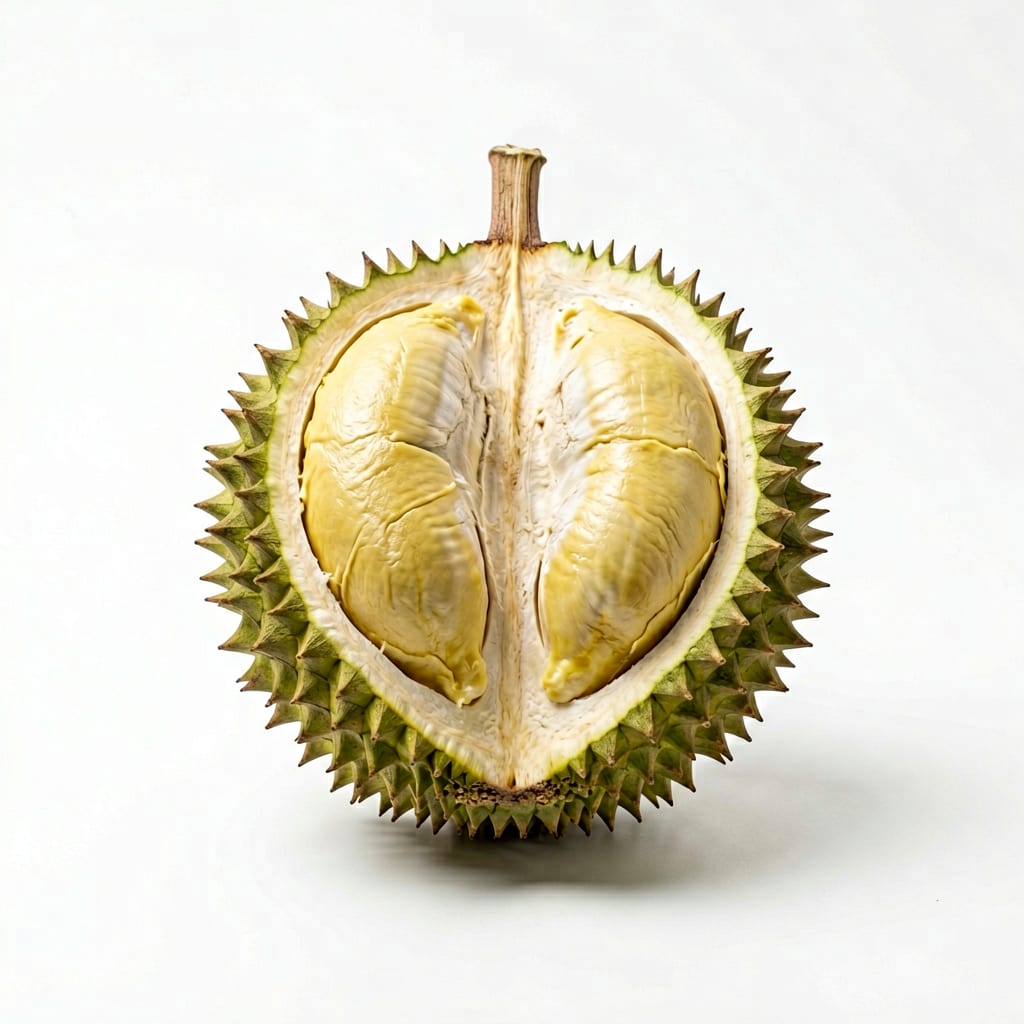
Durian
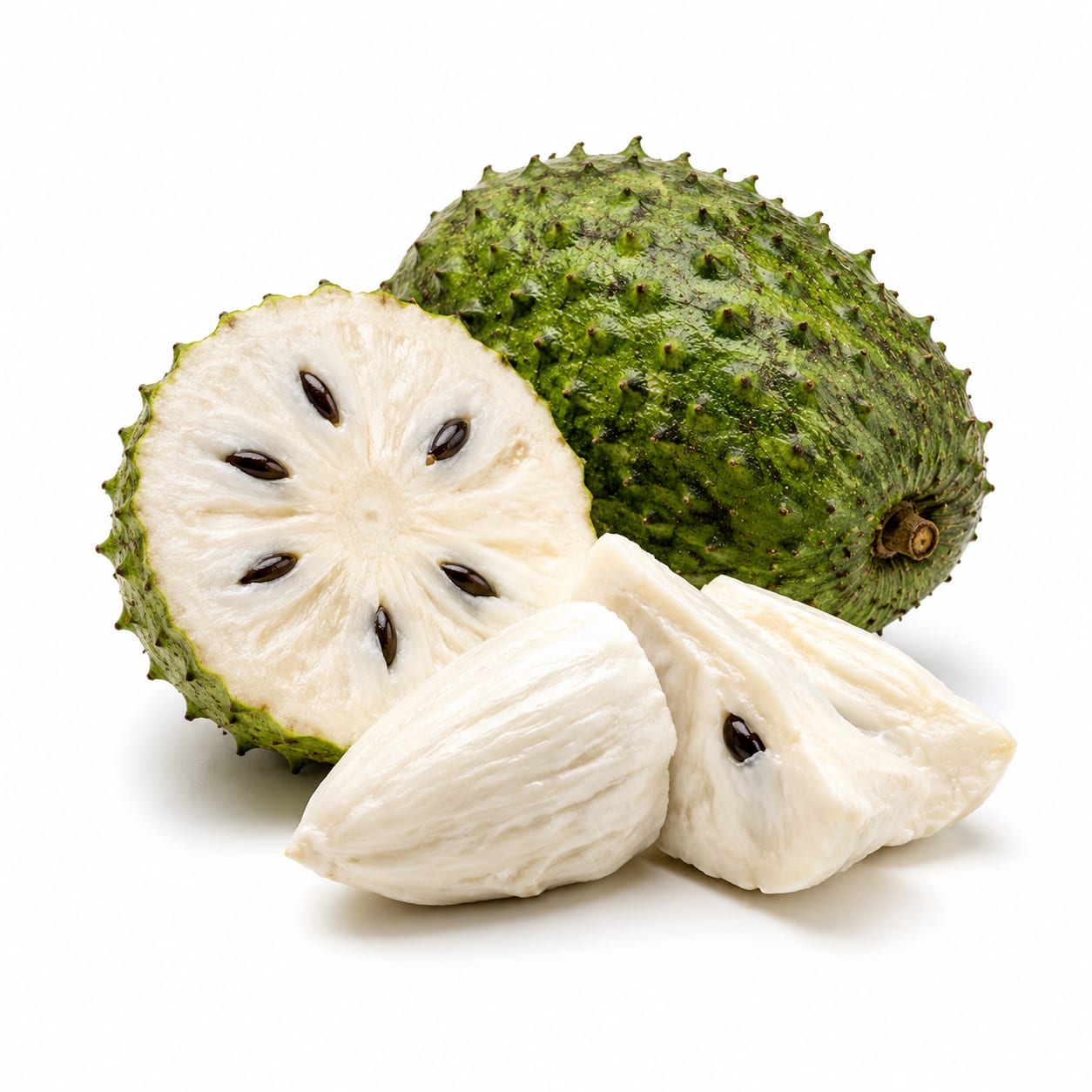
Soursop
Durian offers more nutrients and energy per bite but demands caution with portions and alcohol. Soursop is lighter and more versatile but carries a serious long-term neurotoxicity risk if consumed frequently.
Durian scores slightly higher for nutritional density and satiety value, but loses points for calorie load and social impracticality. Soursop scores lower primarily due to the annonacin neurotoxicity risk with regular consumption, which is a serious but often overlooked safety concern. Neither fruit is ideal for frequent daily use.
Durian gives you more nutrition at the cost of heavy calories and social restrictions. Soursop gives you easier eating but hidden risks with regular use that most people never hear about.
At a glance
Executive summary
Overall
It depends
Healthier
It depends
More practical
Soursop
Daily use
Soursop
Key comparison lenses
Safety and toxicity concerns unique to tropical fruits
Soursop contains annonacin, a neurotoxin linked to atypical Parkinsonism with regular consumption, while durian interacts dangerously with alcohol and causes concerns for blood pressure medication users
Calorie density and weight management tradeoffs
Durian is exceptionally calorie-dense for a fruit at roughly 147 kcal per 100g, nearly triple soursop's 66 kcal, making portion control critical
Medicinal and bioactive compound comparison
Both fruits carry strong traditional medicine reputations—soursop for anticancer claims, durian for vitality and energy—which influence how people choose between them
Blood sugar impact and diabetes suitability
Both are tropical fruits with significant sugar content, but their glycemic profiles and practical portion sizes differ meaningfully
Practical accessibility and social acceptability
Durian's polarizing odor restricts where and how it can be consumed, while soursop is more versatile but harder to find fresh outside tropical regions
Best choice for
Durian
- People needing calorie-dense natural fuel for physical labor or weight gain
- Those seeking B-vitamin and iron support from whole food sources
- Anyone wanting a satisfying, filling fruit that discourages overeating by its sheer richness
- Traditional medicine users seeking warming, energy-boosting foods
Soursop
- People wanting a low-calorie tropical fruit option for smoothies or light snacks
- Those who need a milder-flavored fruit that can be consumed anywhere without social friction
- Anyone avoiding high-calorie fruits while still wanting vitamin C and fiber
- Users seeking a cooling, inflammation-soothing food in traditional medicine frameworks
Least suitable for
Durian
- People managing diabetes who struggle with portion control
- Anyone taking blood pressure medications without doctor consultation
- Those who need to avoid high-calorie foods for weight loss
- People living in shared housing or dormitories where the odor would cause problems
Soursop
- People with existing neurological conditions or family history of Parkinson's disease
- Anyone planning to consume this fruit daily or multiple times per week long-term
- Pregnant women due to insufficient safety data on annonacin exposure
- People who mistake 'natural' for 'safe in unlimited quantities'
Deep comparison
Dimension by dimension
Each lens scores both foods and breaks down who each option suits.
- Dimension 1 · Priority 90Soursop
Calorie Density and Weight Management
Durian · 35Soursop · 72Soursop is significantly lighter, making it far easier to fit into a calorie-conscious eating pattern without obsessive portion measuring.
Tradeoff
Durian's calories come with genuine nutritional value—healthy fats, B vitamins, iron—but you pay a heavy caloric price for modest portions. A few bites of durian can equal an entire soursop serving in calories.
Why it matters
For anyone tracking weight, durian is one of the easiest fruits to accidentally overeat. Three small segments can hit 300+ calories. Soursop lets you eat a satisfying portion without the math.
Real-world impact
A durian snack session can silently add 500-800 calories before you feel full. Soursop feels more like eating a regular fruit—filling but not dangerously caloric.
Durian
- Underweight individuals needing calorie-dense whole foods
- Athletes in bulking phases who want natural calorie sources
Better for
- Weight loss dieters who underestimate fruit calories
- Emotional eaters who find rich foods triggering
Worse for
Soursop
- Anyone cutting calories without giving up fruit entirely
- People who graze on fruit throughout the day without tracking portions
Better for
- Those who need concentrated energy from small portions
- Extremely active people who struggle to eat enough calories
Worse for
- Dimension 2 · Priority 95Durian
Safety and Toxicity Profile
Durian · 65Soursop · 40Durian has well-known, easily avoided risks. Soursop carries a hidden, cumulative neurotoxicity risk that most consumers are completely unaware of.
Tradeoff
Durian's dangers are immediate and obvious—mix it with alcohol and you feel sick. Soursop's danger is silent and builds over months or years of regular consumption.
Why it matters
Annonacin in soursop has been linked to atypical Parkinsonism in populations that consume it regularly. This is not a theoretical risk—it has been documented in epidemiological studies in the Caribbean and Pacific islands.
Real-world impact
Occasional durian causes short-term discomfort if mixed with alcohol. Regular soursop consumption may contribute to irreversible neurological damage over years, and most people eating it have no idea.
Durian
- Occasional consumers who eat tropical fruit a few times per month
- People who prefer risks that are immediate and therefore easy to avoid
Better for
- People who drink alcohol regularly and might combine it with durian
- Those on blood pressure medications without medical guidance
Worse for
Soursop
- Those who only consume it rarely as a novelty or flavoring
Better for
- Anyone with personal or family history of Parkinson's disease
- People who eat the same fruit daily assuming all natural foods are safe long-term
- Pregnant women due to unknown fetal effects of annonacin
Worse for
- Dimension 3 · Priority 80Durian
Nutrient Density Per Serving
Durian · 82Soursop · 61Durian delivers substantially more vitamins, minerals, and healthy fats per serving than soursop, making it the more nourishing choice when you can afford the calories.
Tradeoff
Durian's nutrient richness comes packaged with high calories. Soursop offers decent vitamin C and fiber but is nutritionally thinner overall—you get less of almost everything per bite.
Why it matters
If you're eating fruit partly for micronutrient insurance, durian is genuinely impressive with its B-vitamin complex, iron, potassium, and vitamin C. Soursop is adequate but unremarkable nutritionally.
Real-world impact
A durian serving can meaningfully contribute to your daily iron, B6, and potassium intake. Soursop mostly contributes vitamin C and fiber—good, but not standout.
Durian
- People with higher calorie budgets who want nutrient-dense whole foods
- Those at risk of B-vitamin or iron deficiency who eat limited animal products
Better for
- People whose calorie budget is already tight
Worse for
Soursop
- Anyone already meeting micronutrient needs who just wants a light fruit option
Better for
- Those relying on fruit as a significant nutrient source in their diet
Worse for
- Dimension 4 · Priority 78It depends
Blood Sugar Impact
Durian · 45Soursop · 55Both fruits carry meaningful sugar loads, but soursop's lower calorie density and more manageable portion sizes make it slightly easier to control blood sugar response.
Tradeoff
Durian has a moderate glycemic index but is so calorie-dense that typical portions deliver a large sugar load. Soursop has less sugar per serving but is easier to overconsume in volume because it feels lighter.
Why it matters
For diabetics, neither fruit is ideal in large amounts. But soursop's lighter profile means a reasonable portion creates less glycemic stress, assuming you stop at one serving.
Real-world impact
Eating a typical durian portion can spike blood sugar similarly to eating several slices of bread. Soursop is more like eating a medium apple—noticeable but manageable.
Durian
- Active people whose muscles will quickly use the incoming glucose
Better for
- Insulin-resistant individuals who struggle with post-meal sugar spikes
- Anyone who eats durian in the large portions typical at social gatherings
Worse for
Soursop
- Diabetics who want occasional tropical fruit with less glycemic impact
- Sedentary people who need to be more careful with sugar loads
Better for
- People who assume low calorie means low sugar and overeat it
Worse for
- Dimension 5 · Priority 72Soursop
Practicality and Social Acceptability
Durian · 30Soursop · 75Soursop is dramatically easier to live with—no bans from hotels, no public transport restrictions, no arguments with family about refrigerator storage.
Tradeoff
Durian's legendary odor makes it genuinely impractical for many living situations. Soursop has a pleasant, non-offensive aroma and can be consumed anywhere without social consequences.
Why it matters
In Southeast Asia, durian is banned from subways, hotels, and many apartment buildings. This is not a minor inconvenience—it fundamentally limits where and how you can eat it.
Real-world impact
You can bring soursop to work, eat it in your apartment, store it in a shared fridge. Durian requires strategic planning, ventilation, and tolerant housemates.
Durian
- People with private outdoor spaces who enjoy the ritual of durian eating
- Those who see the strong aroma as part of the authentic experience
Better for
- Apartment dwellers with sensitive neighbors
- Anyone who needs to store food in shared refrigerators
Worse for
Soursop
- Anyone in shared living situations
- People who want to eat fruit at work or in public without complaints
- Travelers who want to bring tropical fruit home without fumigating their luggage
Better for
- People who associate strong aroma with quality and freshness in tropical fruit
Worse for
- Dimension 6 · Priority 68It depends
Digestive Tolerance and Comfort
Durian · 50Soursop · 58Durian is heavy and can cause bloating in large portions. Soursop is gentler on the stomach but its fiber can cause loose stools if you overeat it.
Tradeoff
Durian feels like a meal—rich, filling, sometimes overwhelmingly heavy. Soursop feels like a fruit—light, refreshing, but potentially laxative in excess.
Why it matters
If you have a sensitive stomach, durian's richness can feel like eating a heavy dessert. Soursop is more forgiving but can catch you off guard if you eat a large quantity at once.
Real-world impact
After durian, you may feel stuffed and slightly bloated for hours. After soursop, you may feel pleasantly light—or you may need a bathroom if you overdid it.
Durian
- People with strong digestion who enjoy rich, filling foods
- Those who eat small portions slowly and mindfully
Better for
- People prone to bloating or acid reflux after rich foods
- Anyone with sluggish digestion
Worse for
Soursop
- People with sensitive stomachs who prefer lighter foods
- Those recovering from illness who need gentle, easy-to-digest options
Better for
- People with irritable bowel syndrome who react to certain fibers
- Those who tend to eat large volumes of fruit in one sitting
Worse for
Timeline
Health impact over time
Short-term
Hours to days
Durian
- Heavy fullness that can last several hours due to high fat and calorie content
- Potential digestive discomfort if eaten in large quantities or too close to bedtime
- Alcohol interaction causing nausea, vomiting, and in severe cases requiring hospital attention
- Mild warming sensation in the body per traditional medicine frameworks
Soursop
- Light, refreshing feeling immediately after eating
- Possible mild laxative effect if consuming a large amount at once
- Soothing effect on inflamed or irritated throat per traditional use
- Blood sugar rise that is noticeable but generally manageable in moderate portions
Long-term
Months to years
Durian
- Weight gain if consumed frequently without adjusting overall calorie intake
- Improved B-vitamin and iron status with regular moderate consumption
- Potential conflict with blood pressure medications requiring medical supervision
- Better satiety from whole-food fat sources compared to processed high-calorie snacks
Soursop
- Serious concern: cumulative annonacin exposure linked to atypical Parkinsonism with frequent consumption
- Possible anti-inflammatory benefits from antioxidant compounds when consumed occasionally
- Vitamin C support for immune function and skin health with regular moderate intake
- Risk of neurological effects that may not appear until years of regular consumption
Risk profile
Safety & processing
Both durian and soursop are typically consumed as whole, fresh fruits with minimal processing. The main concern is not additives but what happens during distribution—frozen durian and soursop products may contain added sugars or preservatives. Always check labels on packaged versions. Fresh, whole fruit is the safest form for both.
Durian
Alcohol interaction reaction
highCombining durian with alcohol can cause severe nausea, vomiting, and heart palpitations. The sulfur compounds in durian appear to inhibit aldehyde dehydrogenase, creating a disulfiram-like reaction. Avoid alcohol for at least 12 hours after eating durian.
Blood pressure medication interaction
mediumDurian may potentiate the effects of blood pressure medications, potentially causing dangerous hypotension. Anyone on antihypertensives should consult their doctor before eating durian regularly.
Overconsumption calorie load
mediumIt is remarkably easy to consume 800-1000 calories of durian in a single sitting because the rich taste encourages continued eating. This is not a toxicity risk per se but a metabolic hazard.
Soursop
Annonacin neurotoxicity
highSoursop contains annonacin, an acetogenin that has been linked to atypical Parkinsonism in populations with high consumption. Atypical Parkinsonism does not respond to standard Parkinson's medication. The risk is cumulative and associated with regular, frequent consumption over months to years.
Exaggerated anticancer claims leading to overconsumption
mediumInternet sources promote soursop as a natural cancer treatment, which may lead people to consume dangerous quantities. There is no clinical evidence supporting soursop as a cancer treatment in humans, and the pursuit of such benefits increases neurotoxicity exposure.
Seed toxicity
lowSoursop seeds contain higher concentrations of annonacin and should never be eaten. Most people avoid them naturally due to bitterness, but blended preparations could accidentally include crushed seeds.
Who wins for whom
Audience fit
Same foods, different winners depending on your goal.
children
SoursopSoursop's milder flavor and lighter texture are more child-friendly, and the portions children naturally eat are small enough that annonacin exposure is minimal. Durian's strong taste is often rejected by children, and its calorie density is excessive for small bodies.
daily consumption
SoursopNeither should be consumed daily, but soursop is slightly more tolerable in small daily amounts than durian's heavy calorie load. That said, daily soursop consumption is not recommended due to cumulative annonacin exposure.
diabetes
SoursopNeither is ideal, but soursop's lower sugar density per typical portion makes it easier to manage blood sugar. Durian's combination of high calories and significant sugar in typical portions creates a tougher glycemic challenge.
elderly
SoursopSoursop is easier to chew, gentler on digestion, and provides adequate vitamin C. However, elderly consumers must be particularly cautious about frequency due to neurotoxicity concerns, as aging neurons may be more vulnerable to annonacin.
muscle gain
DurianDurian provides more calories, healthy fats, and B vitamins per serving, supporting the higher energy and nutrient demands of muscle building. Soursop is simply too light to contribute meaningfully to a bulking diet.
weight loss
SoursopSoursop's lower calorie density allows larger, more satisfying portions within a calorie deficit. Durian's richness makes portion control extremely difficult for most people actively losing weight.
Your move
Decision guide
Choose Durian
- You want a nutrient-dense, calorie-rich whole food and have the calorie budget for it
- You are physically active and need sustained energy from natural sources
- You enjoy the taste and aroma and have private space to eat it comfortably
- You will avoid alcohol for at least 12 hours after eating
Choose Soursop
- You want a lighter tropical fruit that fits easily into a calorie-conscious diet
- You need a fruit you can eat anywhere without social friction
- You will consume it only occasionally, not as a daily staple
- You understand that natural does not mean safe in unlimited quantities
Either works if
- You are eating tropical fruit as an occasional treat, not a dietary staple
- You have no specific health conditions that conflict with either fruit
- You simply want variety and can practice moderation with both
Avoid both if
- You are on blood pressure medications without clearing it with your doctor
- You have diabetes and struggle with portion control for sweet foods
- You have neurological conditions or family history of Parkinson's disease
- You are pregnant and want to minimize exposure to compounds with unknown fetal effects
Final recommendation
If you must choose one, soursop is more practical for occasional light enjoyment, but durian is more nourishing when you can afford the calories and have the right setting. The critical insight most people miss: soursop's safety depends on infrequent consumption. Eating it regularly because it feels light and healthy is exactly the pattern that creates neurotoxicity risk. Durian's risks are obvious and immediate—soursop's risks are invisible and cumulative. Treat both as occasional tropical indulgences, not daily health foods.
Practical
Consumer tips
- 1
Limit soursop to no more than once per week to minimize cumulative annonacin exposure
- 2
Never eat durian within 12 hours of consuming alcohol—the reaction can be severe
- 3
If buying frozen durian or soursop pulp, check for added sugars in the ingredient list
- 4
Start with small portions of durian—half a segment—to assess your tolerance before committing to more
- 5
Avoid soursop seed tea or supplements that concentrate annonacin beyond what you'd get from normal fruit consumption
- 6
If you are on any blood pressure medication, talk to your doctor before eating durian regularly
- 7
Store cut durian in airtight containers even in your own fridge—the odor will penetrate everything otherwise
- 8
Soursop blends well into smoothies with other fruits, which naturally limits your portion per serving
- 9
Be skeptical of any source claiming soursop cures cancer—this is not supported by clinical evidence and promotes dangerous overconsumption
- 10
When eating durian socially, set a portion limit before you start—the rich taste makes it very easy to keep eating past fullness