
Nutrition comparison
Coq au Vin vs Chicken Cacciatore: Which Braised Chicken Is Healthier?
Compare Coq au Vin and Chicken Cacciatore on calories, heart health, sodium, and practicality. Find out which braised chicken dish is better for weekly meals and which to save for special occasions.
Overall winner · Chicken Cacciatore
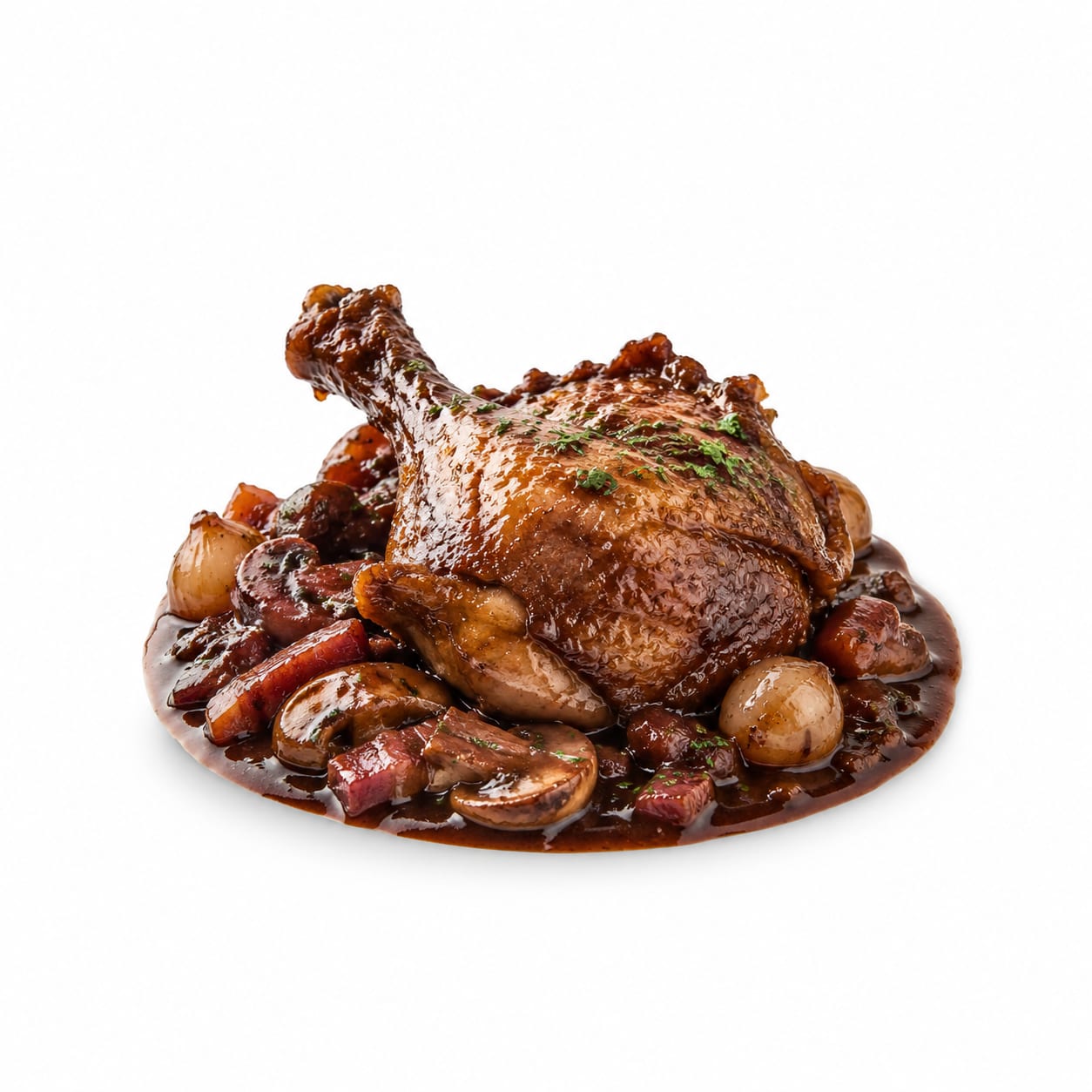
Coq au Vin
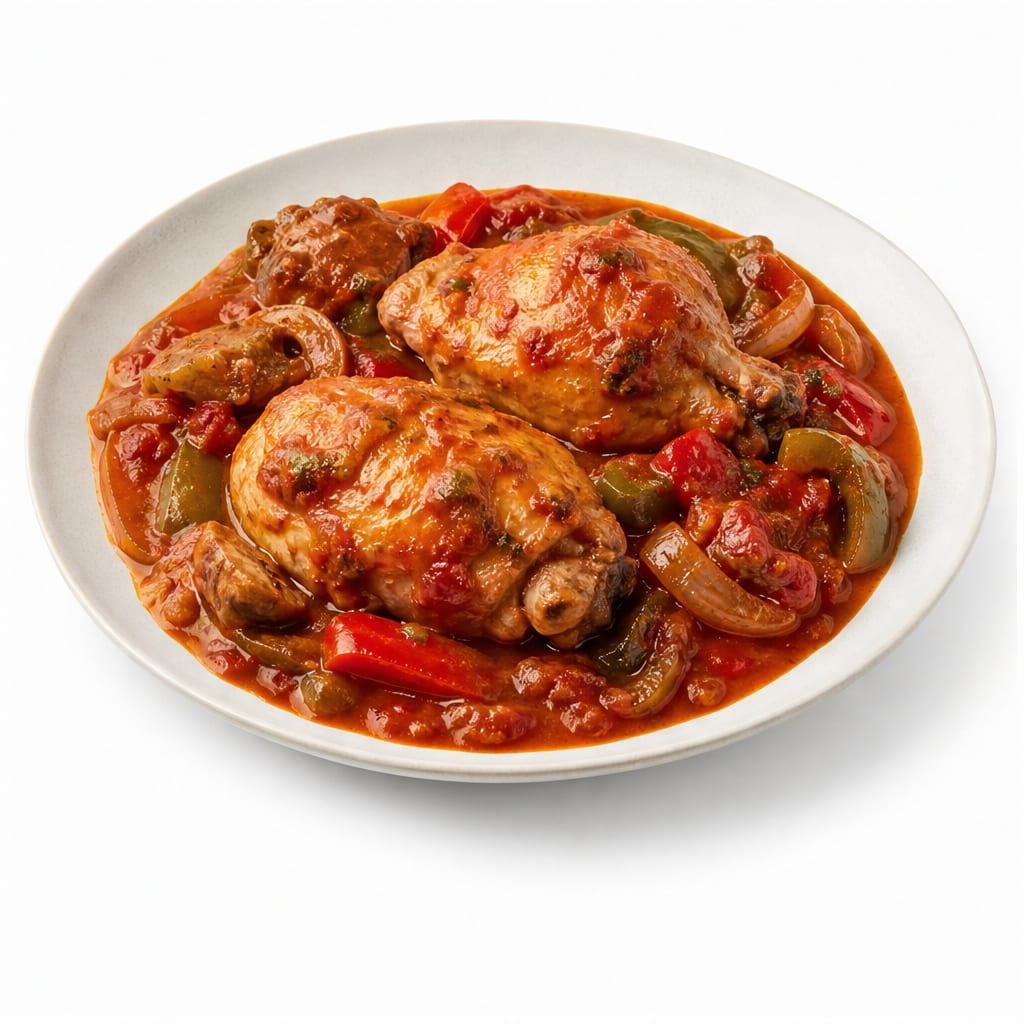
Chicken Cacciatore
Chicken Cacciatore delivers the same braised-chicken satisfaction with a lighter, tomato-driven profile that's easier on your heart and waistline.
Chicken Cacciatore scores noticeably higher due to its leaner fat profile, heart-protective tomato base, and easier fit into regular meal rotation. Coq au Vin remains a phenomenal dish for occasions but its bacon-driven saturated fat and heavier calorie density limit everyday practicality.
Coq au Vin offers deeper, wine-soaked richness but carries more saturated fat from bacon and a heavier calorie load per serving.
At a glance
Executive summary
Overall
Chicken Cacciatore
Healthier
Chicken Cacciatore
More practical
Chicken Cacciatore
Daily use
Chicken Cacciatore
Key comparison lenses
comfort food health tradeoff
Both are rich braised chicken dishes, so users want to know which comfort food is less indulgent
heart health comparison
Coq au Vin's bacon and wine reduction vs Cacciatore's tomato base creates a clear cardiovascular contrast
everyday meal suitability
Home cooks deciding which braised chicken to add to weekly rotation need practical guidance
sodium and fat awareness
Both dishes can be sodium-heavy, but the sources and consequences differ meaningfully
weight management compatibility
Comfort stews feel heavy, so calorie density and satiety per calorie matter
Best choice for
Coq au Vin
- Special occasion dinners where indulgence is the point
- French cuisine enthusiasts wanting authentic flavor depth
- Cold-weather meals craving maximum comfort and richness
- Wine lovers who appreciate reduced wine sauces
Chicken Cacciatore
- Weeknight family dinners needing balanced nutrition
- Anyone watching heart health or sodium intake
- Meal preppers wanting a stew that reheats well without feeling heavy
- People who prefer bright, acidic tomato-based sauces
Least suitable for
Coq au Vin
- Anyone on a low-sodium or low-saturated-fat diet
- Weeknight cooks short on time and ingredients
- People avoiding alcohol in cooking
- Those tracking calories closely
Chicken Cacciatore
- Diners who dislike tomato-based sauces
- Those seeking a deeply rich, wine-forward flavor profile
- Occasions demanding French culinary tradition
Deep comparison
Dimension by dimension
Each lens scores both foods and breaks down who each option suits.
- Dimension 1 · Priority 95Chicken Cacciatore
Heart Health Impact
Coq au Vin · 45Chicken Cacciatore · 78Chicken Cacciatore's tomato base delivers lycopene and potassium that actively support cardiovascular health, while Coq au Vin's bacon and butter push saturated fat upward.
Tradeoff
You sacrifice the deep umami richness of rendered bacon fat but gain a sauce that works with your heart instead of against it.
Why it matters
Heart disease remains the leading cause of death, and sauce choice in a braised dish can swing saturated fat by 10-15g per serving.
Real-world impact
Eating Chicken Cacciatore weekly feels sustainable long-term. Coq au Vin weekly would likely need portion control or recipe modification to stay heart-friendly.
Coq au Vin
- Situations where dietary satisfaction prevents overeating other rich foods
Better for
- Daily or near-daily consumption patterns
- Diners already exceeding saturated fat limits from other meals
Worse for
Chicken Cacciatore
- Anyone with family history of heart disease
- People managing cholesterol levels
- Regular rotation meals where cumulative fat intake matters
Better for
- Occasions where the health advantage feels irrelevant compared to tradition
Worse for
- Dimension 2 · Priority 88Chicken Cacciatore
Calorie Density and Weight Management
Coq au Vin · 50Chicken Cacciatore · 72Coq au Vin packs more calories per bowl due to bacon, butter, and wine reduction concentration. Chicken Cacciatore's tomato broth adds volume and flavor with fewer calories.
Tradeoff
Coq au Vin feels more luxurious per bite but delivers less food volume per calorie, making overconsumption easier.
Why it matters
A typical serving of Coq au Vin can run 550-700 calories versus 350-500 for Chicken Cacciatore, a meaningful gap over weekly meals.
Real-world impact
You can eat a generous bowl of Chicken Cacciatore and still have room for a side salad. Coq au Vin often becomes the entire calorie budget for that meal.
Coq au Vin
- Active individuals with high calorie needs who want quality calories
- Cold days when calorie density actually feels good
Better for
- Sedentary evenings when heavy meals disrupt sleep
- Anyone prone to second helpings of rich food
Worse for
Chicken Cacciatore
- Anyone tracking calories or trying to lose weight gradually
- People who prefer larger portion sizes without guilt
- Meal preppers controlling weekly calorie budgets
Better for
- Very active people who need calorie density to meet needs
Worse for
- Dimension 3 · Priority 82It depends
Satiety and Fullness
Coq au Vin · 80Chicken Cacciatore · 78Both dishes are deeply satisfying braised chicken, but they fill you up differently. Coq au Vin's fat content creates a heavier fullness; Cacciatore's fiber and volume create a steadier satisfaction.
Tradeoff
Fat-driven satiety from Coq au Vin feels more immediately filling but can leave you sluggish. Tomato-driven satiety from Cacciatore feels lighter and more energizing.
Why it matters
How full you feel determines whether you snack later, which often matters more than the meal itself for weight management.
Real-world impact
After Coq au Vin, you likely want a nap. After Chicken Cacciatore, you can still take an evening walk.
Coq au Vin
- Late weekend lunches where post-meal rest is welcome
- People who find low-fat meals unsatisfying
Better for
- Workday lunches that need to fuel afternoon productivity
Worse for
Chicken Cacciatore
- Weeknight dinners after which you need to stay active
- Anyone who dislikes feeling overly stuffed
Better for
- People who need intense caloric satisfaction to avoid late-night snacking
Worse for
- Dimension 4 · Priority 78Chicken Cacciatore
Nutrient Density and Antioxidant Profile
Coq au Vin · 55Chicken Cacciatore · 80Chicken Cacciatore's tomatoes, bell peppers, and herbs deliver vitamin C, lycopene, and a broad antioxidant spectrum. Coq au Vin's wine contributes some resveratrol but less overall micronutrient diversity.
Tradeoff
Red wine's resveratrol is real but modest in cooked form. Tomatoes' lycopene actually becomes more bioavailable through cooking, giving Cacciatore a clear edge.
Why it matters
Long-term health is built on consistent micronutrient intake, not occasional antioxidant hits from wine.
Real-world impact
Regular Chicken Cacciatore consumption meaningfully contributes to your weekly vegetable and antioxidant intake. Coq au Vin contributes mostly protein and fat.
Coq au Vin
- Meals where wine's polyphenols complement an already vegetable-rich menu
Better for
- Serving as a standalone meal without additional vegetable sides
Worse for
Chicken Cacciatore
- Anyone not eating enough vegetables regularly
- People wanting their comfort food to pull nutritional weight
- Men concerned about prostate health where lycopene matters
Better for
- Situations where the diner already exceeds antioxidant needs from other meals
Worse for
- Dimension 5 · Priority 75Chicken Cacciatore
Sodium Load
Coq au Vin · 42Chicken Cacciatore · 60Both braised dishes can be sodium-heavy, but Coq au Vin's bacon, stock, and wine reduction concentrate salt significantly more than Cacciatore's tomato-based approach.
Tradeoff
The bacon that makes Coq au Vin irresistible also makes it a sodium bomb. Cacciatore can be seasoned more conservatively without sacrificing flavor thanks to tomato acidity.
Why it matters
A single serving of traditional Coq au Vin can deliver 800-1200mg sodium, roughly half your daily limit. Cacciatore typically lands in the 500-800mg range.
Real-world impact
If you're sensitive to sodium, Coq au Vin means watching your intake carefully the rest of the day. Cacciatore gives you more flexibility.
Coq au Vin
- Diners without sodium sensitivity eating this occasionally
Better for
- People already near daily sodium limits from processed foods
- Those with kidney concerns
Worse for
Chicken Cacciatore
- Anyone with hypertension or sodium sensitivity
- People who eat braised dishes multiple times per week
- Home cooks who want more control over salt levels
Better for
- Diners who find low-salt versions of tomato dishes bland
Worse for
- Dimension 6 · Priority 72Chicken Cacciatore
Practicality and Cooking Accessibility
Coq au Vin · 48Chicken Cacciatore · 75Chicken Cacciatore uses more accessible ingredients and a simpler technique. Coq au Vin traditionally requires marinating chicken in wine overnight and sourcing lardons or thick-cut bacon.
Tradeoff
Coq au Vin rewards extra effort with deeper complexity. Cacciatore delivers 80% of the comfort with 50% of the fuss.
Why it matters
The best healthy meal is the one you actually cook. Complexity barriers lead to takeout orders instead.
Real-world impact
Most home cooks can pull together Chicken Cacciatore on a Tuesday. Coq au Vin is more of a Sunday project.
Coq au Vin
- Weekend cooking as a rewarding culinary project
- Experienced cooks who enjoy multi-step techniques
Better for
- Last-minute dinner situations
- Cooks intimidated by French technique
Worse for
Chicken Cacciatore
- Busy households needing impressive weeknight meals
- Less experienced cooks wanting reliable results
- Meal preppers who want to batch-cook efficiently
Better for
- Cooks seeking a challenging, impressive dish for guests
Worse for
- Dimension 7 · Priority 65Chicken Cacciatore
Alcohol Content and Sensitivity
Coq au Vin · 40Chicken Cacciatore · 70Coq au Vin uses a full bottle of red wine that reduces but never fully cooks off. Chicken Cacciatore uses little to no wine, or a modest splash that cooks through more completely.
Tradeoff
The wine is what makes Coq au Vin magical, but it also makes it inappropriate for alcohol-sensitive individuals and children.
Why it matters
Even after extended braising, 5-10% of alcohol can remain in Coq au Vin, enough to matter for recovering alcoholics, pregnant women, or children.
Real-world impact
Coq au Vin is not a children's dish. Chicken Cacciatore is family-friendly without modification.
Coq au Vin
- Adult dinner parties where wine is already flowing
Better for
- Recovery situations where any alcohol exposure is problematic
- Cultures or households where cooking with alcohol is avoided
Worse for
Chicken Cacciatore
- Families with children at the table
- Anyone avoiding alcohol for health, religious, or personal reasons
- Pregnant women who want braised chicken comfort
Better for
- Diners specifically seeking wine-forward flavor experiences
Worse for
Timeline
Health impact over time
Short-term
Hours to days
Coq au Vin
- Heavy fullness that may reduce evening activity levels
- Potential for post-meal sluggishness due to high fat content
- Sodium may cause noticeable thirst and mild bloating
- Wine-derived alcohol may cause slight drowsiness
Chicken Cacciatore
- Satisfying fullness without heaviness, easier to stay active after eating
- Tomato acidity may cause mild heartburn in sensitive individuals
- More balanced energy levels due to lower fat and higher fiber
- Better hydration balance with lower sodium load
Long-term
Months to years
Coq au Vin
- Regular consumption could elevate LDL cholesterol due to bacon and butter content
- Higher cumulative sodium intake may affect blood pressure over time
- Saturated fat load may contribute to arterial inflammation if eaten frequently
- Occasional consumption poses minimal long-term risk
Chicken Cacciatore
- Lycopene from cooked tomatoes supports prostate and cardiovascular health over time
- Lower saturated fat intake protects heart health in regular rotation
- Potassium from tomatoes helps counterbalance sodium naturally
- Fiber from vegetables supports digestive health and gut microbiome diversity
Risk profile
Safety & processing
Both dishes are made from scratch with whole ingredients, but Coq au Vin typically relies on cured bacon or lardons, which are processed meats with nitrites and higher sodium. Chicken Cacciatore uses fresher, less processed ingredient profiles overall.
Coq au Vin
Processed meat exposure
mediumTraditional lardons or bacon are classified as Group 1 carcinogens by WHO when consumed regularly. Occasional use in Coq au Vin is low risk, but it's worth noting.
Alcohol retention in cooked wine
lowExtended braising reduces alcohol significantly but not completely. Roughly 5-10% may remain, relevant for highly sensitive individuals.
Undercooked chicken near bone
mediumLarge chicken pieces braised in wine can sometimes appear done on the outside while remaining undercooked near the bone. Use a meat thermometer.
Chicken Cacciatore
Canned tomato BPA exposure
lowIf using canned tomatoes, there is potential BPA exposure from can linings. Choose jarred or carton-packed tomatoes to avoid this.
Undercooked chicken near bone
mediumSame braising challenge as Coq au Vin. Verify internal temperature reaches 165°F near the bone.
Acidic sauce and cast iron interaction
lowLong-simmered tomato sauce in unseasoned cast iron can leach iron and create off-flavors. Use enameled cast iron or stainless steel.
Who wins for whom
Audience fit
Same foods, different winners depending on your goal.
children
Chicken CacciatoreNo alcohol concerns, milder flavor profile, and tomato sauce is more kid-friendly than wine sauce. Children also benefit from the extra vegetable content.
daily consumption
Chicken CacciatoreLighter fat profile, better micronutrient density, and lower sodium make Chicken Cacciatore sustainable as a weekly staple. Coq au Vin is better reserved for occasional enjoyment.
diabetes
Chicken CacciatoreChicken Cacciatore has a lower glycemic impact and more fiber, leading to steadier blood sugar. Coq au Vin's wine reduction can contain concentrated sugars.
elderly
Chicken CacciatoreLower sodium, softer vegetables for easier digestion, and heart-protective lycopene make Cacciatore more appropriate for cardiovascular health concerns common in older adults.
muscle gain
It dependsBoth provide excellent protein from chicken thighs. Coq au Vin offers slightly more calories for bulking, while Cacciatore provides better micronutrient support for recovery.
weight loss
Chicken CacciatoreLower calorie density and higher fiber from tomatoes make Chicken Cacciatore more filling per calorie, supporting portion control without deprivation.
Your move
Decision guide
Choose Coq au Vin
- You're cooking for a special occasion and want maximum wow factor
- Rich, wine-forward French flavors are exactly what you're craving
- You're an experienced cook looking for a rewarding weekend project
- You have no concerns about saturated fat, sodium, or alcohol
- It's a cold evening and you want the heaviest comfort food possible
Choose Chicken Cacciatore
- You want a satisfying braised chicken that fits into a healthy weekly routine
- Heart health, sodium, or calorie awareness matters to you
- You're cooking for a family including children
- You prefer bright, acidic tomato-based sauces over wine reductions
- You want something impressive but achievable on a weeknight
Either works if
- You're serving with plenty of vegetables and a light side salad
- Both dishes fit your calorie and fat budget for the day
- You're cooking for guests with no specific dietary restrictions
Avoid both if
- You have severe poultry allergies
- You need a quick 30-minute meal tonight
- You're on a very low-sodium medical protocol without modification
- You dislike braised or stewed chicken textures
Final recommendation
Make Chicken Cacciatore your go-to braised chicken for everyday eating. Save Coq au Vin for the evenings when only the richest, most indulgent version will do. The health gap between them is real but not dramatic for occasional diners. The practicality gap, however, makes Cacciatore the smarter default.
Practical
Consumer tips
- 1
Lighten Coq au Vin by reducing bacon to a garnish and using less butter for sautéing — you keep the wine essence with significantly less saturated fat
- 2
Boost Chicken Cacciatore's depth by adding a splash of red wine and a pinch of smoked paprika to mimic some of Coq au Vin's complexity without the fat
- 3
Both dishes improve overnight, making them ideal for batch cooking — prepare double and refrigerate for effortless meals later in the week
- 4
Always use a meat thermometer for braised chicken; visual cues near the bone are unreliable and undercooked chicken is a real food safety risk
- 5
Choose jarred or carton tomatoes over canned for Cacciatore to avoid BPA exposure from can linings
- 6
If sodium is a concern for either dish, use low-sodium stock and go easy on added salt — the long braise will concentrate flavors naturally
- 7
Serve either dish with a large green salad or roasted vegetables to balance the plate nutritionally without adding much cooking effort