
Nutrition comparison
Camu Camu vs Acai Berry: Which Superfood Is Better for You?
Compare Camu Camu and Acai Berry to see which superfood wins for immunity, weight loss, and daily use. Discover the tradeoffs between Vitamin C and healthy fats.
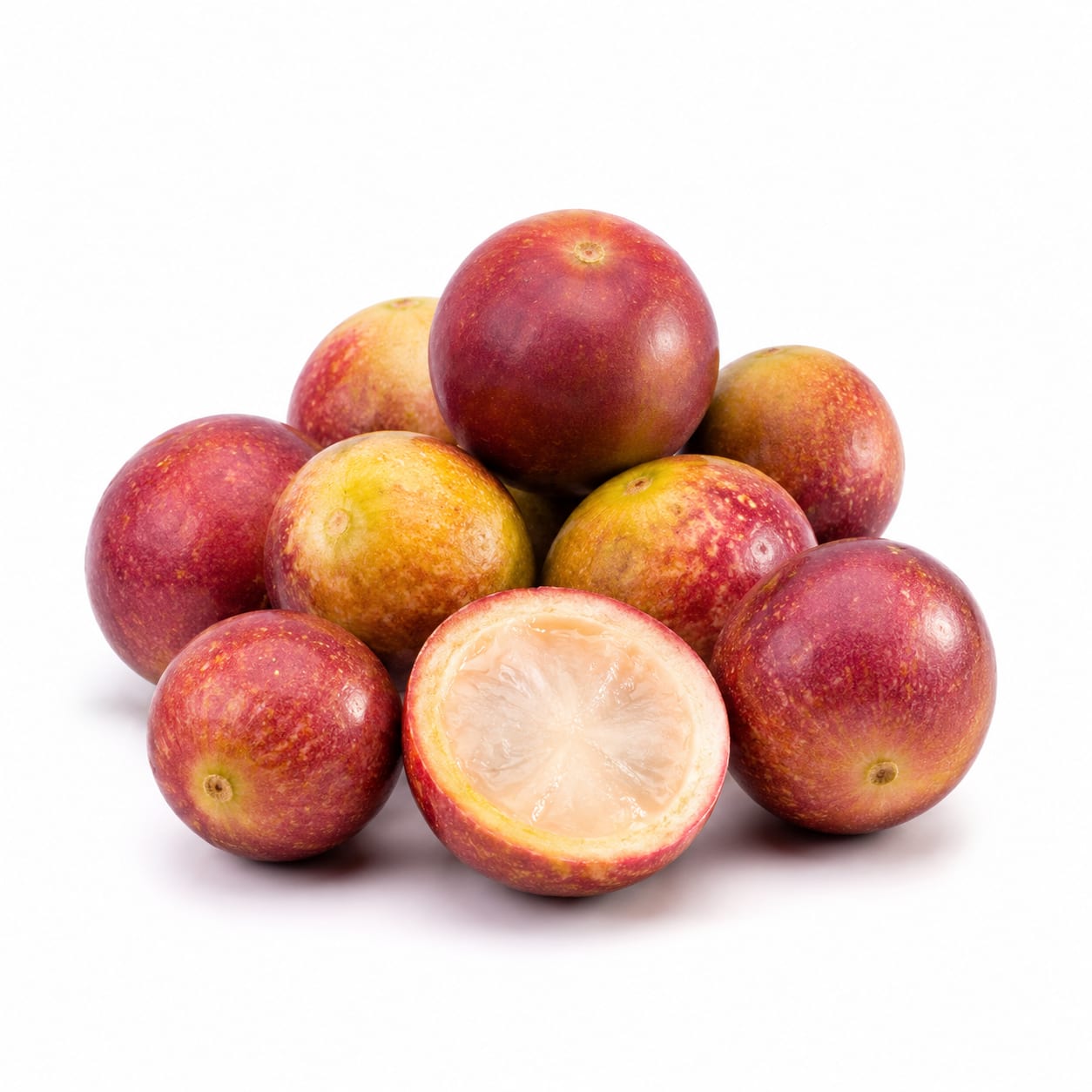
Camu Camu
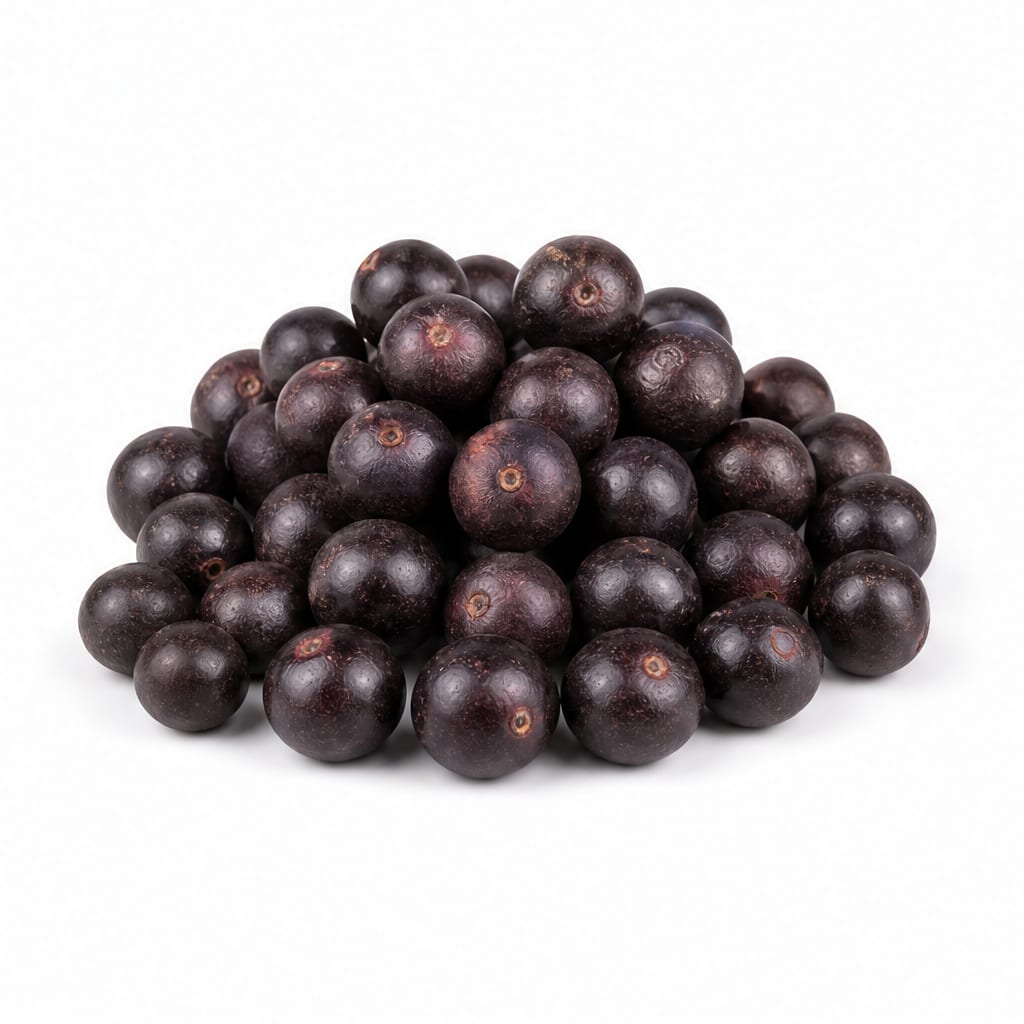
Acai Berry
Camu Camu is a targeted Vitamin C bomb best used as a supplement, while Acai Berry is a satisfying, fat-rich superfood better suited as a meal base.
Acai Berry scores slightly higher for being a more versatile, satisfying food that provides healthy fats and sustained energy. Camu Camu is an exceptional supplement but lacks the macronutrients to stand alone as a food.
Massive immune support and zero calories versus satisfying healthy fats and deeper meal versatility.
At a glance
Executive summary
Overall
It depends
Healthier
It depends
More practical
Acai Berry
Daily use
Acai Berry
Key comparison lenses
Immune support vs. anti-aging benefits
Camu Camu is famed for massive Vitamin C content, while Acai is prized for skin-protecting anthocyanins and healthy fats.
Supplement topper vs. smoothie base
Camu Camu is typically a tart powder add-in, whereas Acai is a calorie-dense frozen pulp used to build a meal.
Calorie and sugar management
Camu Camu is virtually calorie-free, while Acai provides noticeable calories from fats, impacting satiety differently.
Best choice for
Camu Camu
- People wanting massive immune support
- Those strictly limiting calories and sugar
- Anyone needing a quick Vitamin C boost for collagen or skin
Acai Berry
- People looking for a filling, meal-replacement smoothie base
- Those wanting heart-healthy fats in their diet
- Anyone prioritizing anti-aging antioxidants with better taste
Least suitable for
Camu Camu
- People with sensitive stomachs or acid reflux
- Anyone looking for a filling snack
- Those who dislike tart, sour flavors
Acai Berry
- People strictly counting calories
- Those on a low-fat diet
- Anyone trying to avoid hidden sugars in commercial bowls
Deep comparison
Dimension by dimension
Each lens scores both foods and breaks down who each option suits.
- Dimension 1 · Priority 98Camu Camu
Vitamin C and Immunity
Camu Camu · 99Acai Berry · 35Camu Camu is one of the most concentrated natural sources of Vitamin C on the planet, completely overshadowing Acai.
Tradeoff
You get unmatched immune support from Camu Camu, but you miss out on the broader nutritional profile that Acai offers.
Why it matters
Vitamin C is crucial for immune defense and collagen production, and Camu Camu delivers it in a highly absorbable, whole-food form.
Real-world impact
A small pinch of Camu Camu powder in your morning water can help fend off seasonal colds far more effectively than an Acai bowl.
Camu Camu
- Fighting off a cold
- Supporting collagen for skin elasticity
- Adrenal recovery from stress
Better for
- Those prone to kidney stones from high vitamin C
Worse for
Acai Berry
- Getting a moderate, balanced antioxidant intake
Better for
- Targeted immune boosting when sick
Worse for
- Dimension 2 · Priority 90Acai Berry
Healthy Fats and Satiety
Camu Camu · 5Acai Berry · 92Acai is uniquely rich in omega-3, -6, and -9 fats for a berry, making it filling and heart-healthy. Camu Camu has virtually zero fat.
Tradeoff
Acai keeps you full and stabilizes blood sugar, but adds significant calories. Camu Camu is calorie-free but will not satisfy hunger.
Why it matters
Healthy fats are essential for brain function, hormone production, and making a meal actually satisfying instead of just a quick snack.
Real-world impact
An Acai bowl can serve as a legitimate breakfast that keeps you full until lunch. Camu Camu is just a flavorless or tart add-in.
Camu Camu
- Strict calorie restriction
Better for
- Using as a standalone meal
Worse for
Acai Berry
- Sustained energy through the morning
- Post-workout recovery meals
- Keeping hunger at bay
Better for
- Low-fat diet protocols
Worse for
- Dimension 3 · Priority 85It depends
Antioxidant Diversity
Camu Camu · 88Acai Berry · 90Camu Camu brings intense ascorbic acid and ellagic acid, while Acai brings deep purple anthocyanins and polyphenols.
Tradeoff
Different antioxidants protect different systems; Camu Camu is more targeted at immunity and collagen, Acai at cellular membranes and brain health.
Why it matters
A diverse antioxidant intake protects the body from varied environmental stressors and aging factors.
Real-world impact
Eating both rotates your antioxidant defense, but if forced to choose, Acai protects fat-soluble tissues better, while Camu Camu protects water-soluble tissues.
Camu Camu
- Protecting skin from UV stress
- Reducing systemic inflammation quickly
Better for
- Protecting lipid membranes from oxidation
Worse for
Acai Berry
- Protecting brain health
- Supporting cardiovascular membranes
Better for
- Rapid immune response support
Worse for
- Dimension 4 · Priority 75Acai Berry
Taste and Practicality
Camu Camu · 40Acai Berry · 85Acai has a pleasant, earthy berry flavor that blends beautifully into bowls. Camu Camu is intensely sour and bitter, usually masked in smoothies.
Tradeoff
Acai is enjoyable to eat on its own, while Camu Camu requires effort to hide its harsh taste.
Why it matters
If a superfood tastes bad, you will eventually stop taking it, no matter how healthy it is.
Real-world impact
You will actually look forward to eating Acai. Camu Camu will feel like a daily chore you have to choke down.
Camu Camu
- Quickly mixing into a strong-flavored juice
Better for
- Drinking plain with water
- Using in delicate, lightly flavored dishes
Worse for
Acai Berry
- Making enjoyable, satisfying meals
- Sharing with kids or picky eaters
Better for
- Traveling light with just a small powder pouch
Worse for
Timeline
Health impact over time
Short-term
Hours to days
Camu Camu
- Quick burst of immune support
- Potential stomach upset or heartburn if taken on an empty stomach
- No satiation or energy from calories
Acai Berry
- Immediate feeling of fullness and satisfaction
- Steady, calm energy without a sugar crash
- Relief from dry skin due to healthy fat intake
Long-term
Months to years
Camu Camu
- Stronger resilience against common colds
- Improved collagen production for joint and skin health
- Risk of kidney stones if consistently overconsumed
Acai Berry
- Better cardiovascular health from omega fats
- Improved cognitive aging from anthocyanins
- Possible weight gain if portion sizes are not managed
Risk profile
Safety & processing
Both are typically freeze-dried or flash-frozen at the source to preserve nutrients. However, commercial Acai pouches and bowls frequently contain hidden sugars, soy lecithin, or fillers, making label reading essential. Pure Camu Camu powder is rarely adulterated.
Camu Camu
Gastrointestinal distress
mediumHigh acidity and massive Vitamin C doses can cause cramping, diarrhea, or acid reflux in sensitive individuals.
Kidney stone formation
lowExcessive Vitamin C long-term can convert to oxalates, posing a risk for those prone to calcium oxalate stones.
Acai Berry
Hidden sugars and fillers
highMost commercial Acai smoothie packs and bowls are loaded with added sugars or apple juice to improve tartness, negating health benefits.
Heavy metal exposure
lowAs with many Amazonian soil-grown products, sourcing matters to avoid potential heavy metal accumulation from certain regions.
Who wins for whom
Audience fit
Same foods, different winners depending on your goal.
children
Acai BerryKids will actually eat Acai because it tastes like a treat. Camu Camu is far too sour and tart for most children to tolerate.
daily consumption
Acai BerryAcai is easier to incorporate daily as a meal without risking the vitamin toxicity or stomach upset that can come from daily high-dose Camu Camu.
diabetes
Camu CamuCamu Camu has no sugar and will not spike blood glucose. Acai bowls are notorious for hidden sugars that can destabilize blood sugar.
elderly
It dependsCamu Camu is better for immune fragility and joint collagen, while Acai is better for cognitive decline and heart health. Choose based on the primary concern.
muscle gain
Acai BerryAcai provides actual calories and healthy fats that can easily be blended into calorie-dense, muscle-building smoothies.
weight loss
Camu CamuCamu Camu adds zero calories and zero sugar to your diet, making it an effortless supplement for weight loss. Acai's fat content requires strict portion control.
Your move
Decision guide
Choose Camu Camu
- You want maximum immune support and Vitamin C
- You are strictly counting calories or managing blood sugar
- You only need a quick powder to add to your existing supplements
Choose Acai Berry
- You want a filling, satisfying superfood meal
- You are focusing on heart health, brain health, or healthy fats
- You care about taste and actually enjoying your healthy food
Either works if
- You want to boost your overall antioxidant intake
- You are looking for Amazonian superfoods to rotate in your diet
Avoid both if
- You are solely relying on them to fix a poor diet without making other changes
- You have severe gastrointestinal issues that flare with acidic or high-fat foods
Final recommendation
Use Camu Camu as your daily Vitamin C supplement in a small glass of water, and enjoy Acai as your weekend smoothie bowl for healthy fats. If you must pick one for daily sustainability, Acai Berry is the more enjoyable and well-rounded food, while Camu Camu remains a specialized nutritional tool.
Practical
Consumer tips
- 1
Always read Acai packet labels to ensure no added sugars or fillers; the only ingredient should be Acai.
- 2
Start with a tiny pinch of Camu Camu powder to test your stomach's tolerance before using a full serving.
- 3
Blend Acai with a protein source like Greek yogurt or hemp seeds to prevent the sugar crash from a carb-heavy bowl.
- 4
Never mix Camu Camu into hot water; high heat destroys its sensitive Vitamin C content.