
Nutrition comparison
Burger vs Beyond Burger: Which Is Actually Healthier?
Honest comparison of beef burger vs Beyond Burger on protein quality, heart health, processing, food safety, and long-term risks. Find out which is the smarter choice for your goals.

Burger
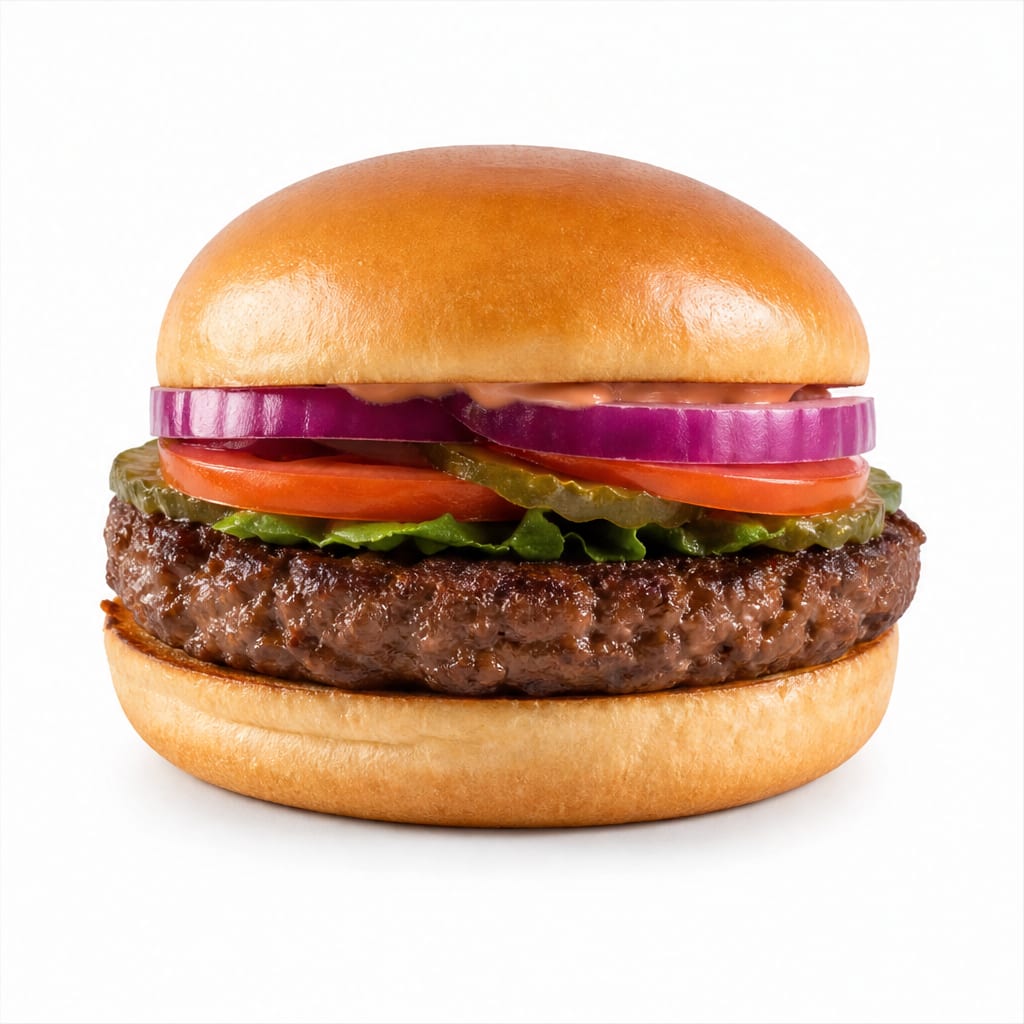
Beyond Burger
Neither is a health food. A beef burger offers superior protein quality and fewer additives, while Beyond Burger wins on cholesterol and food safety but carries ultra-processing baggage.
Beyond Burger edges ahead slightly due to zero cholesterol and lower food safety risk, but the margin is thin because its ultra-processing and additive load partially offset those advantages. Neither scores well overall because both are indulgent choices, not health staples.
Real beef gives you cleaner ingredients and better protein at the cost of saturated fat and cholesterol. Beyond Burger removes cholesterol and pathogen risk but adds industrial processing and novel ingredients your body may not recognize as food.
At a glance
Executive summary
Overall
It depends
Healthier
It depends
More practical
Burger
Daily use
It depends
Key comparison lenses
Plant-based vs animal protein quality and completeness
The core question most users have: does plant protein match real beef for muscle building and satiety?
Ultra-processing and ingredient transparency
Beyond Burger is heavily processed with binders and extracts, while a basic beef burger is minimally processed
Heart health and cholesterol impact
Dietary cholesterol and saturated fat differences directly affect cardiovascular risk
Long-term health sustainability
Regular consumption patterns matter more than a single meal comparison
Food safety and contamination risk
Beef carries pathogen risk; plant-based alternatives have different but real concerns
Best choice for
Burger
- People prioritizing protein quality and bioavailability
- Those avoiding ultra-processed foods
- Anyone who values ingredient simplicity
- Individuals with pea or soy allergies
- Athletes needing complete amino acid profiles
Beyond Burger
- People managing high cholesterol
- Those reducing red meat for heart health
- Vegetarians and vegans seeking a burger experience
- Anyone concerned about foodborne illness from undercooked meat
- People avoiding dietary cholesterol
Least suitable for
Burger
- People with cardiovascular disease risk
- Those monitoring saturated fat intake
- Individuals avoiding red meat for cancer risk
- People with gout or uric acid concerns
Beyond Burger
- People avoiding ultra-processed foods
- Those with pea protein allergies
- Anyone sensitive to added oils or gums
- People seeking whole-food plant-based diets
Deep comparison
Dimension by dimension
Each lens scores both foods and breaks down who each option suits.
- Dimension 1 · Priority 92Burger
Protein Quality & Bioavailability
Burger · 85Beyond Burger · 68Beef provides complete, highly bioavailable protein with all essential amino acids in optimal ratios. Beyond Burger uses pea protein isolate, which is decent but less digestible and lower in methionine.
Tradeoff
You get cleaner, more usable protein from beef but absorb dietary cholesterol and heme iron that may increase disease risk with regular consumption.
Why it matters
Protein quality affects how well your body builds and repairs tissue. Lower bioavailability means you need more total protein to get the same benefit.
Real-world impact
After a beef burger, you feel full longer and recover better from exercise. A Beyond Burger may leave you hungry sooner despite similar protein numbers on the label.
Burger
- Post-workout recovery meals
- Building and maintaining muscle mass
- Sustained fullness between meals
Better for
- Daily consumption for heart-health-conscious individuals
- Those with hereditary hemochromatosis
Worse for
Beyond Burger
- People who cannot or choose not to eat meat
- Reducing heme iron exposure linked to cancer risk
Better for
- Maximizing protein efficiency per calorie
- Anyone needing maximum satiety from a single meal
Worse for
- Dimension 2 · Priority 88Beyond Burger
Heart Health & Cholesterol
Burger · 35Beyond Burger · 58Beyond Burger has zero dietary cholesterol and slightly less saturated fat. Beef burgers deliver 70-80mg of cholesterol per patty plus significant saturated fat from animal sources.
Tradeoff
Beyond Burger still contains coconut oil, which is high in saturated fat. So while cholesterol drops to zero, the saturated fat story is more nuanced than marketing suggests.
Why it matters
Dietary cholesterol and saturated fat directly impact LDL levels and cardiovascular risk, especially for people already managing heart conditions.
Real-world impact
Swapping a beef burger for Beyond Burger a few times per week can meaningfully lower your cholesterol intake, but the saturated fat from coconut oil means it is not a free pass for heart health.
Burger
- People with no cardiovascular risk factors
- Those on low-carb or keto diets who tolerate saturated fat well
Better for
- People with existing heart disease
- Anyone with familial hypercholesterolemia
Worse for
Beyond Burger
- Anyone with elevated LDL cholesterol
- People reducing red meat for heart disease prevention
- Those following doctor recommendations to cut dietary cholesterol
Better for
- People who assume plant-based automatically means heart-healthy without checking saturated fat content
Worse for
- Dimension 3 · Priority 85Burger
Ultra-Processing & Ingredient Simplicity
Burger · 72Beyond Burger · 30A basic beef burger is just ground beef, possibly with salt and seasoning. Beyond Burger contains pea protein isolate, canola oil, coconut oil, methylcellulose, potato starch, natural flavors, and several added minerals.
Tradeoff
Fewer ingredients means fewer unknowns. The long ingredient list in Beyond Burger raises legitimate concerns about how your body processes these isolated components and additives long-term.
Why it matters
Emerging research links ultra-processed food consumption to higher rates of obesity, metabolic disease, and all-cause mortality regardless of calorie content.
Real-world impact
A beef burger is something you could theoretically make at home from a single ingredient. Beyond Burger requires industrial processing that no home kitchen could replicate.
Burger
- People following clean-eating or whole-food approaches
- Anyone concerned about the health effects of food additives
- Those who value knowing exactly what they are eating
Better for
- Those who add processed cheese, bacon, and sugary condiments, negating the simplicity advantage
Worse for
Beyond Burger
- People for whom avoiding animal products is a higher priority than avoiding processing
Better for
- Anyone with digestive sensitivity to gums, starches, or protein isolates
- People following a whole-food plant-based diet philosophy
- Those concerned about long-term effects of methylcellulose and other binders
Worse for
- Dimension 4 · Priority 75Beyond Burger
Food Safety & Contamination Risk
Burger · 45Beyond Burger · 78Ground beef is a leading vehicle for E. coli, Salmonella, and other pathogens. Beyond Burger, being plant-based, carries virtually no risk of bacterial contamination from animal pathogens.
Tradeoff
Beyond Burger is safer from a pathogen standpoint, but the long-term safety of its novel ingredients is less studied than the well-known risks of beef.
Why it matters
Foodborne illness from undercooked ground beef is a real and documented risk, especially for children, elderly, and immunocompromised individuals.
Real-world impact
You can eat a Beyond Burger slightly undercooked without worry. A beef burger must reach 160°F internally to be considered safe, which many home cooks fail to verify.
Burger
- Situations where you control cooking temperature precisely
- People sourcing high-quality, locally raised beef with trusted supply chains
Better for
- Casual backyard grilling with inconsistent temperatures
- Serving to vulnerable populations
Worse for
Beyond Burger
- Cooking for children or elderly individuals
- Outdoor grilling where temperature control is inconsistent
- Anyone immunocompromised
- Pregnant women avoiding undercooked meat risks
Better for
- People concerned about potential allergens from pea protein cross-contamination in manufacturing
Worse for
- Dimension 5 · Priority 72Burger
Satiety & Blood Sugar Stability
Burger · 70Beyond Burger · 62Beef's complete protein and fat profile provides steadier, longer-lasting fullness. Beyond Burger adds fiber from pea protein and potato starch, which helps, but the overall satiety signal is slightly weaker.
Tradeoff
Beef keeps you fuller but may feel heavier. Beyond Burger digests a bit faster, which could mean earlier hunger but also less post-meal sluggishness.
Why it matters
Satiety determines whether you reach for a snack two hours later or stay comfortably full until your next meal.
Real-world impact
A beef burger at lunch might carry you to dinner without thinking about food. A Beyond Burger might leave you eyeing the snack drawer by mid-afternoon.
Burger
- Long workdays without snack access
- Meals that need to sustain energy for 4-5 hours
- Active individuals with higher caloric needs
Better for
- People who dislike the heavy feeling after a rich meal
- Those prone to post-meal food coma
Worse for
Beyond Burger
- Lighter meals where you do not want to feel overly full
- Evening meals before less active periods
Better for
- Anyone prone to snacking between meals
- People trying to reduce overall calorie intake through satiety
Worse for
- Dimension 6 · Priority 80Beyond Burger
Long-Term Health & Disease Risk
Burger · 38Beyond Burger · 55Regular red meat consumption is associated with increased colorectal cancer risk, cardiovascular disease, and type 2 diabetes. Beyond Burger avoids these specific risks but introduces uncertainty from long-term consumption of ultra-processed ingredients.
Tradeoff
Known risks from beef versus unknown risks from novel plant-based processing. The beef risks are well-documented; the Beyond Burger risks are speculative but biologically plausible.
Why it matters
What you eat regularly over decades matters far more than what you eat once. Both options have concerning long-term profiles for different reasons.
Real-world impact
Eating beef burgers multiple times per week is a documented risk factor for colon cancer and heart disease. Eating Beyond Burger that frequently is probably better for your heart but the long-term effects of daily ultra-processed food are still unclear.
Burger
- Occasional consumption, such as once or twice per month
- People who otherwise eat very little red meat
Better for
- People eating burgers multiple times per week
- Those with family history of colorectal cancer
- Anyone with metabolic syndrome
Worse for
Beyond Burger
- People replacing frequent beef burger consumption
- Those with family history of colorectal cancer
- Anyone reducing red meat on medical advice
Better for
- People who treat it as a health food rather than a swap for an indulgence
- Those eating it daily assuming plant-based means risk-free
Worse for
Timeline
Health impact over time
Short-term
Hours to days
Burger
- Strong satiety from complete protein and fat content
- Potential sluggishness or food coma after a heavy meal
- Risk of foodborne illness if undercooked
- Heme iron provides an immediate energy-supporting nutrient boost
Beyond Burger
- Lighter digestive feel compared to beef
- Possible mild bloating from pea protein and fiber for sensitive individuals
- Virtually no risk of acute foodborne illness
- Slightly faster return of hunger compared to beef
Long-term
Months to years
Burger
- Increased colorectal cancer risk with regular consumption
- Higher cardiovascular disease risk from saturated fat and cholesterol
- Heme iron accumulation may promote oxidative stress
- Potential contribution to insulin resistance with frequent intake
Beyond Burger
- Zero cholesterol intake reduces one cardiovascular risk factor
- Ultra-processed food consumption linked to metabolic and weight issues
- Long-term effects of regular methylcellulose and protein isolate intake are understudied
- Likely lower cancer risk than beef but not zero risk due to processing
Risk profile
Safety & processing
A basic beef burger is processed but recognizable as food — it is ground muscle tissue with minimal alteration. Beyond Burger is ultra-processed by definition: protein isolates, refined oils, binders, and added vitamins reassembled to mimic meat. The ingredient gap is substantial and meaningful for anyone prioritizing whole-food eating.
Burger
E. coli and Salmonella contamination
highGround beef has increased surface area for bacterial contamination. Must be cooked to 160°F internally to be safe.
Antibiotic and hormone residues
mediumConventional beef may contain trace antibiotic residues. Choosing grass-fed or organic reduces this concern.
Heterocyclic amines from high-heat cooking
mediumCharring or grilling beef at high temperatures creates carcinogenic compounds. Lower-heat cooking methods reduce this risk.
Beyond Burger
Pea protein allergen exposure
mediumPea protein allergies are increasingly common, especially in people with legume sensitivities. Cross-contamination in manufacturing is possible.
Novel ingredient long-term safety uncertainty
lowMethylcellulose, sunflower lecithin, and other binders are generally recognized as safe but have limited long-term consumption data in these quantities.
Heavy metals in plant protein isolates
lowSome plant protein isolates can accumulate trace heavy metals from soil. Reputable brands test for this, but it is worth awareness.
Who wins for whom
Audience fit
Same foods, different winners depending on your goal.
children
It dependsBeef provides heme iron and B12 critical for development, but food safety risks are higher. Beyond Burger is safer from pathogens but the ultra-processing and lower protein quality are concerns for growing bodies.
daily consumption
It dependsNeither should be eaten daily. If forced to choose, Beyond Burger is slightly less harmful for daily cardiovascular health, but daily ultra-processed food carries its own concerns. Limit both to occasional meals.
diabetes
Beyond BurgerBeyond Burger has zero cholesterol and slightly more fiber, which supports better blood sugar and lipid management. However, both are low enough in carbs that the difference is modest.
elderly
Beyond BurgerLower foodborne illness risk and zero cholesterol make Beyond Burger more appropriate for older adults, who are more vulnerable to both pathogens and cardiovascular disease.
muscle gain
BurgerBeef offers superior protein bioavailability, creatine, and a complete amino acid profile that supports muscle protein synthesis more efficiently than pea protein isolate.
weight loss
It dependsCalorie counts are similar. Beef provides better satiety, which helps some people eat less overall. Beyond Burger has slightly more fiber, which helps others. Neither is a weight loss food.
Your move
Decision guide
Choose Burger
- You want the most bioavailable protein and fullest satiety from your meal
- You avoid ultra-processed foods and prefer ingredient simplicity
- You eat burgers occasionally and want the real experience
- You have no cardiovascular risk factors and tolerate red meat well
- You are an athlete prioritizing muscle recovery and complete amino acids
Choose Beyond Burger
- You are reducing red meat for heart health or cholesterol management
- You are vegetarian, vegan, or reducing animal product consumption
- You are cooking for someone immunocompromised or pregnant
- You want to avoid the documented cancer risks of regular red meat
- You care about the environmental footprint of your food choices
Either works if
- You only eat burgers occasionally and the health difference is minimal
- You are choosing based on taste preference for a single meal
- You pair the burger with a large salad and skip the fries either way
Avoid both if
- You are seeking a genuinely healthy meal — both are indulgences
- You have severe cardiovascular disease and should limit all saturated fat sources
- You are following a whole-food plant-based diet strictly
- You eat burgers more than twice per week and need to reduce frequency regardless
Final recommendation
Think of this as choosing between two compromises, not between healthy and unhealthy. A beef burger gives you real food with real risks. A Beyond Burger gives you a clever imitation with fewer known risks but more unknowns. For occasional eating, pick whichever you enjoy more. For regular consumption, Beyond Burger is probably the lesser cardiovascular risk, but neither should be a dietary staple. The best move is eating burgers of any kind less often and loading your plate with vegetables when you do.
Practical
Consumer tips
- 1
If choosing a beef burger, opt for grass-fed when possible — it has a better omega-3 to omega-6 ratio and fewer antibiotic concerns
- 2
Cook beef burgers to 160°F and verify with a meat thermometer rather than guessing by color
- 3
Pair either burger with a large serving of vegetables to buffer the saturated fat and add fiber
- 4
Skip the processed cheese and sugary condiments — they add more health damage than the patty choice itself
- 5
If eating Beyond Burger regularly, vary your protein sources to avoid over-reliance on pea protein and ultra-processed foods
- 6
Consider a homemade black bean or lentil burger as a less processed plant-based alternative to Beyond Burger
- 7
Be wary of assuming plant-based means healthy — Beyond Burger is a processed convenience food, not a whole food