
Nutrition comparison
Beef Wellington vs Pork Tenderloin en Croûte: Which is Healthier?
Compare Beef Wellington and Pork Tenderloin en Croûte to see which pastry-wrapped dish is better for your health, weight, and dinner party.
Overall winner · Pork Tenderloin en Croûte
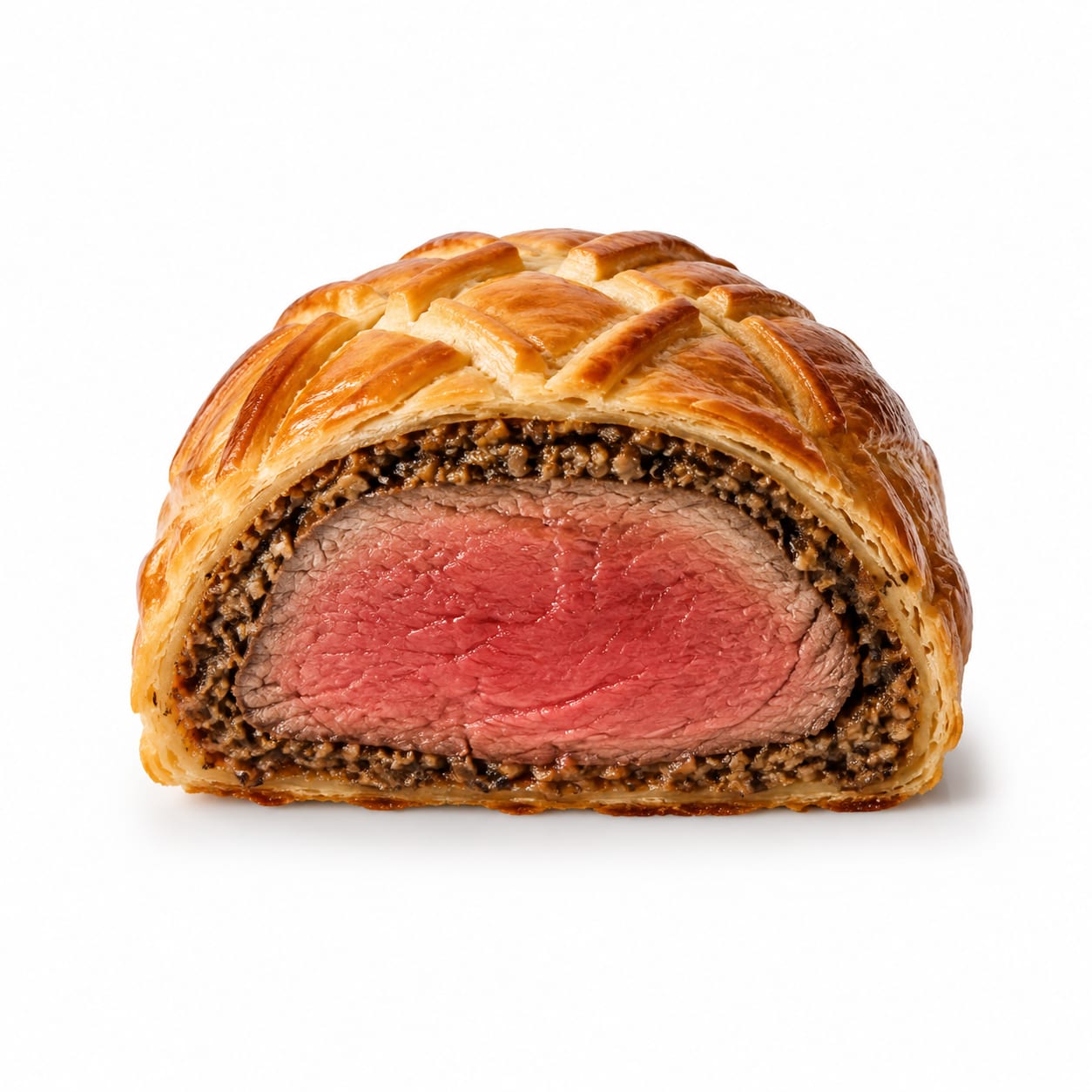
Beef Wellington

Pork Tenderloin en Croûte
Pork Tenderloin en Croûte delivers the same elegant pastry experience as Beef Wellington but with significantly less saturated fat and a lighter post-meal feel.
Pork Tenderloin en Croûte scores higher primarily because pork tenderloin is a remarkably lean cut, offsetting the richness of the pastry. Beef Wellington takes a hit due to the double-layer of saturated fat from both the beef and the pâté.
You trade the deep, rich umami flavor of beef and pâté for a leaner, lighter protein that is easier on your heart and waistline.
At a glance
Executive summary
Overall
Pork Tenderloin en Croûte
Healthier
Pork Tenderloin en Croûte
More practical
It depends
Daily use
Pork Tenderloin en Croûte
Key comparison lenses
saturated fat and heart health
Beef tenderloin wrapped in pâté is significantly higher in saturated fat than lean pork tenderloin, making cardiovascular impact the primary concern.
calorie density and indulgence
Both are pastry-wrapped celebratory dishes, but the hidden fats in Beef Wellington make it a much heavier meal.
protein leanness
Pork tenderloin is one of the leanest meats available, while the beef and pâté combination delivers a denser, fattier protein hit.
special occasion vs regular treat
Users often wonder if these fancy dishes can ever be eaten regularly, and the meat choice dictates the answer.
Best choice for
Beef Wellington
- Major celebrations where rich indulgence is the goal
- Red meat cravings that only a premium steak cut will satisfy
- Those wanting a dense, high-calorie meal after intense physical exertion
Pork Tenderloin en Croûte
- Elegant dinner parties where you want guests to feel satisfied but not sluggish
- Anyone monitoring cholesterol or saturated fat intake
- A slightly lighter Sunday roast alternative
Least suitable for
Beef Wellington
- People managing heart disease or high cholesterol
- Anyone looking for a light meal
- Those watching their saturated fat intake
Pork Tenderloin en Croûte
- Those avoiding pork for religious or personal reasons
- Diners who find pork too lean or dry compared to beef
- People on strict low-carb diets due to the pastry
Deep comparison
Dimension by dimension
Each lens scores both foods and breaks down who each option suits.
- Dimension 1 · Priority 95Pork Tenderloin en Croûte
Saturated Fat & Heart Health
Beef Wellington · 35Pork Tenderloin en Croûte · 70Pork Tenderloin en Croûte is much easier on your heart.
Tradeoff
Beef Wellington layers saturated fat from both the beef tenderloin and the pâté, while pork tenderloin is naturally ultra-lean.
Why it matters
High saturated fat meals spike blood lipid levels and trigger inflammation, making the beef version a riskier choice for cardiovascular health.
Real-world impact
After eating Beef Wellington, you are more likely to feel heavy and sluggish. The pork version leaves you satisfied without the greasy weight.
Beef Wellington
- Keto or very low-carb diets if the pastry is removed
- Those needing high caloric density
Better for
- Daily or weekly consumption
- Post-dinner activity or dancing
Worse for
Pork Tenderloin en Croûte
- Managing high cholesterol
- Keeping heart health in check
- Balancing indulgence with longevity
Better for
- Strict low-fat diets due to the pastry
Worse for
- Dimension 2 · Priority 90Pork Tenderloin en Croûte
Calorie Density & Weight Management
Beef Wellington · 40Pork Tenderloin en Croûte · 65Pork Tenderloin en Croûte is lower in calories for the same serving size.
Tradeoff
The lean pork cut saves you hundreds of calories compared to the beef and pâté combination, even though both share similar pastry shells.
Why it matters
When both foods are already calorie-dense due to the buttery crust, choosing a lean protein inside saves the meal from becoming a massive calorie bomb.
Real-world impact
You can enjoy a full portion of the pork version without blowing your daily calorie budget, whereas the beef version is almost guaranteed to put you over the edge.
Beef Wellington
- Bulking up quickly
- Extreme endurance athletes needing pure calorie load
Better for
- Fat loss phases
- Sedentary evenings
Worse for
Pork Tenderloin en Croûte
- Sustainable weight maintenance
- Enjoying a large portion without overeating
Better for
- Those struggling to eat enough calories
Worse for
- Dimension 3 · Priority 85Beef Wellington
Flavor & Indulgence
Beef Wellington · 95Pork Tenderloin en Croûte · 80Beef Wellington is the ultimate rich, savory indulgence.
Tradeoff
The deep, meaty umami and luxurious mouthfeel of beef and pâté are hard to beat, but you pay for it with a heavier digestive load.
Why it matters
Sometimes only the most decadent option will satisfy a craving, and the complex layering of flavors in Beef Wellington is a culinary experience.
Real-world impact
Beef Wellington feels like a true event on the plate, while the pork version can occasionally feel a bit lean or dry by comparison if overcooked.
Beef Wellington
- Special occasion splurges
- Impressing foodie guests
Better for
- Hot summer evenings
- Light appetites
Worse for
Pork Tenderloin en Croûte
- Palates preferring lighter, less greasy meals
- Pairing with delicate white wines
Better for
- Craving a rich, bloody steak experience
Worse for
- Dimension 4 · Priority 75It depends
Protein Quality & Micronutrients
Beef Wellington · 80Pork Tenderloin en Croûte · 82Both offer excellent protein, but they shine in different micronutrients.
Tradeoff
Beef provides more iron and B12, while pork tenderloin offers a leaner protein package with high thiamine.
Why it matters
Your body absorbs heme iron efficiently from beef, but the pork delivers that protein with far less fat baggage.
Real-world impact
If you are anemic, the beef version gives a stronger iron boost. For pure muscle maintenance with minimal fat, the pork wins.
Beef Wellington
- Correcting iron deficiency
- Boosting B12 for energy
Better for
- Those needing lean protein sources
Worse for
Pork Tenderloin en Croûte
- Lean muscle maintenance
- Higher protein-to-calorie ratio
Better for
- Those with iron deficiency anemia
Worse for
Timeline
Health impact over time
Short-term
Hours to days
Beef Wellington
- Likely to cause a heavy, lethargic feeling due to high fat content
- Very filling, making large portions difficult to finish
- Can trigger indigestion in sensitive stomachs due to rich pâté and butter
Pork Tenderloin en Croûte
- More comfortable digestion with a lighter protein core
- Less likely to cause a post-dinner food coma
- Pastry still provides a satisfying fullness
Long-term
Months to years
Beef Wellington
- Frequent consumption significantly raises saturated fat intake, impacting heart health
- Higher risk of elevated LDL cholesterol
- Contributes to weight gain if eaten regularly due to high calorie density
Pork Tenderloin en Croûte
- Easier to fit into a balanced diet without spiking cholesterol
- Lean pork supports muscle maintenance without cardiovascular strain
- Pastry consumption remains a long-term concern for refined carb intake
Risk profile
Safety & processing
Both dishes are highly composed and rely on processed pastry dough. Beef Wellington ranks slightly higher for additive concern because the traditional pâté and duxelles often include preservatives, nitrates, or excess sodium, whereas a simple pork tenderloin is a whole muscle cut.
Beef Wellington
Undercooked beef
mediumWhile beef tenderloin is safe at medium-rare, achieving a good pastry crust without overcooking the beef is tricky, leading to potential serving temperature issues.
Pâté contamination
mediumPâté carries a higher risk of bacterial contamination if not handled or cooked properly.
Pork Tenderloin en Croûte
Undercooked pork
lowModern pork is safe at medium doneness, but achieving a perfect crust without drying out the lean pork requires careful temperature control.
Who wins for whom
Audience fit
Same foods, different winners depending on your goal.
children
Pork Tenderloin en CroûtePork tenderloin is milder and easier to chew, making it more kid-friendly than the complex, mushroom-heavy flavors of Beef Wellington.
daily consumption
Pork Tenderloin en CroûteNeither is ideal for daily eating due to the pastry, but pork is much closer to a regular healthy protein choice.
diabetes
Pork Tenderloin en CroûteLower saturated fat intake improves insulin sensitivity compared to the heavy fat load in Beef Wellington, though both have refined carbs from the crust.
elderly
Pork Tenderloin en CroûteLeaner protein is easier to digest and better for maintaining cardiovascular health in later years.
muscle gain
Pork Tenderloin en CroûteThe superior protein-to-calorie ratio in pork tenderloin supports muscle growth without adding unnecessary fat.
weight loss
Pork Tenderloin en CroûtePork tenderloin provides high protein and low fat, keeping the overall calorie count much lower than the beef alternative.
Your move
Decision guide
Choose Beef Wellington
- You are celebrating a major milestone and want pure indulgence
- You crave the rich, savory depth that only beef and pâté can provide
- You are not concerned about saturated fat or calorie intake for this meal
Choose Pork Tenderloin en Croûte
- You want an elegant meal without the heavy, sluggish aftermath
- You are watching your cholesterol or trying to eat leaner proteins
- You prefer a milder meat that pairs well with lighter sauces
Either works if
- You are serving a crowd with mixed dietary preferences
- You want a show-stopping centerpiece for a holiday dinner
Avoid both if
- You are strictly limiting refined carbohydrates or gluten
- You are on a low-fat or calorie-restricted diet
- You dislike the texture of pastry-wrapped meats
Final recommendation
Choose Pork Tenderloin en Croûte for a balanced, elegant dinner that respects your heart health without sacrificing presentation. Save Beef Wellington for rare, special occasions when only the richest, most decadent meal will do.
Practical
Consumer tips
- 1
Ask your butcher for a center-cut pork tenderloin to ensure even cooking and maximum tenderness.
- 2
If making Beef Wellington, consider skipping the pâté layer and using a thin crepe to protect the pastry, which cuts down significantly on fat.
- 3
For either dish, swapping puff pastry for phyllo dough reduces calories and saturated fat while keeping a crispy exterior.
- 4
Use a meat thermometer for both dishes; pork is perfect at 145°F, while beef should rest at 125°F for medium-rare.
- 5
Let both meats rest before wrapping in pastry to prevent steam from making the bottom soggy.